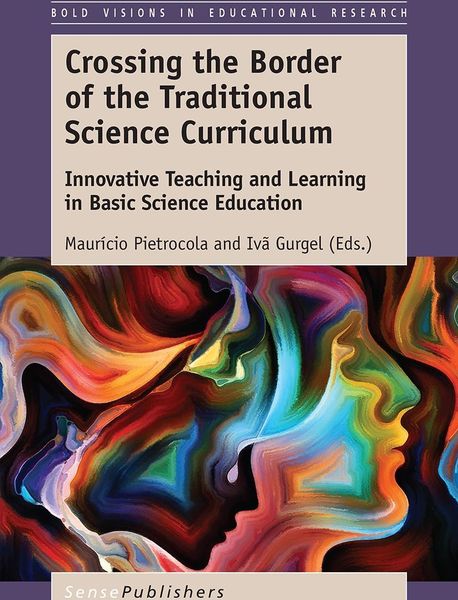
Crossing the Border of the Traditional Science Curriculum Innovative Teaching and Learning in Basic Science Education
-
- Einzelkauf Download ausgewählt
-
Sprache:Englisch
Fr. 44.90
inkl. gesetzl. MwSt.Beschreibung
Produktdetails
Format
Kopierschutz
Nein
Family Sharing
Nein
Text-to-Speech
Nein
Erscheinungsdatum
24.08.2017
Herausgeber
Maurício Pietrocola + weitereVerlag
SensePublishersSeitenzahl
16 (Printausgabe)
Dateigröße
13560 KB
Auflage
1st ed. 2017
Sprache
Englisch
EAN
9789463510417
Nations worldwide consider education an important tool for economic and social development, and the use of innovative strategies to prepare students for the acquisition of knowledge and skills is currently considered the most effective strategy for nurturing engaged, informed learners. In the last decade especially, European countries have promoted a series of revisions to their curricula and in the ways teachers are trained to put these into practice. Updating curriculum contents, pedagogical facilities (for example, computers in schools), and teaching and learning strategies should be seen as a routine task, since social and pedagogical needs change over time. Nevertheless, educational institutions and actors (educational departments, schools, teachers, and even students) normally tend to be committed to traditional practices. As a result of this resistance to change within educational systems, implementing educational innovation is a big challenge.
The authors of the present volume have been involved with curriculum development since 2003. This work is an opportunity to present the results of more than a decade of research into experimental, inventive approaches to science education. Most chapters concern innovative strategies for the teaching and learning of new contents, as well as methods for learning to teach them at the pre-university school level. The research is focused on understanding the pedagogical issues around the process of innovation, and the findings are grounded in analyses of the limits and possibilities of teachers' and students' practices in schools.
The authors of the present volume have been involved with curriculum development since 2003. This work is an opportunity to present the results of more than a decade of research into experimental, inventive approaches to science education. Most chapters concern innovative strategies for the teaching and learning of new contents, as well as methods for learning to teach them at the pre-university school level. The research is focused on understanding the pedagogical issues around the process of innovation, and the findings are grounded in analyses of the limits and possibilities of teachers' and students' practices in schools.
Kundinnen und Kunden meinen
Verfassen Sie die erste Bewertung zu diesem Artikel
Helfen Sie anderen Kund*innen durch Ihre Meinung