Gutscheinbedingungen

*Gültig bis 05.07.2026 auf (fast) alles. Ausgeschlossen sind Smartboxen, Zeitschriften, Tickets, Lebensmittel, Gaming-Elektroartikel, Tinte/Toner, Gutscheine, Geschenkkarten, Blumen und Abos | Einlösbar in allen Buchhandlungen von Orell Füssli, Barth Bücher, Buchladen Rapunzel, Papeterie Köhler, Schuler Orell Füssli, Stauffacher und ZAP unter Vorweisung des Gutscheins, auf www.orellfüssli.ch durch Eingabe des Gutscheincodes. Beim Service „eBooks verschenken“ und bei eBook-Käufen via eReader nicht einlösbar | Mindesteinkaufswert: Fr. 30.- | Nicht mit anderen Rabatten kumulierbar.

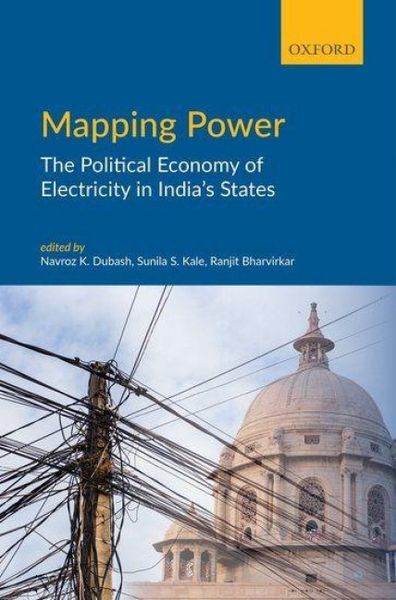
Produktbild: Mapping Power

Mapping Power The Political Economy of Electricity in India's States

Fr. 71.90

inkl. gesetzl. MwSt., Versandkostenfrei


Beschreibung

Produktdetails

Einband

Gebundene Ausgabe

Erscheinungsdatum

06.02.2019

Herausgeber

Navroz K. Dubash + weitere

Verlag

Oxford University Press

Seitenzahl

376

Maße (L/B/H)

22.1/15/2.8 cm

Gewicht

567 g

Sprache

Englisch

ISBN

978-0-19-948782-0

Beschreibung

Portrait

Ranjit Bharvirkar directs the India program at the Regulatory Assistance Project, a global non-profit focused on energy policy and climate change. He has more than 16 years of experience in electricity policy analysis and technical advice and assistance to state- and national-level policymakers in the U.S. and India. Mr. Bharvirkar recently contributed to India's Renewable Electricity Roadmap Initiative undertaken by the ?Government of India. Mr. Bharvirkar has co-authored several journal articles, conference papers, technical reports, discussion papers, and a book chapter. Navroz K Dubash is a senior fellow at CPR. He works on climate change policy and governance, energy and water policy, and regulation and has published widely in these areas. He has been an author on the Intergovernmental Panel on Climate Change, and a member of Government of India committees on climate change, energy and water. He serves on the editorial boards of several journals including Climate Policy, Global Environmental Politics, and Energy Research in Social Science. In 2015 he was conferred the 12th T N Khoshoo Memorial Award in recognition of the impact of his work on Indian climate change policy and the international discourse on global climate governance. Dr. Dubash holds an MA and PhD in energy and resources from the University of California, Berkeley, and an AB in public and international affairs from Princeton University. Sunila S. Kale is Associate Professor in the Jackson School of International Studies and Chair of South Asia Studies at the University of Washington. Her teaching and research focus on the politics and political economy of India and South Asia, history and politics of energy and electricity, development studies, and the history and present-day manifestations of capitalism.

Produktdetails

Einband

Gebundene Ausgabe

Erscheinungsdatum

06.02.2019

Herausgeber

Verlag

Oxford University Press

Seitenzahl

376

Maße (L/B/H)

22.1/15/2.8 cm

Gewicht

567 g

Sprache

Englisch

ISBN

978-0-19-948782-0

Herstelleradresse

Libri GmbH
Europaallee 1
36244 Bad Hersfeld
DE

Email: gpsr@libri.de

Noch keine Bewertungen vorhanden

Verfassen Sie die erste Bewertung zu diesem Artikel

Helfen Sie anderen Kundinnen und Kunden durch Ihre Meinung.

Kundinnen und Kunden meinen

Bewertungen (0)

  • Produktbild: Mapping Power
    • List of Figures and Tables
      List of Abbreviations

      Introduction: A Framework for Mapping Power
      Sunila S. Kale, Navroz K. Dubash and Ranjit Bharvirkar

      1. Transforming Reforms: Hype, Hostility and Placation in Andhra Pradesh's Power Sector Reforms
      Ashwini K. Swain

      2. Disempowerment of Incumbent Elite and Governance: A Case of Bihar's Electricity Sector
      Md. Zakaria Siddiqui

      3. Wielding Power in the Capital: The Case of the Delhi Electricity Distribution Sector
      Megha Kaladharan

      4. Gujarat's Success in Efficient Electricity Distribution: A Call for Proactive Governance to Further Gains
      Siddharth Sareen

      5. Extractive States and Layered Conflict: The Case of Jharkhand's Electricity Sector
      Rohit Chandra

      6. Efficiency and Welfare: the Tightrope Walk in Karnataka's Power Sector
      Meera Sudhakar

      7. Poverty in the Midst of Abundance: Repressive Populism, Bureaucratization, and Supply-Side Bias in Madhya Pradesh's Power Sector
      Ashwini K. Swain

      8. Paradoxes of Distribution

    • Reforms in Maharashtra
      Kalpana Dixit

      9. Endless Restructuring of the Power Sector in Odisha: A Sisyphean Tale?
      Mrigakshi Das and Mahaprajna Nayak

      10. Protecting Power: The Politics of Partial Reforms in Punjab
      Ashwini K. Swain

      11. Electricity Distribution in Rajasthan: Unbundling theRecurrent Failures of a Politicised Sector
      Siddharth Sareen

      12. Tamil Nadu Power Sector - the Saga of the Subsidy Trap
      Hema Ramakrishnan

      13. Stalled Reform in the Face of Electoral Fears: Uttar Pradesh's Electricity Distribution Sector
      Jonathan Balls

      14. Uttarakhand: The Golden Combination of Cheap Energy and a Large Industrial Base
      Jonathan Balls

      15. Insulated Wires: The Precarious Rise of West Bengal's Power Sector
      Elizabeth Chatterjee

      Mapping Power: Comparative Analysis across States
      Navroz K. Dubash, Ranjit Bharvirkar and Sunila S. Kale

      Index
      About the Editors and Contributors.