Band 119
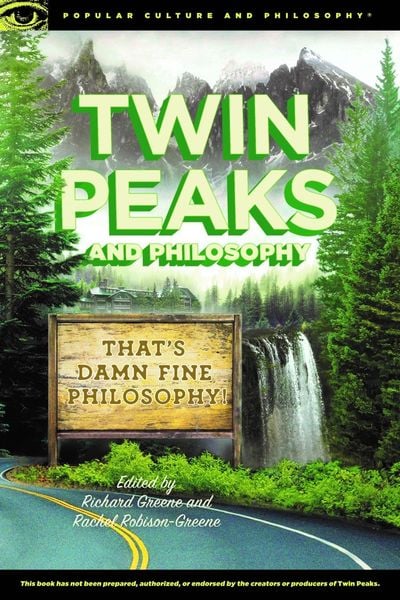
Twin Peaks and Philosophy That's Damn Fine Philosophy!
Aus der Reihe
Popular Culture and Philosophy
-
- Taschenbuch
- eBook ausgewählt
-
Form:Einzelkauf Download
-
Sprache:Englisch
Fr. 21.90
inkl. gesetzl. MwSt.Beschreibung
Produktdetails
Format
ePUB
Kopierschutz
Ja
Family Sharing
Nein
Text-to-Speech
Ja
Erscheinungsdatum
07.08.2018
Herausgeber
Richard Greene + weitereVerlag
Open CourtSeitenzahl
(Printausgabe)
Dateigröße
1273 KB
Sprache
Englisch
EAN
9780812699876
2017 saw the triumphant return of the weird and haunting TV show Twin Peaks, with most of the original cast, after a gap of twenty-five years. Twin Peaks and Philosophy finally answers that puzzling question: What is Twin Peaks really about?
Twin Peaks is about evil in various forms, and poses the question: What's the worst kind of evil? Can the everyday evil of humans in a small mountain town ever be as evil as the evil of alien supernatural beings? Or is the evil of non-humans actually less threatening because it's so strange and unaccountable? And does the influence of uncanny forces somehow excuse the crimes committed by regular folks? Some Twin Peaks characters try to confine evil by sticking to their own moral code, as in the cast of Albert Rosenfeld, who refuses to disguise his feelings and upsets everyone by his forthright honesty.
Twin Peaks is about responsibility, both legal and moral. Who is really responsible for the death of Laura Palmer and other murder victims? Although Leland has been revealed as Laura's actual killer, the show suggests that no one in town was without some responsibility. And was Leland even guilty at all, if he was not in control of his own mind or body?
Twin Peaks is about the quest for self-knowledge and the dangers of that quest, as Agent Cooper keeps learning something new about himself, as well as about the troubled townspeople. The Buddhist Cooper has to confront his own shadow side, culminating in the rite of passage at the Black Lodge, at the end of Season Two.
Twin Peaks is about madness, sanity, the borderline between them, and the necessity of some madness to make sense of sanity. The outwardly super-normal if somewhat eccentric Agent Dale Cooper is the inspired, deranged, and dedicated shaman who seeks the truth by coming to terms with the reality of unreason, partly through his dreams and partly through his existential encounters with giants, logs, outer space, and other unexpected sources. Cooper challenges official law enforcement's over-reliance on science.
Twin Peaks is about the imagination run wild, moving from metaphysics to pataphysics-the discipline invented by Alfred Jarry, which probes the assumption that anything can happen and discovers the laws governing events which constitute exceptions to all laws.
Twin Peaks is about evil in various forms, and poses the question: What's the worst kind of evil? Can the everyday evil of humans in a small mountain town ever be as evil as the evil of alien supernatural beings? Or is the evil of non-humans actually less threatening because it's so strange and unaccountable? And does the influence of uncanny forces somehow excuse the crimes committed by regular folks? Some Twin Peaks characters try to confine evil by sticking to their own moral code, as in the cast of Albert Rosenfeld, who refuses to disguise his feelings and upsets everyone by his forthright honesty.
Twin Peaks is about responsibility, both legal and moral. Who is really responsible for the death of Laura Palmer and other murder victims? Although Leland has been revealed as Laura's actual killer, the show suggests that no one in town was without some responsibility. And was Leland even guilty at all, if he was not in control of his own mind or body?
Twin Peaks is about the quest for self-knowledge and the dangers of that quest, as Agent Cooper keeps learning something new about himself, as well as about the troubled townspeople. The Buddhist Cooper has to confront his own shadow side, culminating in the rite of passage at the Black Lodge, at the end of Season Two.
Twin Peaks is about madness, sanity, the borderline between them, and the necessity of some madness to make sense of sanity. The outwardly super-normal if somewhat eccentric Agent Dale Cooper is the inspired, deranged, and dedicated shaman who seeks the truth by coming to terms with the reality of unreason, partly through his dreams and partly through his existential encounters with giants, logs, outer space, and other unexpected sources. Cooper challenges official law enforcement's over-reliance on science.
Twin Peaks is about the imagination run wild, moving from metaphysics to pataphysics-the discipline invented by Alfred Jarry, which probes the assumption that anything can happen and discovers the laws governing events which constitute exceptions to all laws.
Kundinnen und Kunden meinen
Verfassen Sie die erste Bewertung zu diesem Artikel
Helfen Sie anderen Kund*innen durch Ihre Meinung