KI-Beratung Beta

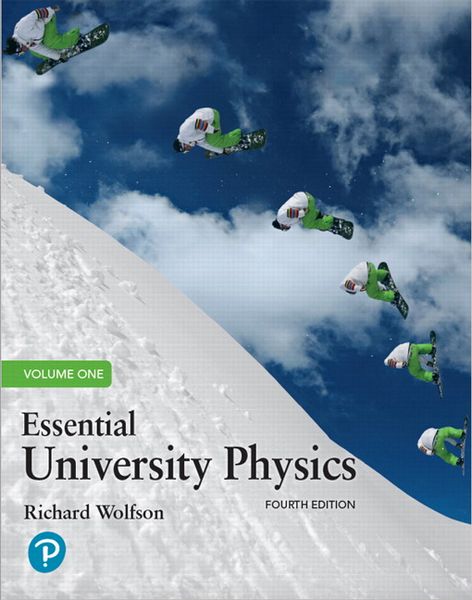
Produktbild: Essential University Physics, Volume 1

Essential University Physics, Volume 1

Fr. 166.00

inkl. gesetzl. MwSt., Versandkostenfrei


Beschreibung

Produktdetails

Einband

Taschenbuch

Erscheinungsdatum

28.09.2024

Verlag

Pearson Studium

Seitenzahl

432

Maße (L/B/H)

27.6/21.6/2.4 cm

Gewicht

1065 g

Auflage

4

Sprache

Englisch

ISBN

978-0-13-498855-9

Beschreibung

Produktdetails

Einband

Taschenbuch

Erscheinungsdatum

28.09.2024

Verlag

Pearson Studium

Seitenzahl

432

Maße (L/B/H)

27.6/21.6/2.4 cm

Gewicht

1065 g

Auflage

4

Sprache

Englisch

ISBN

978-0-13-498855-9

Herstelleradresse

Pearson
St.-Martin-Straße 82
81541 München
DE

Email: salesde@pearson.com

Noch keine Bewertungen vorhanden

Verfassen Sie die erste Bewertung zu diesem Artikel

Helfen Sie anderen Kundinnen und Kunden durch Ihre Meinung.

Kundinnen und Kunden meinen

Bewertungen (0)

  • Produktbild: Essential University Physics, Volume 1
  • Essential University Physics, 4th Edition is available in 3 versions:
    • Full Version, All Chapters: Chs 1-39
    • Volume 1: Chs 1-19
    • Volume 2: Chs 20-39
    1. Doing Physics
    • 1.1 Realms of Physics
    • 1.2 Measurements and Units
    • 1.3 Working with Numbers
    • 1.4 Strategies for Learning Physics
    PART ONE: MECHANICS
    1. Motion in a Straight Line
    • 2.1 Average Motion
    • 2.2 Instantaneous Velocity
    • 2.3 Acceleration
    • 2.4 Constant Acceleration
    • 2.5 The Acceleration of Gravity
    • 2.6 When Acceleration Isn't Constant
    1. Motion in Two and Three Dimensions
    • 3.1 Vectors
    • 3.2 Velocity and Acceleration Vectors
    • 3.3 Relative Motion
    • 3.4 Constant Acceleration
    • 3.5 Projectile Motion
    • 3.6 Uniform Circular Motion
    1. Force and Motion
    • 4.1 The Wrong Question
    • 4.2 Newton's First and Second Laws
    • 4.3 Forces
    • 4.4 The Force of Gravity
    • 4.5 Using Newton's Second Law
    • 4.6 Newton's Third Law
    1. Using Newton's Laws
    • 5.1 Using Newton's Second Law
    • 5.2 Multiple Objects
    • 5.3 Circular Motion
    • 5.4 Friction
    • 5.5 Drag Forces
    1. Energy, Work, and Power
    • 6.1 Energy
    • 6.2 Work
    • 6.3 Forces That Vary
    • 6.4 Kinetic Energy
    • 6.5 Power
    1. Conservation of Energy
    • 7.1 Conservative and Nonconservative Forces
    • 7.2 Potential Energy
    • 7.3 Conservation of Mechanical Energy
    • 7.4 Nonconservative Forces
    • 7.5 Conservation of Energy
    • 7.6 Potential-Energy Curves
    1. Gravity
    • 8.1 Toward a Law of Gravity
    • 8.2 Universal Gravitation
    • 8.3 Orbital Motion
    • 8.4 Gravitational Energy
    • 8.5 The Gravitational Field
    1. Systems of Particles
    • 9.1 Center of Mass
    • 9.2 Momentum
    • 9.3 Kinetic Energy of a System
    • 9.4 Collisions
    • 9.5 Totally Inelastic Collisions
    • 9.6 Elastic Collisions
    1. Rotational Motion
    • 10.1 Angular Velocity and Acceleration
    • 10.2 Torque
    • 10.3 Rotational Inertia and the Analog of Newton's Law
    • 10.4 Rotational Energy
    • 10.5 Rolling Motion
    1. Rotational Vectors and Angular Momentum
    • 11.1 Angular Velocity and Acceleration Vectors
    • 11.2 Torque and the Vector Cross Product
    • 11.3 Angular Momentum
    • 11.4 Conservation of Angular Momentum
    • 11.5 Gyroscopes and Precession
    1. Static Equilibrium
    • 12.1 Conditions for Equilibrium
    • 12.2 Center of Gravity
    • 12.3 Examples of Static Equilibrium
    • 12.4 Stability
    PART TWO: OSCILLATIONS, WAVES, AND FLUIDS
    1. Oscillatory Motion
    • 13.1 Describing Oscillatory Motion
    • 13.2 Simple Harmonic Motion
    • 13.3 Applications of Simple Harmonic Motion
    • 13.4 Circular Motion and Harmonic Motion
    • 13.5 Energy in Simple Harmonic Motion
    • 13.6 Damped Harmonic Motion
    • 13.7 Driven Oscillations and Resonance
    1. 14. Wave Motion
    • 14.1 Waves and Their Properties
    • 14.2 Wave Math
    • 14.3 Waves on a String
    • 14.4 Wave Energy
    • 14.5 Sound Waves
    • 14.6 Interference
    • 14.7 Reflection and Refraction
    • 14.8 Standing Waves
    • 14.9 The Doppler Effect and Shock Waves
    1. Fluid Motion
    • 15.1 Density and Pressure
    • 15.2 Hydrostatic Equilibrium
    • 15.3 Archimedes' Principle and Buoyancy
    • 15.4 Fluid Dynamics
    • 15.5 Applications of Fluid Dynamics
    • 15.6 Viscosity and Turbulence
    PART THREE: THERMODYNAMICS
    1. Temperature and Heat
    • 16.1 Heat, Temperature, and Thermodynamic Equilibrium
    • 16.2 Heat Capacity and Specific Heat
    • 16.3 Heat Transfer
    • 16.4 Thermal-Energy Balance
    1. The Thermal Behavior of Matter
    • 17.1 Gases
    • 17.2 Phase Changes
    • 17.3 Thermal Expansion
    1. Heat, Work, and the First Law of Thermodynamics
    • 18.1 The First Law of Thermodynamics
    • 18.2 Thermodynamic Processes
    • 18.3 Specific Heats of an Ideal Gas
    1. The Second Law of Thermodynamics
    • 19.1 Reversibility and Irreversibility
    • 19.2 The Second Law of Thermodynamics
    • 19.3 Applications of the Second Law
    • 19.4 Entropy and Energy Quality
    PART FOUR: ELECTROMAGNETISM
    1. Electric Charge, Force, and Field
    • 20.1 Electric Charge
    • 20.2 Coulomb's Law
    • 20.3 The Electric Field
    • 20.4 Fields of Charge Distributions
    • 20.5 Matter in Electric Fields
    1. Gauss's Law
    • 21.1 Electric Field Lines
    • 21.2 Electric Field and Electric Flux
    • 21.3 Gauss's Law
    • 21.4 Using Gauss's Law
    • 21.5 Fields of Arbitrary Charge Distributions
    • 21.6 Gauss's Law and Conductors
    1. Electric Potential
    • 22.1 Electric Potential Difference
    • 22.2 Calculating Potential Difference
    • 22.3 Potential Difference and the Electric Field
    • 22.4 Charged Conductors
    1. Electrostatic Energy and Capacitors
    • 23.1 Electrostatic Energy
    • 23.2 Capacitors
    • 23.3 Using Capacitors
    • 23.4 Energy in the Electric Field
    1. Electric Current
    • 24.1 Electric Current
    • 24.2 Conduction Mechanisms
    • 24.3 Resistance and Ohm's Law
    • 24.4 Electric Power
    • 24.5 Electrical Safety
    1. Electric Circuits
    • 25.1 Circuits, Symbols, and Electromotive Force
    • 25.2 Series and Parallel Resistors
    • 25.3 Kirchhoff's Laws and Multiloop Circuits
    • 25.4 Electrical Measurements
    • 25.5 Capacitors in Circuits
    1. Magnetism: Force and Field
    • 26.1 What Is Magnetism?
    • 26.2 Magnetic Force and Field
    • 26.3 Charged Particles in Magnetic Fields
    • 26.4 The Magnetic Force on a Current
    • 26.5 Origin of the Magnetic Field
    • 26.6 Magnetic Dipoles
    • 26.7 Magnetic Matter
    • 26.8 Ampère's Law
    1. Electromagnetic Induction
    • 27.1 Induced Currents
    • 27.2 Faraday's Law
    • 27.3 Induction and Energy
    • 27.4 Inductance
    • 27.5 Magnetic Energy
    • 27.6 Induced Electric Fields
    1. Alternating-Current Circuits
    • 28.1 Alternating Current
    • 28.2 Circuit Elements in AC Circuits
    • 28.3 LC Circuits
    • 28.4 Driven RLC Circuits and Resonance
    • 28.5 Power in AC Circuits
    • 28.6 Transformers and Power Supplies
    1. Maxwell's Equations and Electromagnetic Waves
    • 29.1 The Four Laws of Electromagnetism
    • 29.2 Ambiguity in Ampère's Law
    • 29.3 Maxwell's Equations
    • 29.4 Electromagnetic Waves
    • 29.5 Properties of Electromagnetic Waves
    • 29.6 The Electromagnetic Spectrum
    • 29.7 Producing Electromagnetic Waves
    • 29.8 Energy and Momentum in Electromagnetic Waves
    PART FIVE: OPTICS
    1. Reflection and Refraction
    • 30.1 Reflection
    • 30.2 Refraction
    • 30.3 Total Internal Reflection
    • 30.4 Dispersion
    1. Images and Optical Instruments
    • 31.1 Images with Mirrors
    • 31.2 Images with Lenses
    • 31.3 Refraction in Lenses: The Details
    • 31.4 Optical Instruments
    1. Interference and Diffraction
    • 32.1 Coherence and Interference
    • 32.2 Double-Slit Interference
    • 32.3 Multiple-Slit Interference and Diffraction Gratings
    • 32.4 Interferometry
    • 32.5 Huygens' Principle and Diffraction
    • 32.6 The Diffraction Limit
    PART SIX: MODERN PHYSICS
    1. Relativity
    • 33.1 Speed c Relative to What?
    • 33.2 Matter, Motion, and the Ether
    • 33.3 Special Relativity
    • 33.4 Space and Time in Relativity
    • 33.5 Simultaneity Is Relative
    • 33.6 The Lorentz Transformations
    • 33.7 Energy and Momentum in Relativity
    • 33.8 Electromagnetism and Relativity
    • 33.9 General Relativity
    1. Particles and Waves
    • 34.1 Toward Quantum Theory
    • 34.2 Blackbody Radiation
    • 34.3 Photons
    • 34.4 Atomic Spectra and the Bohr Atom
    • 34.5 Matter Waves
    • 34.6 The Uncertainty Principle
    • 34.7 Complementarity
    1. Quantum Mechanics
    • 35.1 Particles, Waves, and Probability
    • 35.2 The Schrödinger Equation
    • 35.3 Particles and Potentials
    • 35.4 Quantum Mechanics in Three Dimensions
    • 35.5 Relativistic Quantum Mechanics
    1. Atomic Physics
    • 36.1 The Hydrogen Atom
    • 36.2 Electron Spin
    • 36.3 The Exclusion Principle
    • 36.4 Multielectron Atoms and the Periodic Table
    • 36.5 Transitions and Atomic Spectra
    1. Molecules and Solids
    • 37.1 Molecular Bonding
    • 37.2 Molecular Energy Levels
    • 37.3 Solids
    • 37.4 Superconductivity
    1. Nuclear Physics
    • 38.1 Elements, Isotopes, and Nuclear Structure
    • 38.2 Radioactivity
    • 38.3 Binding Energy and Nucleosynthesis
    • 38.4 Nuclear Fission
    • 38.5 Nuclear Fusion
    1. From Quarks to the Cosmos
    • 39.1 Particles and Forces
    • 39.2 Particles and More Particles
    • 39.3 Quarks and the Standard Model
    • 39.4 Unification
    • 39.5 The Evolving Universe
    APPENDICES
    • A. Mathematics
    • B. The International System of Units (SI)
    • C. Conversion Factors
    • D. The Elements
    • E. Astrophysical Data
    • Answers to Odd-Numbered Problems