• Produktbild: Historical Buildings and Energy
  • Produktbild: Historical Buildings and Energy

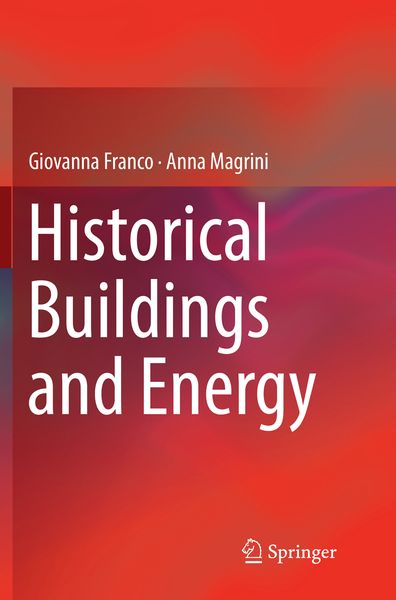
Historical Buildings and Energy

Fr. 192.00

inkl. gesetzl. MwSt., Versandkostenfrei


Beschreibung

Produktdetails

Einband

Taschenbuch

Erscheinungsdatum

04.05.2018

Abbildungen

X, 112 illus., 104 illus. in color., schwarz-weiss Illustrationen, farbige Illustrationen

Verlag

Springer

Seitenzahl

221

Maße (L/B/H)

23.5/15.5/1.3 cm

Gewicht

359 g

Auflage

Softcover reprint of the original 1st edition 2017

Sprache

Englisch

ISBN

978-3-319-84947-8

Beschreibung

Produktdetails

Einband

Taschenbuch

Erscheinungsdatum

04.05.2018

Abbildungen

X, 112 illus., 104 illus. in color., schwarz-weiss Illustrationen, farbige Illustrationen

Verlag

Springer

Seitenzahl

221

Maße (L/B/H)

23.5/15.5/1.3 cm

Gewicht

359 g

Auflage

Softcover reprint of the original 1st edition 2017

Sprache

Englisch

ISBN

978-3-319-84947-8

Herstelleradresse

Springer-Verlag KG
Sachsenplatz 4-6
1201 Wien
AT

Email: GPSR Kontakt

Noch keine Bewertungen vorhanden

Verfassen Sie die erste Bewertung zu diesem Artikel

Helfen Sie anderen Kundinnen und Kunden durch Ihre Meinung.

Kundinnen und Kunden meinen

Bewertungen (0)

  • Produktbild: Historical Buildings and Energy
  • Produktbild: Historical Buildings and Energy
  • Part I Methodology1 Contexts and Methodology (Giovanna Franco) 1.1 The Main Principles 1.1.1 Heritage as an Active Resource 1.1.2 Heritage and Sustainability: Aporias and Conflicts 1.2 The Contexts 1.2.1 Research and Technological Innovation 1.2.2 Technical Regulations and Guidelines 1.3 The Questions 1.3.1 The Smart Grid System and Historical Heritage 1.3.2 Quality of the Renovation Process and Sustainable Management 1.3.3 The Role of the Tools 1.4 Energy Efficiency in Historical Heritage and Applied Research 1.4.1 The System of Knowledge, Data Acquisition, Cataloguing and Management 1.4.2 The Evaluations 1.4.3 The Strategies 1.5 The Structure of the Book References2 Conserving-Restoring for the Future What we Inherited from the Past (Stefano F. Musso) 2.1 The Reasons of Conservation-Restoration of Built Environment Today 2.2 A Brief Historical Profile of the Discipline  2.3 Methodological and Operational Issues and Tools 2.4 Studies and Researches 2.5 Values, Impacts, Consequences of the Conservation-Restoration Interventions 2.6 The Specificity of any Conservation-Restoration Project 2.7 Conservation-Restoration as an Open and Transversal Field 2.8 New Reasons and Challenges for Conservation-Restoration in the Future World References3 Energy Efficiency and HVAC system in existing and historical buildings (Francesca d'Ambrosio Alfano, Livio de Santoli) 3.1 Introduction 3.2 The EN 16883 Standard 3.3 AiCARR's Guide 3.3.1 The Energy Efficiency as Preservation Tool 3.3.2 HVAC Systems in Historical Buildings 3.3.3 Thermal Insulation og the Envelope of Historical Buildings 3.3.4 AiCARR’s Procedure to Improve the Energy Efficiency in Historical Buildings 3.3.5 Energy Efficiency and Cultural Landscape: a Tool to Assess their Integration< 3.4 Conclusions References4 Thermal Behaviour of Historical Buildings, Materials and Components: Methodological Framework, Calculation, Results (Anna Magrini) 4.1 Introduction 4.2 The Calculation Method of the Energy Performance of Buildings 4.3 Main Parameters for the Thermal Characterization of Walls 4.3.1 Thermal Transmittance 4. 3.2 Thermal Bridges 4.3.3 Dynamic Thermal Characteristics of the Envelope 4.3.4 Vapour Transmission through Walls 4.4 Some Typologies of Walls and their Characteristics 4.5 Thermo-hygrometric Analysis in the Energy Refurbishment 2.5.1 Effects of the Insulation on Historic Building Walls ReferencesPart II Enhancing Energy Efficiency in a Monumental Complex: a Feasibility Study5 Energy and Heritage. Development on a Case Study (Giovanna Franco) 5.1 The Complex of the Albergo dei Poveri in Genoa 5.2 Brief History of the Settlement 5.3 Morphological and Architectural Features 5.4 Current Use of the Building 5.5 For a Sustainable Cognitive Approach: Acquisition, Cataloguing and Management of Information 5.6 Improving the Energy Performance of the Complex: a Feasibility Study References6 Constructive Techniques in Historical Buildings (Simonetta Acacia, Marta Casanova) 6.1 Introduction 6.2 The Elevation Structure: the Walls 6.3 Vaults and Wooden Floors 6.4 The Roof Structures 6.5 The Windows References7 Thermal Behaviour and Energy Demand  (Giovanna Franco, Marco Cartesegna) 7.1 General Masterplan: Identification of New Compatible Uses 7.2 Quantifying Energy Needs: Power Demand for Heating 7.2.1 Thermal Characteristic of Dispersive Elements: External Walls 7.2.2 Roofs 7.2.3 Attic floors 7.2.4 Windows 7.2.5 Prerequisites for the New Uses and Calculation 7.3 Energy demand for Hot Water 7.4 The Electricity Demand  7.4.1 Electricity Demand for Lighting 7.4.2 Electricity Demand for Other Electrical Appliances 7.4.3 Measuring the Air Conditioning Systems 7.5 Overall Calculation of Energy Consumption 7.5.1 Consumption of Electricity and Thermal Energy for Summer Cooling 7.5.2 Consumption of electricity and thermal energy for winter heating 7.5.3 Electricity consumption for extraction in communal bathrooms 7.5.4 Consumption of electricity and thermal energy for hot water 7.5.5 Consumption of electricity for lighting and supplying other apparatus8 Strategies for Energy Saving and Efficiency: Technical Feasibility, Compatibility, Energy Balance (Giovanna Franco, Marco Cartesegna) 8.1 Improving the Thermal Performance of the Historical Buildings 8.1.1 Insulation of the Roof  8.2.1 Insulation of the Attic Floors 8.2.1.1 Masonry Brick Vaults 8.2.1.2 Wooden Structure and Plastered Wattle Vaults 8.2.1.3 Brick Arches and Plastered Wattle Vaults 8.2.1.4 Reinforced Concrete Floors 8.2.1.5 Plasterboard Ceilings 8.3.1 Insulation of the External Walls 8.4.1 External Windows: Conservation, Restoration and Addition 8.2 Energy Gains from the Insulating Techniques 8.3 The Cogeneration System: Installation of Micro-turbines 8.3.1 Preliminary Analysis of the Cogeneration Units 8.3.2 Coverage of Thermal and Electrical Loads through Cogeneration Units 8.3.3 Calculation during Winter and Summer Periods 8.3.4 Operation Mode of "Thermal Tracking" Cogenerators 8.4 Micro-generation through Solar Energy References9 Impacts of Solar-powered Panels on the Historical Environment (Giovanna Franco) 9.1 Efficacy, Efficiency and Life Cycle Assessment 9.2 Means and Aims: Integration, Mimesis and Alteration 9.3 Identification of the Factors and Criteria for Compatibility 9.4 Compatibility Criteria: General Recommendations 9.4.1 Interventions on historical buildings, either isolated or aggregated 9.4.2 Intervention on flat roofs 9.4.3 Interventions on annexes to the building or projecting elements 9.4.4 Interventions on recently constructed buildings 9.5 Recommendations relating to Quantitative and Qualitative Factors 9.5.1Surface area and coverage ratio 9.5.2 Height 9.5.3 Width  9.5.4 Shape  9.5.5 Colour  9.5.6 Texture 9.5.6 Tilt 9.5.6 Attachment/anchoring method 9.5.7 Arrangement: discrete or continuous 9.5.8 Aggregation, proportion and alignment  References