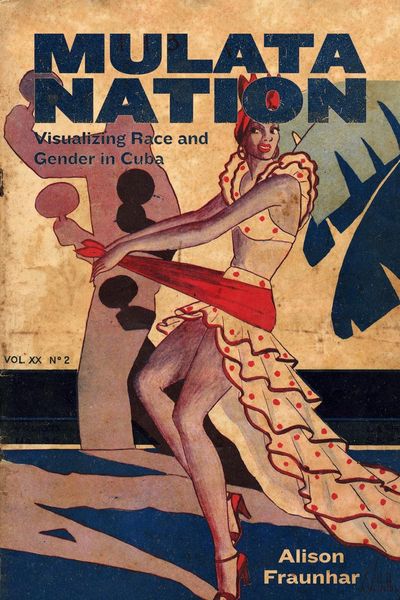
Mulata Nation Visualizing Race and Gender in Cuba
Aus der Reihe
Caribbean Studies Series
-
- Hardcover
- Taschenbuch
- eBook ausgewählt
-
Form:Einzelkauf Download
-
Sprache:Englisch
Fr. 32.90
inkl. gesetzl. MwSt.Beschreibung
Produktdetails
Format
ePUB
Kopierschutz
Ja
Family Sharing
Nein
Text-to-Speech
Ja
Erscheinungsdatum
24.08.2018
Verlag
Penguin Random House South AfricaSeitenzahl
272 (Printausgabe)
Dateigröße
30468 KB
Sprache
Englisch
EAN
9781496814449
Repeatedly and powerfully throughout Cuban history, the mulata, a woman of mixed racial identity, features prominently in Cuban visual and performative culture. Tracing the figure, Alison Fraunhar looks at the representation and performance in both elite and popular culture. She also tracks how characteristics associated with these women have accrued across the Atlantic world.
Widely understood to embody the bridge between European subject and African other, the mulata contains the sensuality attributed to Africans in a body more closely resembling the European ideal of beauty. This symbol bears far-reaching implications, with shifting, contradictory cultural meanings in Cuba. Fraunhar explores these complex paradigms, how, why, and for whom the image was useful, and how it was both subverted and asserted from the colonial period to the present. From the early seventeenth century through Cuban independence in 1899 up to the late revolutionary era, Fraunhar illustrates the ambiguous figure's role in nationhood, citizenship, and commercialism. She analyzes images including key examples of nineteenth-century graphic arts, avant-garde painting and magazine covers of the Republican era, cabaret and film performance, and contemporary iterations of gender.
Fraunhar's study stands out for attending to the phenomenon of mulataje not only in elite production such as painting, but also in popular forms: popular theater, print culture, later films, and other media where stereotypes take hold. Indeed, in contemporary Cuba, mulataje remains a popular theme with Cubans as well as foreigners in drag shows, reflecting queerness in visual culture.
Widely understood to embody the bridge between European subject and African other, the mulata contains the sensuality attributed to Africans in a body more closely resembling the European ideal of beauty. This symbol bears far-reaching implications, with shifting, contradictory cultural meanings in Cuba. Fraunhar explores these complex paradigms, how, why, and for whom the image was useful, and how it was both subverted and asserted from the colonial period to the present. From the early seventeenth century through Cuban independence in 1899 up to the late revolutionary era, Fraunhar illustrates the ambiguous figure's role in nationhood, citizenship, and commercialism. She analyzes images including key examples of nineteenth-century graphic arts, avant-garde painting and magazine covers of the Republican era, cabaret and film performance, and contemporary iterations of gender.
Fraunhar's study stands out for attending to the phenomenon of mulataje not only in elite production such as painting, but also in popular forms: popular theater, print culture, later films, and other media where stereotypes take hold. Indeed, in contemporary Cuba, mulataje remains a popular theme with Cubans as well as foreigners in drag shows, reflecting queerness in visual culture.
Kundinnen und Kunden meinen
Verfassen Sie die erste Bewertung zu diesem Artikel
Helfen Sie anderen Kund*innen durch Ihre Meinung