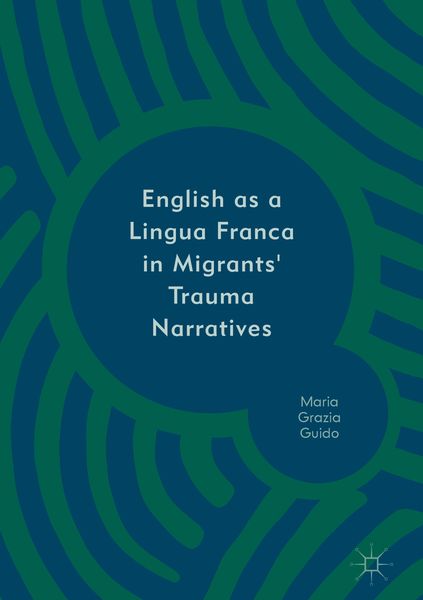
English as a Lingua Franca in Migrants' Trauma Narratives
Fr. 120.00
inkl. gesetzl. MwSt.,
Beschreibung
Produktdetails
Einband
Gebundene Ausgabe
Erscheinungsdatum
27.02.2019
Abbildungen
XV, 3 illus., schwarz-weiss Illustrationen
Verlag
Palgrave Macmillan UKSeitenzahl
228
Maße (L/B/H)
21.6/15.3/1.8 cm
Gewicht
433 g
Auflage
1st ed. 2018
Sprache
Englisch
ISBN
978-1-137-58299-7
This book examines how trauma is experienced and narrated differently across languages and cultures, drawing on rich ethnographic case studies and a novel cognitive-linguistic approach to analyse the variations of English as a Lingua Franca (ELF) used in the narratives of West-African migrants and refugees in the course of intercultural encounters with Italian experts from domain-specific fields of discourse (including legal, medical, religious and cultural professionals). It examines the ways in which such experts interpret the migrants’ trauma narratives by applying discourse conventions from within their communities of practice, as well as their own native linguacultural norms. It argues persuasively for the development of a ‘hybrid ELF mode’ of intercultural communication to be used by experts in charge of unequal encounters in specialized migration contexts that can accommodate different culture-bound categorizations of trauma. This timely and important work will appeal in particular to students and scholars of applied linguistics, discourse analysis, cognitive linguistics, intercultural communication, pragmalinguistics, migration studies and healthcare communication.
Kundinnen und Kunden meinen
Verfassen Sie die erste Bewertung zu diesem Artikel
Helfen Sie anderen Kund*innen durch Ihre Meinung