Beschreibung
Produktdetails
Einband
Taschenbuch
Erscheinungsdatum
12.03.2019
Verlag
Human Kinetics PublishersSeitenzahl
328
Maße (L/B/H)
27.9/21.5/2.5 cm
Gewicht
922 g
Sprache
Englisch
ISBN
978-1-4925-6251-1
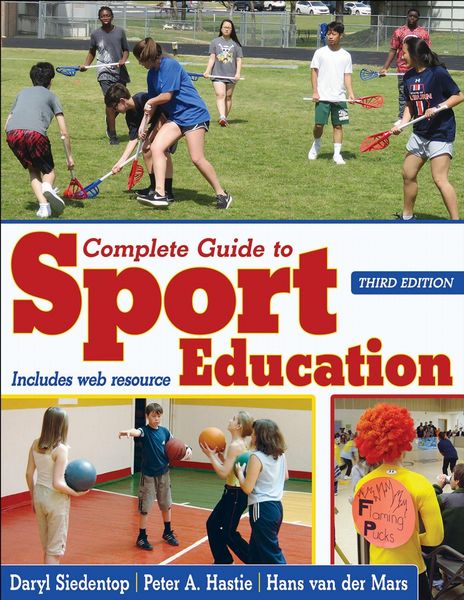
Complete Guide to Sport Education, Third Edition, offers a thoroughly updated version of the evidence-based curriculum and instruction model pioneered by Daryl Siedentop, universally acknowledged as the Father of Sport Education.
Lead author Siedentop first articulated his Sport Education model back in the late 1970s; it has evolved ever since and has been expressed through three editions of this book. This third edition is backed by substantial research that supports the idea that Sport Education is a valuable and motivating approach to delivering quality physical education experiences for students from the early elementary grades through the university years.
New and Revised Material
Complete Guide to Sport Education, Third Edition, offers readers a significant amount of revised and new material, including enhanced guidance for Sport Education programming across a year. Also noteworthy is the updated alignment of Sport Education's goals and objectives with the SHAPE America standards and the national learning objectives from other countries. In addition, the text provides six brand-new chapters on the following topics:
- Including students with special needs
- Implementing Sport Education beyond physical education (e.g., school-based after-school programs, intramurals, community-based programs, and university basic instruction programs)
- Evidence-based research on Sport Education
- Developing effective program-level policies and procedures
- Managing equipment, facilities, and supplies
- Sport Education's link with international objectives
Complete Guide to Sport Education represents a departure from traditional curriculum and instruction (C&I) models because it takes an effective student-centered approach, providing students with opportunities to take ownership and responsibility for various aspects of their class experiences. This approach better prepares students to be lifelong participants in healthy physical activity and sport-and to be more engaged in class.
The text targets more in-depth and authentic learning experiences than most C&I models, giving students time to develop the skills they need and to learn to fulfill the team roles required for successful seasons. This latest edition introduces new readers to the idea of Sport Education and gives previous users of the model some fresh ways to expand their seasons and make them even more engaging and attractive to their students.
Updated Ancillaries
Complete Guide to Sport Education comes with several useful and updated ancillaries:
- A web resource that provides a wealth of examples to support the book content; this resource includes forms, charts, assessments, and other tools
- A test package that houses 447 multiple-choice and short-answer questions
- A presentation package with 225 slides outlining the book's content, including select tables and illustrations from the book
- An instructor guide that includes course syllabus templates for instructors of undergraduate and graduate students, and provides core course assignments, optional course assignments, graduate student course assignments, and signature assignments
This popular text, whose first edition was published in 1994, is very affordable compared to similar texts. But the greatest benefit is the enduring quality of an evidence-based, student-centered text that has proven to be of high value to instructors and students alike. Students develop sport skills, grow in leadership and responsibility, and learn about the nonplaying roles of the sport experience.
Noch keine Bewertungen vorhanden
Verfassen Sie die erste Bewertung zu diesem Artikel
Helfen Sie anderen Kundinnen und Kunden durch Ihre Meinung.