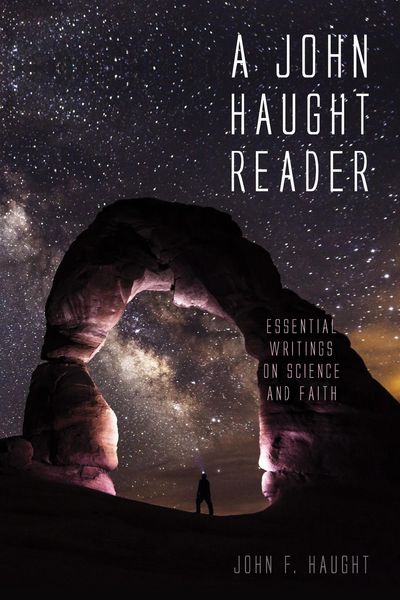
A John Haught Reader Essential Writings on Science and Faith
-
- Hardcover
- Taschenbuch
- eBook ausgewählt
-
Form:Einzelkauf Download
-
Sprache:Englisch
Fr. 45.90
inkl. gesetzl. MwSt.Beschreibung
Produktdetails
Format
ePUB
Kopierschutz
Nein
Family Sharing
Nein
Text-to-Speech
Ja
Erscheinungsdatum
06.11.2018
Verlag
Wipf and Stock PublishersSeitenzahl
360 (Printausgabe)
Dateigröße
2055 KB
Sprache
Englisch
EAN
9781532661044
Classical Christian theologies came to expression at a time when the universe seemed relatively fixed and unchanging. The otherworldly spiritual instincts of many religions reflected a static, vertical, and hierarchical understanding of the natural world. Today, however, especially because of developments in the sciences, it appears that the universe is still coming into being. The writings offered in this book reflect their author's belief that if the universe is unfinished, new thoughts about God and all the traditional theological topics are essential to make sense of it all. John Haught argues that the universe is best understood according to the metaphor of drama rather than design. This means that the most important question in science and theology today is not whether the intricate complexity of life points to a deity, or even how God acts in nature, but whether the cosmic drama as a whole carries a meaning.
Unfortunately, the devotional life of most religious people on our planet still presupposes an essentially immobile universe. Christian instruction, for example, continues to nurture an otherworldly piety that estranges nature unnecessarily from God. The readings in this book, however, suggest that the ancient Abrahamic hope for the coming of God from out of the future may now become the foundation of a scientifically up-to-date theology of nature that affirms divine transcendence without robbing nature of its significance.
Unfortunately, the devotional life of most religious people on our planet still presupposes an essentially immobile universe. Christian instruction, for example, continues to nurture an otherworldly piety that estranges nature unnecessarily from God. The readings in this book, however, suggest that the ancient Abrahamic hope for the coming of God from out of the future may now become the foundation of a scientifically up-to-date theology of nature that affirms divine transcendence without robbing nature of its significance.
Kundinnen und Kunden meinen
Verfassen Sie die erste Bewertung zu diesem Artikel
Helfen Sie anderen Kund*innen durch Ihre Meinung