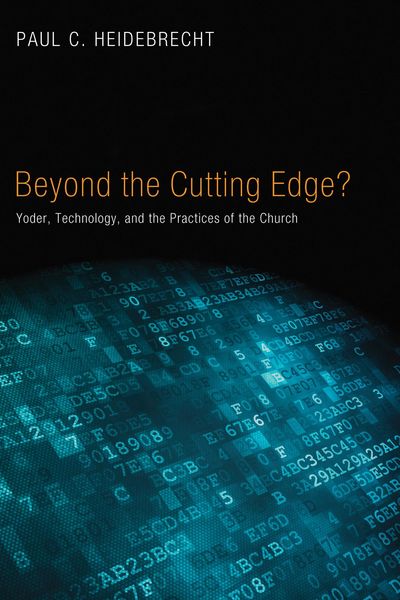
Beyond Cutting Edge? Yoder, Technology, and the Practices of the Church
-
- Hardcover
- Taschenbuch
- eBook ausgewählt
-
Form:Einzelkauf Download
-
Sprache:Englisch
Fr. 32.90
inkl. gesetzl. MwSt.Beschreibung
Produktdetails
Format
ePUB
Kopierschutz
Nein
Family Sharing
Nein
Text-to-Speech
Ja
Erscheinungsdatum
10.03.2014
Verlag
Wipf and Stock PublishersSeitenzahl
252 (Printausgabe)
Dateigröße
1975 KB
Sprache
Englisch
EAN
9781630873387
A quick scan of any newsstand is enough to confirm the widespread preoccupation with technological change. As a myriad of articles and advertisements demonstrate, not only are we preoccupied with technology, but we are bombarded with numerous reminders that the cutting edge is in constant motion. Most often the underlying assumption of Christians is that we have no choice but to find ways to cope with the latest and greatest. Indeed, it is often assumed that the church has no choice but to find ways to cope with its new technological context.
This book does not make the same assumptions. Building on the work of Mennonite theologian John Howard Yoder, it argues that the practices of the church make it possible for Christians to conscientiously engage technology. This happens when we recognize that marks of the church such as patience, vulnerability, and servanthood can put technological ideals such as speed, control, and efficiency in their proper place. In the course of grappling with three examples of morally formative technologies--automobiles, genetically modified food, and the Internet--this book goes beyond Yoder's thought by emphasizing that the church also plays a crucial role in our moral formation.
This book does not make the same assumptions. Building on the work of Mennonite theologian John Howard Yoder, it argues that the practices of the church make it possible for Christians to conscientiously engage technology. This happens when we recognize that marks of the church such as patience, vulnerability, and servanthood can put technological ideals such as speed, control, and efficiency in their proper place. In the course of grappling with three examples of morally formative technologies--automobiles, genetically modified food, and the Internet--this book goes beyond Yoder's thought by emphasizing that the church also plays a crucial role in our moral formation.
Kundinnen und Kunden meinen
Verfassen Sie die erste Bewertung zu diesem Artikel
Helfen Sie anderen Kund*innen durch Ihre Meinung