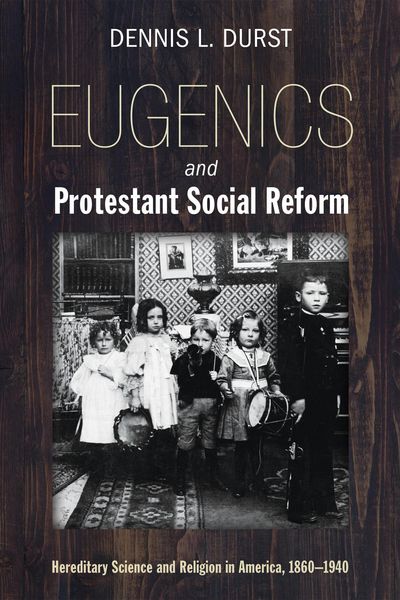
Eugenics and Protestant Social Reform Hereditary Science and Religion in America, 1860-1940
-
- Hardcover
- Taschenbuch
- eBook ausgewählt
-
Form:Einzelkauf Download
-
Sprache:Englisch
Fr. 28.90
inkl. gesetzl. MwSt.Beschreibung
Produktdetails
Format
ePUB
Kopierschutz
Nein
Family Sharing
Nein
Text-to-Speech
Ja
Erscheinungsdatum
06.06.2017
Verlag
Wipf and Stock PublishersSeitenzahl
218 (Printausgabe)
Dateigröße
2146 KB
Sprache
Englisch
EAN
9781532605789
The eugenics movement prior to the Second World War gave voice to the desire of many social reformers to promote good births and prevent bad births. Two sources of cultural authority in this period, science and religion, often found common cause in the promotion of eugenics. The rhetoric of biology and theology blended in strange ways through a common framework known as degeneration theory. Degeneration, a core concept of the eugenics movement, served as a key conceptual nexus between theological and scientific reflection on heredity among Protestant intellectuals and social reformers in the late nineteenth century and the early twentieth century. Elite efforts at social control of the allegedly "unfit" took the form of negative eugenics. This included marriage restrictions and even sterilization for many who were identified as having a suspect heredity. Speculations on heredity were deployed in identifying the feeble-minded, hereditary criminals, hereditary alcoholics, and racial minorities as presumed hindrances to the progress of civilization. A few social reformers trained in biology, anthropology, criminology, and theology eventually raised objections to the eugenics movement. Still, many thousands of citizens on the margins were labeled as defectives and suffered human rights violations during this turbulent time of social change.
Kundinnen und Kunden meinen
Verfassen Sie die erste Bewertung zu diesem Artikel
Helfen Sie anderen Kund*innen durch Ihre Meinung