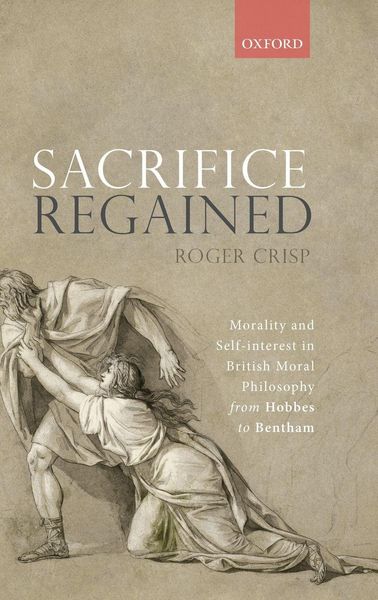
Sacrifice Regained Morality and Self-Interest in British Moral Philosophy from Hobbes to Bentham
-
- Hardcover ausgewählt
- Taschenbuch
- eBook
-
Sprache:Englisch
Fr. 143.00
inkl. gesetzl. MwSt.,
Beschreibung
Produktdetails
Einband
Gebundene Ausgabe
Erscheinungsdatum
03.11.2019
Verlag
Oxford AcademicSeitenzahl
244
Maße (L/B/H)
24/16.1/1.8 cm
Gewicht
534 g
Sprache
Englisch
ISBN
978-0-19-884047-3
Does being virtuous make you happy? In this book, Roger Crisp examines the answers to this ancient question provided by the so-called 'British Moralists', from Thomas Hobbes, around 1650, for the next two hundred years, until Jeremy Bentham. This involves elucidating their views on happiness (self-interest, or well-being) and on virtue (or morality), in order to bring out the relation of each to the other. Themes ran through many of these writers: psychological egoism, evaluative hedonism, and - after Hobbes - the acceptance of self-standing moral reasons. But there are exceptions, and even those taking the standard views adopt them for very different reasons and express them in various ways. As the ancients tended to believe that virtue and happiness largely coincide, so these modern authors are inclined to accept posthumous reward and punishment. Both positions sit uneasily with the common-sense idea that a person can truly sacrifice their own good for the sake of morality or for others. Roger Crisp shows that David Hume - a hedonist whose ethics made no appeal to the afterlife - was the first major British moralist to allow for, indeed to recommend, such self-sacrifice. Morality and well-being of course remain central to modern ethics, and Crisp demonstrates how much there is to learn from this remarkable group of philosophers.
Noch keine Bewertungen vorhanden
Verfassen Sie die erste Bewertung zu diesem Artikel
Helfen Sie anderen Kundinnen und Kunden durch Ihre Meinung.