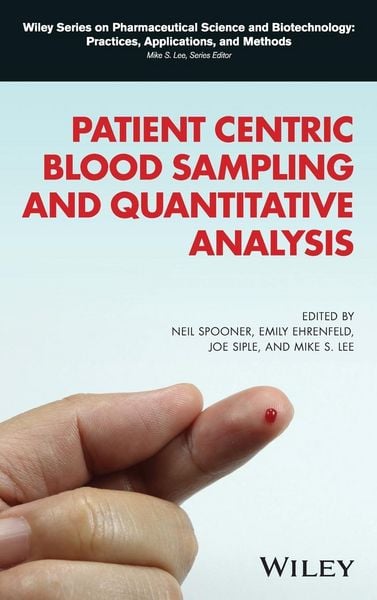
Patient Centric Blood Sampling and Quantitative Analysis
Aus der Reihe
Wiley Series on Pharmaceutical Science
-
- Englisch ausgewählt
Fr. 229.00
inkl. gesetzl. MwSt.,
Beschreibung
Produktdetails
Einband
Gebundene Ausgabe
Erscheinungsdatum
31.10.2023
Herausgeber
Neil Spooner + weitereVerlag
John Wiley & Sons IncSeitenzahl
400
Maße (L/B/H)
23.5/15.7/2.6 cm
Gewicht
730 g
Auflage
1. Auflage
Sprache
Englisch
ISBN
978-1-119-61555-2
PATIENT CENTRIC BLOOD SAMPLING AND QUANTITATIVE ANALYSIS
Authoritative resource providing a complete overview of patient centric blood sampling, as well as its benefits and challenges
Patient Centric Blood Sampling and Quantitative Analysis focuses on the growing interest in alternative means to standard phlebotomy and analytical workflows for the collection and analysis of high-quality human biological samples for the quantitative determination of circulating drugs, their metabolites, and endogenous substances for clinical trials, routine healthcare and neonatal screening. The book clearly explains the benefits and constraints of having patients collect small volumes of blood in locations outside of a clinic (e.g at home), including: patient convenience; less invasive procedures; increased frequency of sampling; applicability to collecting samples from the young, elderly, and those in remote locations; greater frequency; and lower cost per sample. Readers will learn about approaches for successfully implementing patient centric sampling workflows in a number of scenarios, including the clinical setting and in the analytical laboratory.
Edited by four recognized experts in this field, with additional specialists in the discipline enlisted to write the component chapters, enabling greater depth and detail to be added and further raising the scientific standing of the publication, Patient Centric Blood Sampling and Quantitative Analysis includes information on:
* Basics of patient centric blood sampling and techniques and approaches that are available and in development for the collection and analysis of the samples
* Science behind patient centric blood sampling and its implications regarding human healthcare and wellbeing
* Application areas of patient centric sampling, including drug development, clinical chemistry/pathology, therapeutic drug monitoring, and more
* Practical approaches to successful implementation for existing and developing purposes and workflows, and case studies to support implementation within an organization
Giving the reader a broad understanding of what patient centric sampling is and where it might be applied for existing and potential future areas, Patient Centric Blood Sampling and Quantitative Analysis is an essential resource on the subject for many different types of laboratories, areas of clinical research and healthcare, including those in pharmaceutical, clinical, and research functions.
Authoritative resource providing a complete overview of patient centric blood sampling, as well as its benefits and challenges
Patient Centric Blood Sampling and Quantitative Analysis focuses on the growing interest in alternative means to standard phlebotomy and analytical workflows for the collection and analysis of high-quality human biological samples for the quantitative determination of circulating drugs, their metabolites, and endogenous substances for clinical trials, routine healthcare and neonatal screening. The book clearly explains the benefits and constraints of having patients collect small volumes of blood in locations outside of a clinic (e.g at home), including: patient convenience; less invasive procedures; increased frequency of sampling; applicability to collecting samples from the young, elderly, and those in remote locations; greater frequency; and lower cost per sample. Readers will learn about approaches for successfully implementing patient centric sampling workflows in a number of scenarios, including the clinical setting and in the analytical laboratory.
Edited by four recognized experts in this field, with additional specialists in the discipline enlisted to write the component chapters, enabling greater depth and detail to be added and further raising the scientific standing of the publication, Patient Centric Blood Sampling and Quantitative Analysis includes information on:
* Basics of patient centric blood sampling and techniques and approaches that are available and in development for the collection and analysis of the samples
* Science behind patient centric blood sampling and its implications regarding human healthcare and wellbeing
* Application areas of patient centric sampling, including drug development, clinical chemistry/pathology, therapeutic drug monitoring, and more
* Practical approaches to successful implementation for existing and developing purposes and workflows, and case studies to support implementation within an organization
Giving the reader a broad understanding of what patient centric sampling is and where it might be applied for existing and potential future areas, Patient Centric Blood Sampling and Quantitative Analysis is an essential resource on the subject for many different types of laboratories, areas of clinical research and healthcare, including those in pharmaceutical, clinical, and research functions.
Noch keine Bewertungen vorhanden
Verfassen Sie die erste Bewertung zu diesem Artikel
Helfen Sie anderen Kundinnen und Kunden durch Ihre Meinung.