KI-Beratung Beta

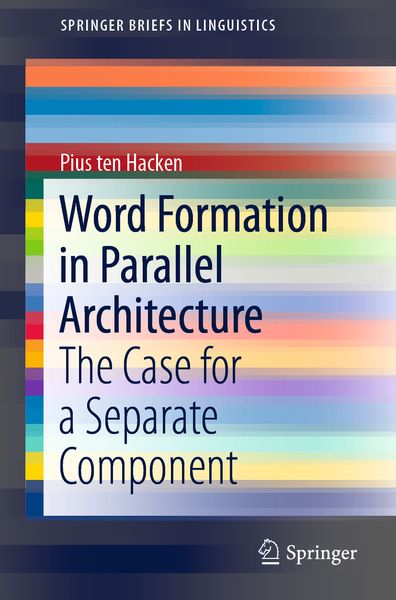
  • Produktbild: Word Formation in Parallel Architecture
  • Produktbild: Word Formation in Parallel Architecture

Word Formation in Parallel Architecture The Case for a Separate Component

Fr. 72.90

inkl. gesetzl. MwSt., Versandkostenfrei


Beschreibung

This book aims to reconcile the generative considerations of Jackendoff’s Parallel Architecture (PA) with the European structuralist approach to naming. It shows that there are good reasons to single out word formation as a separate component in PA. It demonstrates that it is a drawback not to distinguish...

Beschreibung

This book aims to reconcile the generative considerations of Jackendoff’s Parallel Architecture (PA) with the European structuralist approach to naming. It shows that there are good reasons to single out word formation as a separate component in PA. It demonstrates that it is a drawback not to distinguish word formation, and explains that the function of word formation rules is different from the function of the lexicon and rules of grammar. After making the argument for a separate word formation component, the book sets out to determine which types of rule qualify as part of this component. Traditionally, the boundaries of word formation with inflection and with syntax have been a matter of debate. By focusing on the naming function, the book poses a guiding principle for determining which rules should be in the word formation component.

The position of morphology in the architecture of grammar has always been an issue of debate in generative linguistics. Since Chomsky (1970), thisquestion has been framed in terms of the Lexicalist Hypothesis. Compared to Chomsky’s architectures, Jackendoff’s Parallel Architecture places phonetic and conceptual structures at the same level as syntactic structure, i.e. connected by bidirectional linking rules rather than interpretation rules. One of the consequences is that PA does not formally distinguish lexicon entries from rules of grammar. This changes the setting for the question of the autonomy of morphology, because the Lexicalist Hypothesis depends on this distinction.

Produktdetails

Einband

Taschenbuch

Erscheinungsdatum

20.06.2019

Abbildungen

VI, 99 p. 18 illus., 5 illus. in color.

Verlag Springer

Produktdetails

Einband

Taschenbuch

Erscheinungsdatum

20.06.2019

Abbildungen

VI, 99 p. 18 illus., 5 illus. in color.

Verlag Springer
Seitenzahl

99

Maße (L/B/H)

23.5/15.5/0.7 cm

Gewicht

178 g

Auflage

1st ed. 2019

Sprache

Englisch

ISBN

978-3-030-18008-9

Herstelleradresse

Springer-Verlag KG
Sachsenplatz 4-6
1201 Wien
AT

Email: ProductSafety@springernature.com

Noch keine Bewertungen vorhanden

Verfassen Sie die erste Bewertung zu diesem Artikel

Helfen Sie anderen Kundinnen und Kunden durch Ihre Meinung.

Kundinnen und Kunden meinen

Bewertungen (0)

  • Produktbild: Word Formation in Parallel Architecture
  • Produktbild: Word Formation in Parallel Architecture
  • Introduction.- The Mental Lexicon in Jackendoff’s Parallel Architecture.- Morphology in Jackendoff’s Parallel Architecture.- Productivity and Onomasiological Coercion.- The Boundaries of Word Formation.- Conclusion.