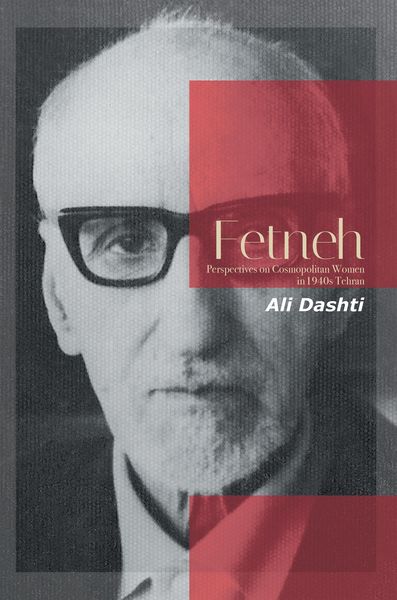
Fetneh Perspectives on Cosmopolitan Women in 1940S Tehran
-
- Taschenbuch
- eBook ausgewählt
-
Form:Einzelkauf Download
-
Sprache:Englisch
Fr. 4.90
inkl. gesetzl. MwSt.Beschreibung
Produktdetails
Format
ePUB
Kopierschutz
Ja
Family Sharing
Nein
Text-to-Speech
Ja
Erscheinungsdatum
28.05.2019
Verlag
Xlibris USSeitenzahl
180 (Printausgabe)
Dateigröße
650 KB
Sprache
Englisch
EAN
9781796022902
Reza Shah Pahlavi introduced policies that altered the lives of Iranian women radically. For the first time, women entered into modern sectors of the economy, family laws were modified, the unveiling was enforced, and the government established public coeducational primary schools. The rapid development of women's schools, in spite of bitter clerical objection, was one of the primary means for women's awakening in this period. The mid-1930s also saw the opening of higher education to women and enrollment of over seventy female students in 1936-37 at the University of Tehran.
Reflecting on this radical change in the infrastructure of Iran's social scene, Ali Dashti wrote his collections of short stories and essays-Fetneh, Jadoo, Hindu, and Sayeh-in which he analyzed the attitudes of upper-class women caught between the traditional and modern Europeanized societies of Tehran. These books are testaments to the courage of Ali Dashti to document the situation in Iranian society so accurately. With his assertive voice, he underlined the short stories with the actual political and social changes in Iran.
Dashti's humanistic ideas and his regard and high expectations for the human race, especially for women, are beyond time and place. The quality debates on the subject of human rights and gender equality presented in his short stories, written about a century ago in Iran, are only recently surfacing in the Western world.
Reflecting on this radical change in the infrastructure of Iran's social scene, Ali Dashti wrote his collections of short stories and essays-Fetneh, Jadoo, Hindu, and Sayeh-in which he analyzed the attitudes of upper-class women caught between the traditional and modern Europeanized societies of Tehran. These books are testaments to the courage of Ali Dashti to document the situation in Iranian society so accurately. With his assertive voice, he underlined the short stories with the actual political and social changes in Iran.
Dashti's humanistic ideas and his regard and high expectations for the human race, especially for women, are beyond time and place. The quality debates on the subject of human rights and gender equality presented in his short stories, written about a century ago in Iran, are only recently surfacing in the Western world.
Noch keine Bewertungen vorhanden
Verfassen Sie die erste Bewertung zu diesem Artikel
Helfen Sie anderen Kundinnen und Kunden durch Ihre Meinung.