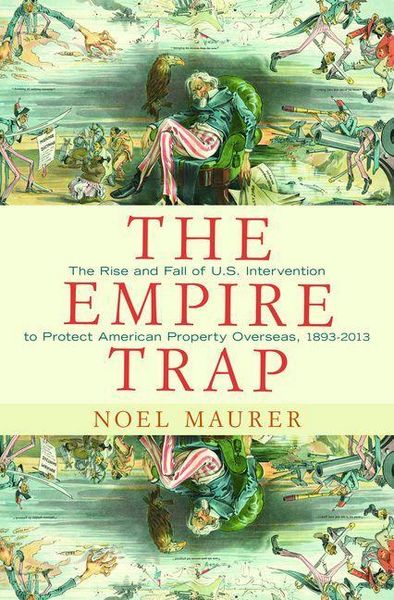
Empire Trap The Rise and Fall of U.S. Intervention to Protect American Property Overseas, 1893-2013
-
- Einzelkauf Download ausgewählt
-
Sprache:Englisch
Fr. 58.90
inkl. gesetzl. MwSt.Beschreibung
Produktdetails
Format
Kopierschutz
Ja
Family Sharing
Ja
Text-to-Speech
Ja
Erscheinungsdatum
25.08.2013
Verlag
Princeton University PressSeitenzahl
568 (Printausgabe)
Dateigröße
3708 KB
Sprache
Englisch
EAN
9781400846603
How the United States became an imperial power by bowing to pressure to defend its citizens' overseas investments
Throughout the twentieth century, the U.S. government willingly deployed power, hard and soft, to protect American investments all around the globe. Why did the United States get into the business of defending its citizens' property rights abroad? The Empire Trap looks at how modern U.S. involvement in the empire business began, how American foreign policy became increasingly tied to the sway of private financial interests, and how postwar administrations finally extricated the United States from economic interventionism, even though the government had the will and power to continue.
Noel Maurer examines the ways that American investors initially influenced their government to intercede to protect investments in locations such as Central America and the Caribbean. Costs were small-at least at the outset-but with each incremental step, American policy became increasingly entangled with the goals of those they were backing, making disengagement more difficult. Maurer discusses how, all the way through the 1970s, the United States not only failed to resist pressure to defend American investments, but also remained unsuccessful at altering internal institutions of other countries in order to make property rights secure in the absence of active American involvement. Foreign nations expropriated American investments, but in almost every case the U.S. government's employment of economic sanctions or covert action obtained market value or more in compensation-despite the growing strategic risks. The advent of institutions focusing on international arbitration finally gave the executive branch a credible political excuse not to act. Maurer cautions that these institutions are now under strain and that a collapse might open the empire trap once more.
With shrewd and timely analysis, this book considers American patterns of foreign intervention and the nation's changing role as an imperial power.
Noch keine Bewertungen vorhanden
Verfassen Sie die erste Bewertung zu diesem Artikel
Helfen Sie anderen Kundinnen und Kunden durch Ihre Meinung.