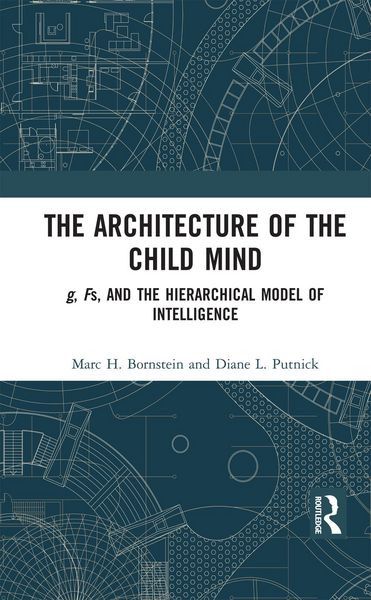
The Architecture of the Child Mind g, Fs, and the Hierarchical Model of Intelligence
-
- Hardcover
- Taschenbuch
- eBook ausgewählt
-
Form:Einzelkauf Download
-
Sprache:Englisch
-
eBook Format:PDF
- ePUB 3 Fr. 59.90
- PDF Fr. 59.90 ausgewählt
Fr. 59.90
inkl. gesetzl. MwSt.Beschreibung
Produktdetails
Format
Kopierschutz
Ja
Family Sharing
Nein
Text-to-Speech
Nein
Erscheinungsdatum
21.02.2019
Verlag
Taylor & Francis eBooksSeitenzahl
246 (Printausgabe)
Dateigröße
21142 KB
Sprache
Englisch
EAN
9780429643170
What exactly does it mean to be intelligent? Does intelligence manifest itself in one way or in different ways in children? Do children fit any preconceived notions of intelligence? Some theories assert a general (g) factor for intelligence that is universal and enters all mental abilities; other theories state that there are many separate domains or faculties (Fs) of intelligence; and still others argue that the g and Fs of intelligence coexist in a hierarchical relation. The Architecture of the Child Mind: g, Fs, and the Hierarchical Model of Intelligence argues for the third option in young children. Through state-of-the-art methodologies in an intensive research program conducted with 4-year-old children, Bornstein and Putnick show that the structure of intelligence in the preschool child is best construed as a hierarchically organized combination of a General Intelligence factor (g) and multiple domain-specific faculties (Fs).
The Architecture of the Child Mind offers a review of the history of intelligence theories and testing, and a comprehensive and original research effort on the nature and structure of intelligence in young children before they enter school. Its focus on intelligence will appeal to cognitive, developmental, and social psychologists as well as researchers and scholars in education, particularly those specializing in early childhood education.
Noch keine Bewertungen vorhanden
Verfassen Sie die erste Bewertung zu diesem Artikel
Helfen Sie anderen Kundinnen und Kunden durch Ihre Meinung.