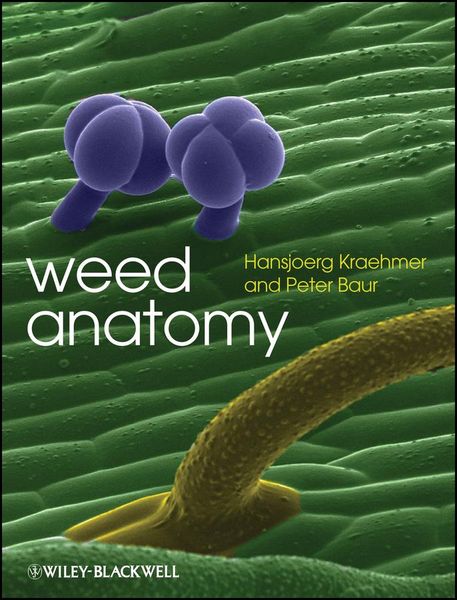
Weed Anatomy
-
Form:Einzelkauf Download
-
Sprache:Englisch
-
eBook Format:PDF
- PDF Fr. 296.00 ausgewählt
- ePUB Fr. 296.00
Fr. 296.00
inkl. gesetzl. MwSt.Beschreibung
Produktdetails
Format
Kopierschutz
Ja
Family Sharing
Nein
Text-to-Speech
Nein
Erscheinungsdatum
04.02.2013
Verlag
WileySeitenzahl
504 (Printausgabe)
Dateigröße
336500 KB
Auflage
1. Auflage
Sprache
Englisch
EAN
9781118503430
Weeds affect everyone in the world by reducing crop yield and
crop quality, delaying or interfering with harvesting, interfering
with animal feeding (including poisoning), reducing animal health,
preventing water flow, as plant parasites, etc. Weeds are common
everywhere and cause many $ billions worth of crop losses annually,
with the global cost of controlling weeds running into $
billions.
The anatomy of plants is generally well understood, but the
examples used for explanations in most books are often restricted
to non-weed species. Weeds have many features that make them more
competitive, for example enabling them to more quickly recover
after herbicide treatment. Some of these adaptations include
rhizomes, adapted roots, tubers and other special structures. Until
now,
no single book has concentrated on weeds' anatomical
features. A comprehensive understanding of these features is,
however, often imperative to the successful implementation of many
weed control measures.
Beautifully and comprehensively illustrated, in full colour
throughout, Weed Anatomy provides a comprehensive insight into the
anatomy of the globally-important weeds of commercial significance.
Commencing with a general overview of anatomy, the major part of
the book then includes sections covering monocotyledons,
dicotyledons, brackens and horsetails, with special reference to
their anatomy. Ecological and evolutionary aspects of weeds are
also covered and a number of less common weeds such as Adonis
vernalis, Caucalis platycarpos and Scandix pecten-veneris are also
included.
The authors of this book, who have between them many years of
experience studying weeds, have put together a true landmark
publication, providing a huge wealth of commercially-important
information. Weed scientists, plant anatomists and agricultural
scientists, including personnel within the agrochemical and crop
protection industry, will find a great deal of useful information
within
the book's covers. All libraries in universities and research
establishments where agricultural and biological sciences are
studied and taught should have copies of this exceptional book on
their shelves.
crop quality, delaying or interfering with harvesting, interfering
with animal feeding (including poisoning), reducing animal health,
preventing water flow, as plant parasites, etc. Weeds are common
everywhere and cause many $ billions worth of crop losses annually,
with the global cost of controlling weeds running into $
billions.
The anatomy of plants is generally well understood, but the
examples used for explanations in most books are often restricted
to non-weed species. Weeds have many features that make them more
competitive, for example enabling them to more quickly recover
after herbicide treatment. Some of these adaptations include
rhizomes, adapted roots, tubers and other special structures. Until
now,
no single book has concentrated on weeds' anatomical
features. A comprehensive understanding of these features is,
however, often imperative to the successful implementation of many
weed control measures.
Beautifully and comprehensively illustrated, in full colour
throughout, Weed Anatomy provides a comprehensive insight into the
anatomy of the globally-important weeds of commercial significance.
Commencing with a general overview of anatomy, the major part of
the book then includes sections covering monocotyledons,
dicotyledons, brackens and horsetails, with special reference to
their anatomy. Ecological and evolutionary aspects of weeds are
also covered and a number of less common weeds such as Adonis
vernalis, Caucalis platycarpos and Scandix pecten-veneris are also
included.
The authors of this book, who have between them many years of
experience studying weeds, have put together a true landmark
publication, providing a huge wealth of commercially-important
information. Weed scientists, plant anatomists and agricultural
scientists, including personnel within the agrochemical and crop
protection industry, will find a great deal of useful information
within
the book's covers. All libraries in universities and research
establishments where agricultural and biological sciences are
studied and taught should have copies of this exceptional book on
their shelves.
Kundinnen und Kunden meinen
Verfassen Sie die erste Bewertung zu diesem Artikel
Helfen Sie anderen Kund*innen durch Ihre Meinung