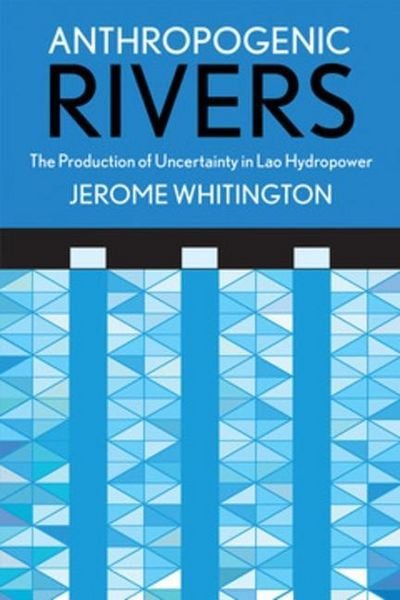
Anthropogenic Rivers The Production of Uncertainty in Lao Hydropower
-
- Taschenbuch
- eBook ausgewählt
-
Form:Einzelkauf Download
-
Sprache:Englisch
-
eBook Format:PDF
- PDF Fr. 142.90 ausgewählt
- ePUB Fr. 25.90
Fr. 142.90
inkl. gesetzl. MwSt.Beschreibung
Produktdetails
Format
Kopierschutz
Nein
Family Sharing
Nein
Text-to-Speech
Nein
Erscheinungsdatum
15.01.2019
Verlag
Cornell University PressSeitenzahl
288 (Printausgabe)
Dateigröße
3654 KB
Sprache
Englisch
EAN
9781501730924
In the 2000s, Laos was treated as a model country for the efficacy of privatized, "sustainable" hydropower projects as viable options for World Bank-led development. By viewing hydropower as a process that creates ecologically uncertain environments, Jerome Whitington reveals how new forms of managerial care have emerged in the context of a privatized dam project successfully targeted by transnational activists. Based on ethnographic work inside the hydropower company, as well as with Laotians affected by the dam, he investigates how managers, technicians and consultants grapple with unfamiliar environmental obligations through new infrastructural configurations, locally-inscribed ethical practices, and forms of flexible experimentation informed by American management theory.
Far from the authoritative expertise that characterized classical modernist hydropower, sustainable development in Laos has been characterized by a shift from the risk politics of the 1990s to an ontological politics in which the institutional conditions of infrastructure investment are pervasively undermined by sophisticated 'hactivism.' Whitington demonstrates how late industrial environments are infused with uncertainty inherent in the anthropogenic ecologies themselves. Whereas 'anthropogenic' usually describes human-induced environmental change, it can also show how new capacities for being human are generated when people live in ecologies shot through with uncertainty. Implementing what Foucault called a "historical ontology of ourselves," Anthropogenic Rivers formulates a new materialist critique of the dirty ecologies of late industrialism by pinpointing the opportunistic, ambitious and speculative ontology of capitalist natures.
Noch keine Bewertungen vorhanden
Verfassen Sie die erste Bewertung zu diesem Artikel
Helfen Sie anderen Kundinnen und Kunden durch Ihre Meinung.