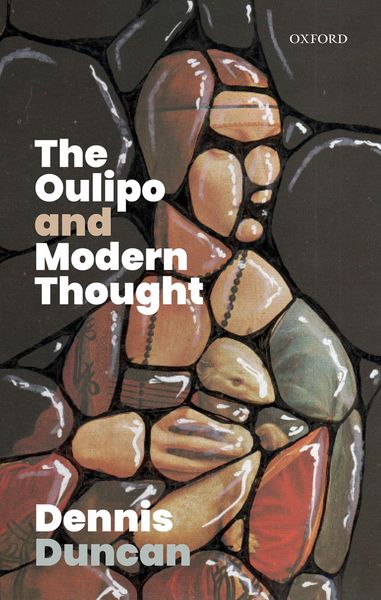
The Oulipo and Modern Thought
-
Form:Einzelkauf Download
-
Sprache:Englisch
-
eBook Format:ePUB
- PDF Fr. 85.90
- ePUB Fr. 85.90 ausgewählt
Fr. 85.90
inkl. gesetzl. MwSt.Beschreibung
Produktdetails
Format
ePUB
Kopierschutz
Ja
Family Sharing
Nein
Text-to-Speech
Ja
Erscheinungsdatum
08.07.2019
Verlag
OUP eBookSeitenzahl
192 (Printausgabe)
Dateigröße
1525 KB
Sprache
Englisch
EAN
9780192567437
The impact of the Oulipo (Ouvroir de Littérature Potentielle), one of the most important groups of experimental writers of the late twentieth century, is still being felt in contemporary literature, criticism, and theory, both in Europe and the US. Founded in 1960 and still active today, this Parisian literary workshop has featured among its members such notable writers as Italo Calvino, Georges Perec, and Raymond Queneau, all sharing in its light-hearted, slightly boozy bonhomie, the convivial antithesis of the fractious, volatile coteries of the early twentieth-century avant-garde. For the last fifty years the Oulipo has undertaken the same simple goal: to investigate the potential of 'constraints' in the production of literature--that is, formal procedures such as anagrams, acrostics, lipograms (texts which exclude a certain letter), and other strange and complex devices.
Yet, far from being mere parlour games, these methods have been frequently used as part of a passionate--though sometimes satirical--involvement with the major intellectual currents of the mid-twentieth century. Structuralism, psychoanalysis, Surrealism, analytic philosophy: all come under discussion in the group's meetings, and all find their way in the group's exercises in ways that, while often ironic, are also highly informed.
Using meeting minutes, correspondence, and other material from the Oulipo archive at the Bibliothèque nationale de France, The Oulipo and Modern Thought shows how the group have used constrained writing as means of puckish engagement with the debates of their peers, and how, as the broader intellectual landscape altered, so too would the group's conception of what constrained writing can achieve.
Yet, far from being mere parlour games, these methods have been frequently used as part of a passionate--though sometimes satirical--involvement with the major intellectual currents of the mid-twentieth century. Structuralism, psychoanalysis, Surrealism, analytic philosophy: all come under discussion in the group's meetings, and all find their way in the group's exercises in ways that, while often ironic, are also highly informed.
Using meeting minutes, correspondence, and other material from the Oulipo archive at the Bibliothèque nationale de France, The Oulipo and Modern Thought shows how the group have used constrained writing as means of puckish engagement with the debates of their peers, and how, as the broader intellectual landscape altered, so too would the group's conception of what constrained writing can achieve.
Noch keine Bewertungen vorhanden
Verfassen Sie die erste Bewertung zu diesem Artikel
Helfen Sie anderen Kundinnen und Kunden durch Ihre Meinung.