Gutscheinbedingungen

*Gültig bis 20.07.2026 auf alle Bücher. Ausgeschlossen sind Zeitschriften, Prozentbücher und Abos | Einlösbar in allen Buchhandlungen von Orell Füssli, Barth Bücher, Buchladen Rapunzel, Papeterie Köhler, Schuler Orell Füssli, Stauffacher und ZAP unter Vorweisung des Gutscheins, auf www.orellfüssli.ch durch Eingabe des Gutscheincodes. Beim Service „eBooks verschenken“ und bei eBook-Käufen via eReader nicht einlösbar | Mindesteinkaufswert: Fr. 30.- | Nicht mit anderen Rabatten kumulierbar.

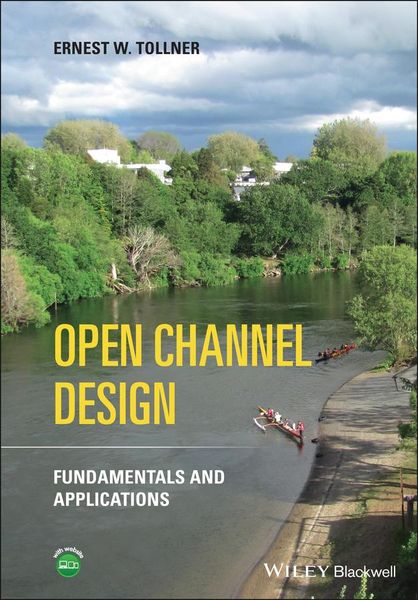
Produktbild: Open Channel Design

Open Channel Design Fundamentals and Applications

Fr. 183.00

inkl. gesetzl. MwSt., Versandkostenfrei


Beschreibung

Produktdetails

Einband

Gebundene Ausgabe

Erscheinungsdatum

20.09.2021

Verlag

Wiley

Seitenzahl

336

Maße (L/B/H)

24.4/17/1.9 cm

Gewicht

794 g

Auflage

1. Auflage

Sprache

Englisch

ISBN

978-1-119-66424-6

Beschreibung

Produktdetails

Einband

Gebundene Ausgabe

Erscheinungsdatum

20.09.2021

Verlag

Wiley

Seitenzahl

336

Maße (L/B/H)

24.4/17/1.9 cm

Gewicht

794 g

Auflage

1. Auflage

Sprache

Englisch

ISBN

978-1-119-66424-6

Noch keine Bewertungen vorhanden

Verfassen Sie die erste Bewertung zu diesem Artikel

Helfen Sie anderen Kundinnen und Kunden durch Ihre Meinung.

Kundinnen und Kunden meinen

Bewertungen (0)

Die Leseprobe wird geladen.
  • Produktbild: Open Channel Design
  • Preface ix

    Acknowledgments xi

    About the Companion Website xii

    1 Basic Principles and Flow Classifications 1

    Fluid Mechanics Foundations 2

    Hydrologic Foundations 7

    Presentation Organization 8

    Problems and Questions 10

    References 11

    2 Channel Fundamentals 12

    Goals 12

    Channel Elements and Nomenclature 12

    General Flow Relationships 17

    Uniform Flow Relationships 17

    Theoretical Considerations 23

    Natural, Compound, or Sustainable Channels 25

    Lined Channels, Optimum Channels, and Velocity Constraints 28

    Channel Installation 43

    Summary 43

    Problems and Questions 47

    References 51

    3 Vegetated Waterways and Bioswales 53

    Goals 53

    Background 53

    Channel Planning 54

    Basic Design Procedures 56

    Bioswales 60

    Vegetated Filter Strips 62

    Temporary Linings 62

    Summary 66

    Problems and Questions 68

    References 69

    4 Tractive Force Methods for Earthen Channels 71

    Goals 71

    Riprap-Lined or Earthen Waterways (Earthen II) 71

    Tractive Force for Vegetated Waterways 77

    Details and Origins of The Parabolic Cross-section 82

    Costing Channel Designs 92

    Steady Uniform Flow Conclusion 94

    Problems and Questions 95

    References 97

    5 The Energy Equation and Gradually Varied Flows 98

    Goals 98

    Energy Preliminaries - Velocity Profiles and Boundary Effects 98

    Longer Transitions - Gradually Varied Flow Analyses 115

    Conclusions 126

    Problems and Questions 126

    References 127

    6 Momentum Equation for Analyzing Varied Steady Flows and Spatially Varied Increasing Flows 128

    Goals 128

    Rapidly Varying Steady Flows (dQ/dt = 0, dQ/dx = 0, dy/dx varies) 128

    Spatially Varying Steady Flow (dQ/dt = 0, dQ/dx varies, dy/dx varies) 137

    Conclusions 142

    Problems and Questions 142

    References 143

    7 Hydraulics of Water Management Structures 144

    Goals 144

    Structure Types 145

    Hydraulic Concepts 147

    Stage-Discharge Relationships of Weir Inlets and Flumes 150

    Discharge Relations of Orifices and Sluice Gates Inlet Devices 156

    Flow Hydraulics of Closed Conduits 157

    Stage-Discharge Curves for Culverts and Spillways 167

    Closed Conduit Systems for Urban Stormwater Collection 169

    Ecologic Suitability 171

    Summary and Conclusions 177

    Problems and Questions 179

    References 182

    8 Gradually Varied Unsteady Flow 185

    Goals 185

    Hydrologic Routing Approaches 187

    Kinematic Wave Method 194

    Diffusion Wave Method 199

    Dynamic Routing 203

    Summary and Conclusions 209

    Problems and Questions 210

    References 211

    9 Rapidly Varying Unsteady Flow Applications - Waves 213

    Goals 213

    Surface Irrigation 213

    Sluice Gate and Related Operations 217

    The Dam-Break Problem 223

    Oscillatory Waves 230

    Summary and Conclusions 233

    Problems and Questions 234

    References 235

    10 Channel Design Emphasizing Fine Sediments and Survey of Alluvial Channel Sediment Transport 236

    Goals 236

    Alluvial Channel vs. Earthen Channel and Other Preliminaries 237

    Early Approaches to Sediment Transport 237

    Incipient Motion 238

    Riprap or Revetment Specification 243

    Bedform Descriptions and Analysis 244

    Sediment Fall Velocity 245

    A Probabilistic Approach to Sediment Transport 249

    Einstein (1950)-Laursen (1958)-Graf (1971) Stage-Discharge and Other Hydraulic Calculations 254

    Van Rijn (1984) Stage-Discharge and Total Load 259

    Total Load by Regression Approaches 264

    Sediment Measurement 268

    Sediment Routing Through Detention Ponds and Streams 268

    Software Support for Estimating Sediment Transport 270

    Implications of Sediment Transport on Infrastructure 271

    Empirical Channel Design Approaches Leading to Sustainable Channels 274

    Forces Impacting Channel Cross Sections - Stream Restoration 281

    Summary and Future Directions 286

    Problems and Questions 289

    References 290

    Appendix A¿ Software and Selected Solutions 294

    Appendix B¿ Solution Charts for Vegetated Waterways Using the Permissible Velocity Method 305

    Appendix C¿ Selected Cost Data for Channel Excavation and Lining Materials 310

    Appendix D¿ Design Strategy Summary for Uniform Flow Channels 315

    Index 317