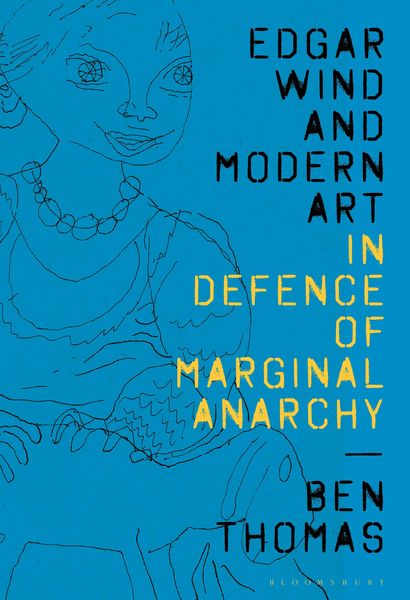
Edgar Wind and Modern Art In Defence of Marginal Anarchy
Fr. 148.00
inkl. gesetzl. MwSt.,
Beschreibung
Produktdetails
Einband
Gebundene Ausgabe
Erscheinungsdatum
25.02.2021
Verlag
Bloomsbury AcademicSeitenzahl
272
Maße (L/B/H)
23.7/16.7/2.3 cm
Gewicht
735 g
Sprache
Englisch
ISBN
978-1-5013-4175-5
This book presents the first comprehensive study of the philosopher and art historian Edgar Wind’s critique of modern art. The first student of Erwin Panofsky, and a close associate of Aby Warburg, Edgar Wind was unusual among the ‘Warburgians’ for his sustained interest in modern art, together with his support for contemporary artists. This culminated in his respected and influential book Art and Anarchy (1963), which seemed like a departure from his usual scholarly work on the iconography of Renaissance art. Based on extensive archival research and bringing to light previously unpublished lectures, Edgar Wind and Modern Art reveals the extent and seriousness of Wind’s thinking about modern art, and how it was bound up with theories about art and knowledge that he had developed during the 1920s and 30s. Wind’s ideas are placed in the context of a closely connected international cultural milieu consisting of some of the leading artists and thinkers of the twentieth century. In particular, the book discusses in detail his friendships with three significant artists: Pavel Tchelitchew, Ben Shahn and R. B. Kitaj. In the process, the existence of an alternative to the prevailing formalist approach of Alfred Barr and Clement Greenberg to modern art, based on the enduring importance of the symbol, is revealed.
Kundinnen und Kunden meinen
Verfassen Sie die erste Bewertung zu diesem Artikel
Helfen Sie anderen Kund*innen durch Ihre Meinung