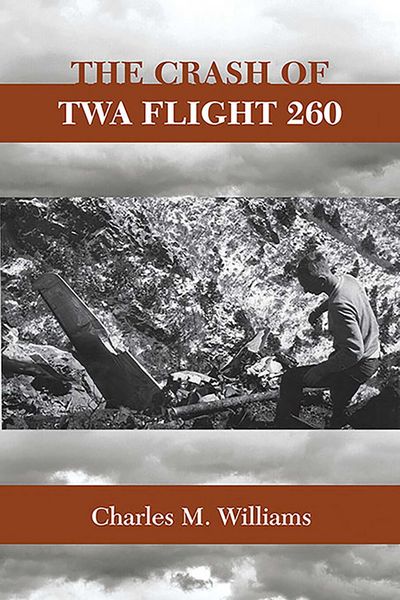
Crash of TWA Flight 260
-
- Taschenbuch
- eBook ausgewählt
-
Form:Einzelkauf Download
-
Sprache:Englisch
Fr. 17.40
inkl. gesetzl. MwSt.Beschreibung
Produktdetails
Format
ePUB
Kopierschutz
Ja
Family Sharing
Ja
Text-to-Speech
Ja
Erscheinungsdatum
16.08.2010
Verlag
Simon + Schuster LLCSeitenzahl
272 (Printausgabe)
Sprache
Englisch
EAN
9780826348081
This moment-by-moment account of a major airplane crash on a beautiful and treacherous mountainside puts the reader at the pilot's side, describing the flight, its catastrophic ending, and the aftermath.
At 7:05 a.m. on February 19, 1955, TWA Flight 260 took off from the Albuquerque airport for a short flight to Santa Fe. To avoid flying over the Sandia Mountains, the plane's approved air route was a dogleg running north-northwest from Albuquerque, then east-northeast into Santa Fe. But at 7:08 a.m. Flight 260 was headed directly toward Sandia Ridge, almost entirely obscured by storm clouds. A local resident who saw Flight 260 overhead observed that if the plane was eastbound, it was too low; if it was northbound, it was off course.
At 7:12 a.m. the plane's terrain-warning bell sounded its alarm. Both pilots saw the sheer west face of the Sandias just beyond the right wingtipan appalling shock considering they should have been ten miles further west. Reacting instantly, they rolled the plane steeply to the left, pulled its nose up, and started to level the wings. It was their final act. Hidden by the storm, another cliffside lay directly ahead. When they struck it, they were still in a left bank, nose high.
At 7:05 a.m. on February 19, 1955, TWA Flight 260 took off from the Albuquerque airport for a short flight to Santa Fe. To avoid flying over the Sandia Mountains, the plane's approved air route was a dogleg running north-northwest from Albuquerque, then east-northeast into Santa Fe. But at 7:08 a.m. Flight 260 was headed directly toward Sandia Ridge, almost entirely obscured by storm clouds. A local resident who saw Flight 260 overhead observed that if the plane was eastbound, it was too low; if it was northbound, it was off course.
At 7:12 a.m. the plane's terrain-warning bell sounded its alarm. Both pilots saw the sheer west face of the Sandias just beyond the right wingtipan appalling shock considering they should have been ten miles further west. Reacting instantly, they rolled the plane steeply to the left, pulled its nose up, and started to level the wings. It was their final act. Hidden by the storm, another cliffside lay directly ahead. When they struck it, they were still in a left bank, nose high.
Kundinnen und Kunden meinen
Verfassen Sie die erste Bewertung zu diesem Artikel
Helfen Sie anderen Kund*innen durch Ihre Meinung