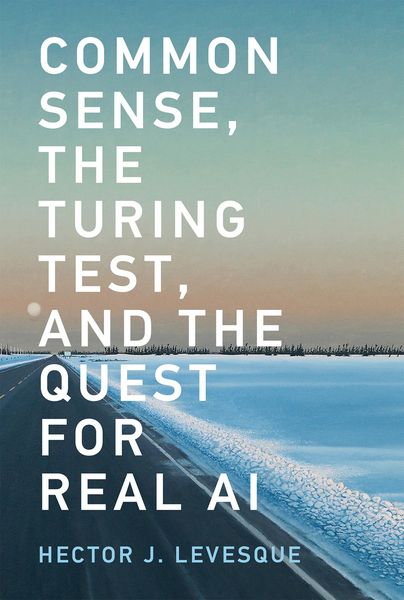
Common Sense, the Turing Test, and the Quest for Real AI
-
- Taschenbuch
- eBook ausgewählt
-
Form:Einzelkauf Download
-
Sprache:Englisch
Fr. 32.90
inkl. gesetzl. MwSt.Beschreibung
Produktdetails
Format
ePUB 3
Kopierschutz
Ja
Family Sharing
Ja
Text-to-Speech
Ja
Erscheinungsdatum
17.02.2017
Verlag
Mit PressSeitenzahl
192 (Printausgabe)
Dateigröße
488 KB
Sprache
Englisch
EAN
9780262338370
What can artificial intelligence tell us about the mind and intelligent behavior? A computer science expert explores the importance of common sense in everyday decision making.
What can artificial intelligence teach us about the mind? If AI's underlying concept is that thinking is a computational process, then how can computation illuminate thinking? It's a timely question. Artificial intelligence is all the rage, and the buzziest AI buzz surrounds adaptive machine learning: computer systems that learn intelligent behavior from massive amounts of data. This is what powers a driverless car, for example. In this book, Hector Levesque shifts the conversation to "good old fashioned artificial intelligence," which is based not on heaps of data but on understanding commonsense intelligence. This kind of artificial intelligence is equipped to handle situations that depart from previous patterns-as we do in real life, when, for example, we encounter a washed-out bridge or when the barista informs us there's no more soy milk.
Levesque considers the role of language in learning. He argues that a computer program that passes the famous Turing Test could be a mindless zombie, and he proposes another way to test for intelligence-the Winograd Schema Test, developed by Levesque and his colleagues. "If our goal is to understand intelligent behavior, we had better understand the difference between making it and faking it," he observes. He identifies a possible mechanism behind common sense and the capacity to call on background knowledge: the ability to represent objects of thought symbolically. As AI migrates more and more into everyday life, we should worry if systems without common sense are making decisions where common sense is needed.
What can artificial intelligence teach us about the mind? If AI's underlying concept is that thinking is a computational process, then how can computation illuminate thinking? It's a timely question. Artificial intelligence is all the rage, and the buzziest AI buzz surrounds adaptive machine learning: computer systems that learn intelligent behavior from massive amounts of data. This is what powers a driverless car, for example. In this book, Hector Levesque shifts the conversation to "good old fashioned artificial intelligence," which is based not on heaps of data but on understanding commonsense intelligence. This kind of artificial intelligence is equipped to handle situations that depart from previous patterns-as we do in real life, when, for example, we encounter a washed-out bridge or when the barista informs us there's no more soy milk.
Levesque considers the role of language in learning. He argues that a computer program that passes the famous Turing Test could be a mindless zombie, and he proposes another way to test for intelligence-the Winograd Schema Test, developed by Levesque and his colleagues. "If our goal is to understand intelligent behavior, we had better understand the difference between making it and faking it," he observes. He identifies a possible mechanism behind common sense and the capacity to call on background knowledge: the ability to represent objects of thought symbolically. As AI migrates more and more into everyday life, we should worry if systems without common sense are making decisions where common sense is needed.
Kundinnen und Kunden meinen
Verfassen Sie die erste Bewertung zu diesem Artikel
Helfen Sie anderen Kund*innen durch Ihre Meinung