Gutscheinbedingungen

*Gültig bis 21.06.2026 auf (fast) alles. Ausgeschlossen sind Smartboxen, Zeitschriften, Tickets, Lebensmittel, Gaming-Elektroartikel, Tinte/Toner, Gutscheine, Geschenkkarten, Blumen und Abos | Einlösbar in allen Buchhandlungen von Orell Füssli, Barth Bücher, Buchladen Rapunzel, Schuler Orell Füssli, Stauffacher und ZAP unter Vorweisung des Gutscheins, auf www.orellfüssli.ch durch Eingabe des Gutscheincodes. Beim Service „eBooks verschenken“ und bei eBook-Käufen via eReader nicht einlösbar | Mindesteinkaufswert: Fr. 30.- | Nicht mit anderen Rabatten kumulierbar.

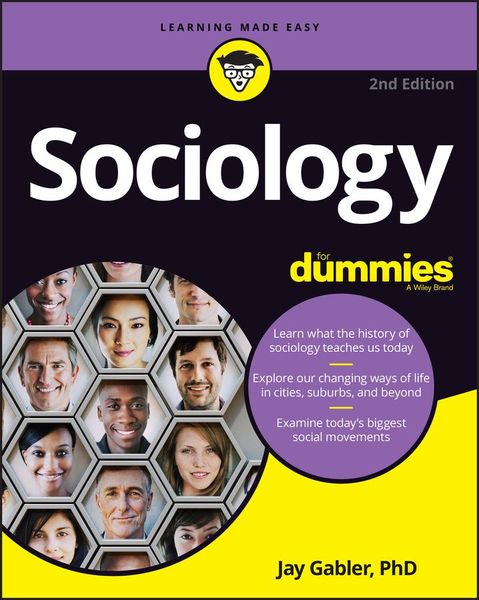
Produktbild: Sociology For Dummies

Sociology For Dummies

Aus der Reihe For Dummies

Fr. 35.90

inkl. gesetzl. MwSt., Versandkostenfrei


Beschreibung

Produktdetails

Einband

Taschenbuch

Erscheinungsdatum

03.05.2021

Verlag

John Wiley & Sons Inc

Seitenzahl

384

Maße (L/B/H)

23.3/18.7/2.2 cm

Gewicht

522 g

Auflage

2. Auflage

Sprache

Englisch

ISBN

978-1-119-77281-1

Beschreibung

Produktdetails

Einband

Taschenbuch

Erscheinungsdatum

03.05.2021

Verlag

John Wiley & Sons Inc

Seitenzahl

384

Maße (L/B/H)

23.3/18.7/2.2 cm

Gewicht

522 g

Auflage

2. Auflage

Sprache

Englisch

ISBN

978-1-119-77281-1

Herstelleradresse

Libri GmbH
Europaallee 1
36244 Bad Hersfeld
DE

Email: gpsr@libri.de

Kundinnen und Kunden meinen

0 Bewertungen

Informationen zu Bewertungen

Zur Abgabe einer Bewertung ist eine Anmeldung im Konto notwendig. Die Authentizität der Bewertungen wird von uns nicht überprüft. Wir behalten uns vor, Bewertungstexte, die unseren Richtlinien widersprechen, entsprechend zu kürzen oder zu löschen.

Die Bewertungen sind nach Format, Anzahl Sterne und Datum sortiert.

Verfassen Sie die erste Bewertung zu diesem Artikel

Helfen Sie anderen Kund*innen durch Ihre Meinung

Kundinnen und Kunden meinen

0 Bewertungen filtern

Die Leseprobe wird geladen.
  • Produktbild: Sociology For Dummies
  • Introduction 1

    About This Book 2

    Foolish Assumptions 4

    Icons Used In This Book 5

    Beyond the Book 6

    Where To Go From Here 6

    Part 1: Getting the Basic Basics 7

    Chapter 1: Getting Your Head around Sociology 9

    Focusing Your Sociological Lens 10

    Defining sociology 10

    Knowing the history of sociology 10

    Doing sociology 11

    The Nuts and Bolts of Society 12

    Understanding culture 13

    Microsociology 13

    Understanding Differences Among People and Groups 14

    Social stratification 14

    Race and ethnicity 15

    Sex and gender 15

    Religion 16

    Crime, deviance, and social control 16

    How People Get Organized (Or At Least Try To) 17

    Organizations and networks 17

    Social movements and political sociology 17

    Urban and rural sociology 18

    Changes In Your Life, Changes In Your Society 18

    The life course 19

    Social change 19

    Sociology For Dummies, for Dummies 20

    Chapter 2: Knowing Why Sociology Matters 21

    Figuring Out What Sociology is 22

    Defining sociology 22

    Studying society scientifically 22

    Asking and answering sociological questions 25

    Discovering Where Sociology is "Done" 27

    Colleges and universities 27

    Think tanks and research institutes 27

    Nonprofit organizations 28

    Government 29

    Journalism and reporting 29

    Business and consulting 30

    Everyday life 31

    Recognizing How Sociology Affects Your Life and Your World 31

    Thinking about the social world in an objective, value-free way 32

    Visualizing connections across times and places 33

    Uncovering what really matters and what doesn't 34

    Informing social policy 35

    Keeping a unique perspective for everyday problems 36

    Chapter 3: Conflict and Cooperation: The History of Sociology 37

    So Who Cares about History? 38

    Thinking about Society before There Was Sociology 39

    People are the same everywhere you go except when they aren't 39

    Pre-sociologists: People with ideas about society 40

    Political and industrial revolution: Ready or not, here it comes 41

    The Development of "Sociology" 43

    Figuring out life with positivism 43

    Common themes of early sociologists 43

    Sociology: The most ambitious science 44

    Sociology's Power Trio 46

    Karl Marx 47

    Emile Durkheim 49

    Max Weber 51

    Sociology in the 20th Century 53

    Sociology in America: W.E.B Du Bois and the Chicago School 53

    Mass society: Are we, or are we not, sheep? 54

    The Power Elite: Marx's revenge 56

    Sociology Today 58

    Chapter 4: Understanding the Research Methods: You Can't Put Society in a Test Tube 59

    Performing Sociological Research 60

    Asking your question 60

    Checking the literature 62

    Operationalizing your question and find your data 63

    Analyzing your data 65

    Step 5: Interpreting your results 65

    Getting to Know the Research Methods 67

    Getting quantitative data 68

    Gathering qualitative data 72

    Choosing hybrid methods 73

    Preparing For Potential Pitfalls 75

    Using inappropriate data 75

    Getting overzealous 75

    Overlooking relevant information 78

    Misusing statistics 79

    Making mistakes just plain oops! 80

    Part 2: Seeing Society Like a Sociologist 83

    Chapter 5: Getting Some Culture: How Socialization Works 85

    Understanding What Culture is - and Isn't 86

    Defining "culture" 86

    Breaking down structure 87

    Does culture matter? 89

    Studying Culture: Makin' It and Takin' It 91

    Other angles on culture 91

    The production and reception of culture 93

    Culture, information, and the news 94

    Paddling the "Mainstream" 95

    Subculture 96

    Microcultures 97

    Socialization: Where You Connect in Culture 99

    Nature vs nurture: Social psychology 100

    You are who other people think you are 101

    Culture Paradox: Pulling Us Together and Pushing Us Apart 103

    Uniting through culture 103

    Dividing because of culture 104

    Chapter 6: Studying Sociology at Its Smallest: Microsociology 105

    Grasping the Paradox of Society 106

    Social facts: What your society says about you 106

    Adaptation and frustration 109

    Understanding Why People Make Rational - and Irrational - Choices 110

    Making rational choices - or, at least, trying 111

    Making bad decisions (we've all been there) 114

    Getting How Symbolic Interactionism Works 119

    Play ball! The rules of the game 120

    Stop frontin': Switching roles, changing frames 122

    Part 3: Equality and Inequality in Our Diverse World 125

    Chapter 7: Social Stratification: We're All Equal, But Some of Us Are More Equal Than Others 127

    Excavating the Social Strata 128

    Understanding social inequality 128

    Grappling with the perennial debate: Is inequality necessary? 131

    Recognizing the Many Means of Inequality 134

    Income and wealth: Making money (or inheriting it) 134

    Occupation: Landing in the labor force 135

    Innate ability: Capitalizing on your skills 137

    Motivation: Getting out of bed in the morning 137

    Social connections: Knowing the right people 139

    Credentials: Carrying the right cards 140

    Education: Learning the ropes 141

    Specialized knowledge: Knowing what others don't 142

    Bias and discrimination: Being limited by others' lack of imagination 143

    Considering Global Inequality 144

    Chapter 8: Race and Ethnicity: What Others See, Who We Are 147

    Race: Real in Its Consequences 148

    Knowing the difference between race and ethnicity 148

    Grasping the complexities of life in color 152

    Debunking the myth of the "model minority" 154

    Putting whiteness in the spotlight 155

    Considering Individuals and Institutions 158

    Racial discrimination: Conscious and unconscious 158

    How racism becomes institutionalized 160

    Understanding Immigration in a Changing World 161

    Crossing borders, keeping ties 162

    Immigration today 163

    Chapter 9: Sex and Gender: Beyond the Binary 167

    Biology is Not Destiny 168

    Distinguishing between sex and gender 168

    Understanding the sex and gender spectrum 169

    Changing Ideas of Femininity and Masculinity 171

    The history of feminism 172

    Rethinking masculinity 175

    #MeToo and a new reckoning 177

    Intersectionality: Race and Gender 180

    Chapter 10: Getting Religion: Faith in the Modern World 183

    Understanding Religion in History 184

    Karl Marx on religion: Opium of the people 184

    Émile Durkheim on religion: Progressing from specific rules to common principles 185

    Weber on religion: A switchman on the tracks 188

    Religion in Theory and in Practice 189

    Religious ideas, ideology, and values 189

    The important role of religious organizations 191

    Faith and Freedom in the World Today 194

    Shopping for God 194

    Belief, action, and everything in between 197

    Chapter 11: Crime and Deviance: Who's in Control? 201

    Knowing the Difference between Deviance and Crime 202

    Understanding Why People Commit Crimes 204

    Theory one: Are criminals bad people? 204

    Theory two: Are criminals driven to it? 205

    Accepting crime as normal 206

    Breaking Down the Social Construction of Crime 208

    Writing laws that make sense to a society 208

    Enforcing the law 210

    Looking Beyond Crime and Punishment 212

    Rethinking policing 213

    Examining the effects of America's high incarceration rate 216

    Considering whether punishment works 216

    Tallying the high costs of incarceration 217

    Part 4: All Together Now: The Ins and Outs of Social Organization 219

    Chapter 12: Knowing What Works (and Doesn't): Sociology and Organizations 221

    Recognizing the Corporate Conundrum 222

    Understanding Weber's Big Idea About Organizations 224

    Getting That People Are More Than Cogs in a Machine 226

    Rational systems: Bureaucracy at its purest 227

    Natural systems: We're only human 229

    Open systems: The whole wide world of work 231

    Seeing Society as a Network 234

    Connecting individuals to their society 234

    The strength of weak ties 235

    Gathering insights from network analysis 237

    Exploring the New World of Work 238

    Chapter 13: Getting into It: Political Sociology 241

    Government: Governing and Being Governed 242

    Understanding government as a social institution 242

    Knowing what causes political revolution 244

    Sharing (or Not Sharing) Power in Society 247

    Conflict models: Everyone for themselves 247

    Pluralist models: Fair is fair 250

    Social Movements: Working for Change 253

    Getting off the ground 253

    Mobilizing supporters 256

    Understanding why social movements succeed - or fizzle 259

    Going Viral: How Social Media Transforms Social Movements 261

    Chapter 14: Recognizing Why Density and Demographics Matter 263

    Studying Sociology in the City 264

    Feeling lonely in a crowd: The paradox of social life 264

    Observing street corner society 267

    Changing Neighborhoods Through History 269

    Recognizing the relevance of neighborhoods 269

    Understanding how and why neighborhoods change 271

    Studying the rise of the suburbs 274

    The upper class, the lower class, and the underclass 276

    Considering City and Country 279

    Who are cities for? 279

    Small towns, high hopes 281

    Part 5: Sociology and Your Life 285

    Chapter 15: Exploring Family and the Life Course as Social Constructs 287

    The Social Construction of Age 288

    The "invention" of childhood 288

    The new senior citizens - and the new young adults 290

    Running the Course of Life 292

    Demographics and life transitions 292

    The changing role of education 294

    Taking Care: Health Care and Society 296

    Deciding what counts as "healthy" 296

    Organizing and distributing health care 299

    Families Past and Present 301

    The way we never were 301

    The family today 304

    Chapter 16: Understanding Social Change 307

    Understanding How and Why Societies Change 308

    Marx: If it's not one revolution, it's another 308

    Durkheim: Increasing diversity 310

    Weber: Into the iron cage 312

    Forecasting the Future of Society 314

    Globalization: Does the future hold cooperation or conflict? 314

    Digital communication: Protecting privacy and freedom in an always-online era 316

    Climate change: The unequal effects of a warming world 318

    Exploring Sociology of the Future! 320

    Social science will be more important than ever 320

    Too much information? A good problem to have if you're a sociologist 322

    Will sociology continue to exist? 323

    Part 6: The Part of Tens 325

    Chapter 17: Ten Sociology Books That Don't Feel Like Homework 327

    W.E.B Du Bois: The Souls of Black Folk (1903) 328

    Erving Goffman: The Presentation of Self in Everyday Life (1959) 328

    Randall Collins: Sociological Insight (1982) 329

    Arlie Hochschild: The Second Shift (1989) 329

    Patricia Hill Collins: Black Feminist Thought (1990) 330

    Evelyn Nakano Glenn (editor): Shades of Difference (2009) 330

    Annette Lareau: Unequal Childhoods (2003) 331

    Lorena Garcia: Respect Yourself, Protect Yourself: Latina Girls and Sexual Identity (2012) 332

    Matthew Desmond: Evicted: Poverty and Profit in the American City (2016) 332

    Suk-Young Kim: K-pop Live (2018) 333

    Chapter 18: Ten Ways to Use Sociological Insight in Everyday Life 335

    Thinking Critically About Claims That "Research Proves" One Thing or Another 336

    Being Aware of Unprovable Assertions About Society 336

    Understanding Barriers to Effective Communication 337

    Knowing the Difference Between the Identity You Choose and the Identities Others Choose For You 338

    Understanding Art: If It Seems Confusing, That's Exactly the Point 339

    Being Smart About Relationship-Building 340

    Staying Safer in a Pandemic 341

    Learning How to Mobilize a Social Movement 342

    Running Your Company Effectively 342

    Thinking Critically About What You Read and Hear 343

    Chapter 19: Ten Myths About Society Busted by Sociology 345

    With Hard Work and Determination, Anyone Can Get What They Deserve 346

    Our Actions Reflect Our Values 347

    We're Being Brainwashed by the Media 348

    Understanding Society is Just a Matter of "Common Sense" 348

    Race Doesn't Matter Any More 349

    Immigration Equals Invasion 350

    Bureaucracy is Dehumanizing 351

    People Who Make Bad Choices Are Just Getting the Wrong Messages 351

    Society Prevents Us From Being Our "True Selves" 352

    There is Such a Thing as a Perfect Society 353

    Index 355