KI-Beratung Beta

Produktbild: Brodsky, C: Linguistic Condition

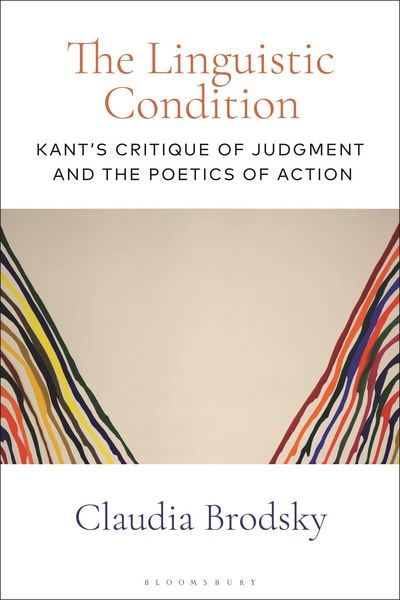
Brodsky, C: Linguistic Condition Kant's Critique of Judgment and the Poetics of Action

Fr. 159.00

inkl. gesetzl. MwSt., Versandkostenfrei


Beschreibung

Providing a unique interpretation of Kant's theory of judgement as integral to his overall project, Claudia Brodsky explores his continued relevance to contemporary theoretical concerns. The Linguistic Condition traces how Kant combined sensus communis, or common sense with the communicative nature...

Beschreibung

Providing a unique interpretation of Kant's theory of judgement as integral to his overall project, Claudia Brodsky explores his continued relevance to contemporary theoretical concerns. The Linguistic Condition traces how Kant combined sensus communis, or common sense with the communicative nature of judgement to reveal that, for him, acts of judgement are dependent on their linguistic articulation, so that in Kantian philosophy language and judgement are inextricably linked. In this first in-depth analysis of language in the Critique of Judgement, Brodsky forms creative connections between literature and philosophy.

Produktdetails

Einband

Gebundene Ausgabe

Erscheinungsdatum

20.05.2021

Verlag Bloomsbury Academic
Seitenzahl

270

Produktdetails

Einband

Gebundene Ausgabe

Erscheinungsdatum

20.05.2021

Verlag Bloomsbury Academic
Seitenzahl

270

Maße (L/B/H)

23.4/15.6/1.6 cm

Gewicht

557 g

Sprache

Englisch

ISBN

978-1-350-14437-8

Noch keine Bewertungen vorhanden

Verfassen Sie die erste Bewertung zu diesem Artikel

Helfen Sie anderen Kundinnen und Kunden durch Ihre Meinung.

Kundinnen und Kunden meinen

Bewertungen (0)

Die Leseprobe wird geladen.
  • Produktbild: Brodsky, C: Linguistic Condition
  • Preface. Acting upon Condition

    Chapter One. Introduction: Before Judgment: Doing without Knowing in Kant and Diderot
    Part I. Linguistic Conditions
    Chap. Two. "The Condition of Judgment:" Kant's "Common Sense," or the Origin of Language in the Third Critique
    1. "'Common Sense'" and Signification, or What is Not Tautology
    2. "Technique"
    3. "Free"
    4. "Feeling"
    5. Speech Act and "Communicability"
    6. Rousseau's Nouns
    7. Diderot's Adjectives
    8. Kant's Predicates: "Synthetic Judgments a Priori" and "A General Voice"
    9. "The Schema," or Language Inside
    10. What is Articulation?
    11. World Without Words: Wordsworth

    Part II. Missing Senses and Poetics Chap. Three. "Judgment" and the Genesis of What We Lack: "Poetry," "Schema,"
    and the "Monogram of Imagination" in Kant
    1. "Judgment" in the "Age of Critique"
    2. Judgment and "Indifference:" The "Common Sense" of Imagination in Arendt
    and Kant
    3. The Schema and the Language of Poetry
    4. Poetry and the Judgment of Critique
    Chap. Four. Kleist's Mere Formalities 1. Kant and Kleist: Representation and Irony
    2. What happened: Missed Representation and Misrepresentation
    in "Die Marquise von O."
    3. Contesting "Judgment" in "The Duel"

    Bibliography
    Primary Bibliography

    Secondary Bibliography