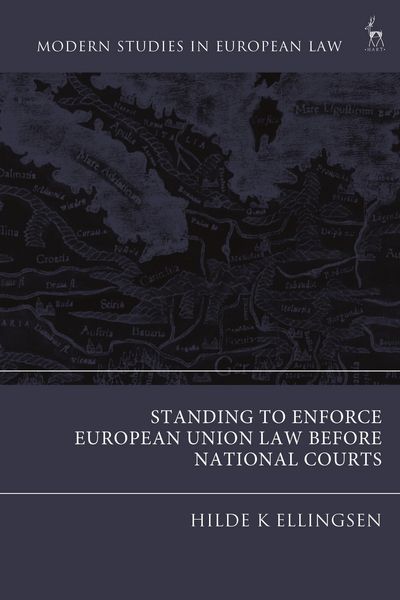

• Produktbild: Standing to Enforce European Union Law before National Courts
  • Produktbild: Standing to Enforce European Union Law before National Courts

Standing to Enforce European Union Law before National Courts

Fr. 168.00

inkl. gesetzl. MwSt., Versandkostenfrei


Beschreibung

Produktdetails

Einband

Gebundene Ausgabe

Erscheinungsdatum

22.04.2021

Verlag

Bloomsbury Academic

Seitenzahl

290

Maße (L/B/H)

24/16.1/2 cm

Gewicht

602 g

Sprache

Englisch

ISBN

978-1-5099-3714-1

Beschreibung

Produktdetails

Einband

Gebundene Ausgabe

Erscheinungsdatum

22.04.2021

Verlag

Bloomsbury Academic

Seitenzahl

290

Maße (L/B/H)

24/16.1/2 cm

Gewicht

602 g

Sprache

Englisch

ISBN

978-1-5099-3714-1

Herstelleradresse

Libri GmbH
Europaallee 1
36244 Bad Hersfeld
DE

Email: GPSR Kontakt

Noch keine Bewertungen vorhanden

Verfassen Sie die erste Bewertung zu diesem Artikel

Helfen Sie anderen Kundinnen und Kunden durch Ihre Meinung.

Kundinnen und Kunden meinen

Bewertungen (0)

Die Leseprobe wird geladen.
  • Produktbild: Standing to Enforce European Union Law before National Courts
  • Produktbild: Standing to Enforce European Union Law before National Courts
  • 1. Introduction
    I. The Topic of this Book
    II. Clarification and Elaboration of Core Concepts
    III. The Structure of the Book
    2. Normative Underpinnings in the Court's Case Law
    I. Introduction
    II. The Rule of Law (as an 'Essentially Contested Concept')
    III. The Need for (and Difficulties Associated with) Distinguishing Rights Protection from Effectiveness Per Se
    IV. 'Eurolegalism': The Particularities of the Union Mode of Regulation
    3. The Union Law Principles at Play
    I. Introduction
    II. The Evolvement of Private Enforcement
    III. Equivalence, Effectiveness and Effective Judicial Protection
    IV. Effective Judicial Protection as the Leading Principle and Rationale in Relation to Standing
    V. A Twofold Approach to Dissecting Union Law Requirements on Standing
    4. Invoking the Principle of Effective Judicial Protection
    I. Introduction
    II. The Relationship between Rights and Judicial Protection in EU Law
    III. The Concept of Union Rights
    IV. Requirement of an Arguable Claim
    5. EU Law Requirements on National Standing Rules
    I. Introduction
    II. Harmonised Standing Rules Based on the Principle of Effective Judicial Protection
    III. Standing Before the Union Courts - A Useful Guideline?
    IV. The Union Doctrine of Standing: Fleshing Out the Criteria
    V. The Union Right to Standing: The Scope for Balancing Countervailing Considerations
    VI. The Effects of the Doctrine in a Concrete Case
    VII. The Legality and Legitimacy of a Court-made Doctrine of Standing
    6. What Standing is Not About: Distinguishing Direct Effect, Invocability and Standing
    I. Introduction
    II. Direct Effect
    III. The Right to Invoke Union Law Provisions When Already before the Court
    7. The Relationship between Standing and (Substantive) Remedies
    I. Introduction
    II. Remedial Autonomy and its Limitations
    III. The Right to Specific Union Law Remedies
    IV. Distinguishing Standing to Pursue Union Law Remedies and the Right to Obtain Such Remedies
    V. Alternative Forms of Legal Recourse
    8. Standing to Seek Judicial Review of Administrative Decisions
    I. Introduction
    II. Standing Doctrines in the Member States
    III. Illustration I: Standing in the Area of Environmental Law
    IV. Illustration II: Standing in the Telecommunications Sector
    9. Standing to Seek Judicial Review of Legislative Acts
    I. Introduction
    II. Review of Legislative Acts in the Member States
    III. Situations Where Incidental Review is Sufficient from the Perspective of Union Law
    IV. A Free-standing Action as an Avenue of Last Resort
    10. Standing to Seek Compensation from the State
    I. Introduction
    II. The Contours of the State Liability Doctrine
    III. The Criteria for Having a Right of Action in Damages
    IV. Autonomous Union Law Remedy or Remedy of Last Resort?
    11. Standing in Proceedings against Private Parties
    I. Introduction
    II. Union Law and Private Legal Relationships
    III. Various Ways to Invoke Union Law against Private Parties
    IV. The Requirement of a Horizontal Right of Action
    V. Standing to Seek Injunctions
    VI. Standing to Seek Contractual Remedies
    12. Enforcing the Rights of Others
    I. Introduction
    II. Claimants Whose Rights are (Also) Affected
    III. Claimants Indirectly Affected by a Union Law Infringement
    IV. Rights of Successors: Assignment of Claims and Third Party Contracts
    V. Third Parties Suffering from the 'Passing-on' of Unlawfully Levied Taxes
    VI. Third Parties Suffering Economic Harm through the Infringement of the Rights of Others
    13. Enforcement of Union Law in the Name of Effectiveness
    I. Introduction
    II. Why a Rights-orientated Approach is Insufficient
    III. Starting Point: No Mandatory Public Interest Standing Without Specific Regulation
    IV. Infringements Committed by Member States
    V. Infringements Committed by Private Parties
    VI. Concluding Remarks
    14. Conclusions
    I. Key Findings
    II. Union Law Standing: No Panacea for Effectiveness and Effective Judicial Protection