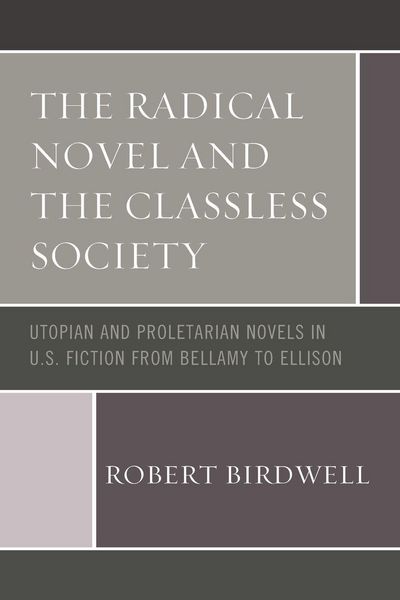
Radical Novel and the Classless Society Utopian and Proletarian Novels in U.S. Fiction from Bellamy to Ellison
-
- Hardcover
- Taschenbuch ausgewählt
- eBook
-
Sprache:Englisch
Fr. 63.90
inkl. gesetzl. MwSt.,
Beschreibung
Produktdetails
Einband
Taschenbuch
Erscheinungsdatum
13.08.2020
Verlag
Ingram Publishers ServicesSeitenzahl
216
Maße (L/B/H)
22.9/15.2/1.2 cm
Gewicht
313 g
Sprache
Englisch
ISBN
978-1-4985-7043-5
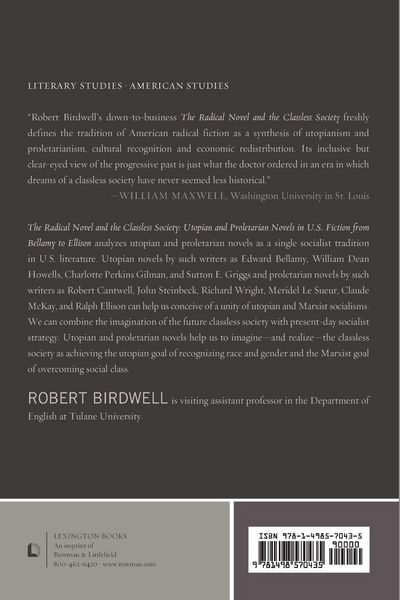
The Radical Novel and the Classless Society analyzes utopian and proletarian novels as a single socialist tradition in U.S. literature. Utopian novels by such writers as Edward Bellamy, William Dean Howells, Charlotte Perkins Gilman, and Sutton E. Griggs and proletarian novels by such writers as Robert Cantwell, John Steinbeck, Richard Wright, Meridel Le Sueur, Claude McKay, and Ralph Ellison can help us conceive of a unity of utopian and Marxist socialisms. We can combine the imagination of the future classless society with present-day socialist strategy. Utopian and proletarian novels help us to imagine-and realize-the classless society as achieving the utopian goal of recognizing race and gender and the Marxist goal of overcoming social class.
Kundinnen und Kunden meinen
Verfassen Sie die erste Bewertung zu diesem Artikel
Helfen Sie anderen Kund*innen durch Ihre Meinung