Beschreibung
Produktdetails
Einband
Gebundene Ausgabe
Erscheinungsdatum
27.03.2023
Verlag
John Wiley & SonsSeitenzahl
336
Maße (L/B/H)
23/15.4/2.4 cm
Gewicht
953 g
Auflage
1. Auflage
Sprache
Englisch
ISBN
978-1-119-79931-3
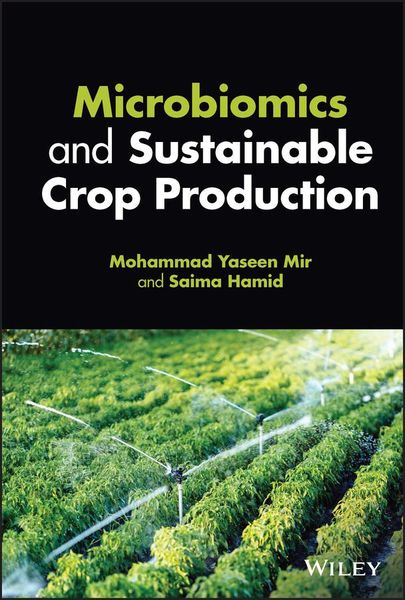
Microbiomics and Sustainable Crop Production
Microbiomics and Sustainable Crop Production presents an overview of the current state of the art in microbiome research, discussing many new technologies and approaches in order to bridge knowledge gaps between field and lab experimental systems. New and emerging strategies to improve the survival and activity of microbial inoculants are covered, including the use of selected indigenous microbes, optimizing microbial delivery methods, and taking advantage of modern gene editing tools to engineer microbial inoculants.
The two highly qualified authors address new molecular tools and powerful biotechnological advances, providing readers with knowledge of the complex chemical and biological interactions that occur in the rhizosphere and ensuring that strategies to engineer the rhizosphere are safe, beneficial to productivity, and result in improvements to the sustainability of agricultural systems. The relationship between phyllosphere microbial communities and functional traits of plants is also explored. Finally, approaches and priority areas for future research on phyllosphere microbiology are suggested.
Topics covered in this comprehensive resource include:
* Transmission modes of bacteria and fungi and the nature of their interactions in the endosphere
* Characteristics of 'core microbiomes', which may be deployed to organize otherwise uncontrollable dynamics of resident microbiomes
* Model microbiome-plant systems, as well as the stability, resilience, and assembly of agricultural microbiomes
* Engineering and management of agricultural microbiomes for improving crop health, including reasons to modify plant microbiomes
* Microbiome research in the omics era and new efforts and challenges in assigning functions to microbes
For students of plant biotechnology, agricultural sciences, and agricultural engineering, along with researchers working in related fields, Microbiomics and Sustainable Crop Production is an important resource to understand many complex modern ideas related to the subject and how they can be applied to practical applications.
Microbiomics and Sustainable Crop Production presents an overview of the current state of the art in microbiome research, discussing many new technologies and approaches in order to bridge knowledge gaps between field and lab experimental systems. New and emerging strategies to improve the survival and activity of microbial inoculants are covered, including the use of selected indigenous microbes, optimizing microbial delivery methods, and taking advantage of modern gene editing tools to engineer microbial inoculants.
The two highly qualified authors address new molecular tools and powerful biotechnological advances, providing readers with knowledge of the complex chemical and biological interactions that occur in the rhizosphere and ensuring that strategies to engineer the rhizosphere are safe, beneficial to productivity, and result in improvements to the sustainability of agricultural systems. The relationship between phyllosphere microbial communities and functional traits of plants is also explored. Finally, approaches and priority areas for future research on phyllosphere microbiology are suggested.
Topics covered in this comprehensive resource include:
* Transmission modes of bacteria and fungi and the nature of their interactions in the endosphere
* Characteristics of 'core microbiomes', which may be deployed to organize otherwise uncontrollable dynamics of resident microbiomes
* Model microbiome-plant systems, as well as the stability, resilience, and assembly of agricultural microbiomes
* Engineering and management of agricultural microbiomes for improving crop health, including reasons to modify plant microbiomes
* Microbiome research in the omics era and new efforts and challenges in assigning functions to microbes
For students of plant biotechnology, agricultural sciences, and agricultural engineering, along with researchers working in related fields, Microbiomics and Sustainable Crop Production is an important resource to understand many complex modern ideas related to the subject and how they can be applied to practical applications.
Noch keine Bewertungen vorhanden
Verfassen Sie die erste Bewertung zu diesem Artikel
Helfen Sie anderen Kundinnen und Kunden durch Ihre Meinung.