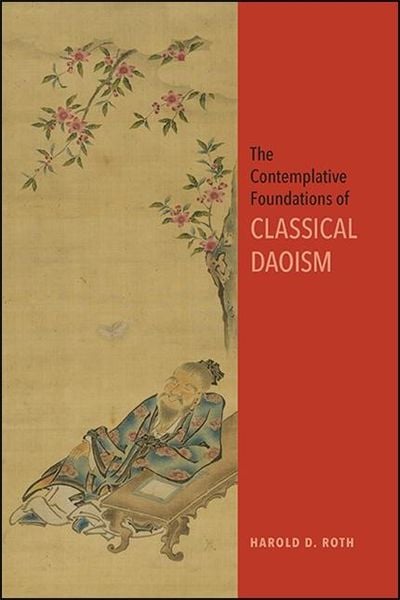
The Contemplative Foundations of Classical Daoism
-
- Hardcover
- Taschenbuch
- eBook ausgewählt
-
Form:Einzelkauf Download
-
Sprache:Englisch
Fr. 45.90
inkl. gesetzl. MwSt.Beschreibung
Produktdetails
Format
ePUB
Kopierschutz
Nein
Family Sharing
Nein
Text-to-Speech
Ja
Erscheinungsdatum
01.05.2021
Verlag
State University Of New York PressSeitenzahl
572 (Printausgabe)
Dateigröße
17730 KB
Sprache
Englisch
EAN
9781438482729
Brings early Daoist writings into conversation with contemporary contemplative studies.
In The Contemplative Foundations of Classical Daoism, Harold D. Roth explores the origins and nature of the Daoist tradition, arguing that its creators and innovators were not abstract philosophers but, rather, mystics engaged in self-exploration and self-cultivation, which in turn provided the insights embodied in such famed works as the Daodejing and Zhuangzi. In this compilation of essays and chapters representing nearly thirty years of scholarship, Roth examines the historical and intellectual origins of Daoism and demonstrates how this distinctive philosophy emerged directly from practices that were essentially contemplative in nature.
In the first part of the book, Roth applies text-critical methods to derive the hidden contemplative dimensions of classical Daoism. In the second part, he applies a "contemplative hermeneutic" to explore the relationship between contemplative practices and classical Daoist philosophy and, in so doing, brings early Daoist writings into conversation with contemporary contemplative studies. To this he adds an introduction in which he reflects on the arc and influence on the field of early Chinese thought of this rich vein of scholarship and an afterword in which he applies both interpretive methods to the vexing question of the authorship of the Inner Chapters of the Zhuangzi. The Contemplative Foundations of Classical Daoism brings to fruition the cumulative investigations and observations of a leading figure in the emerging field of contemplative studies as they pertain to a core component of early Chinese thought.
Kundinnen und Kunden meinen
Verfassen Sie die erste Bewertung zu diesem Artikel
Helfen Sie anderen Kund*innen durch Ihre Meinung