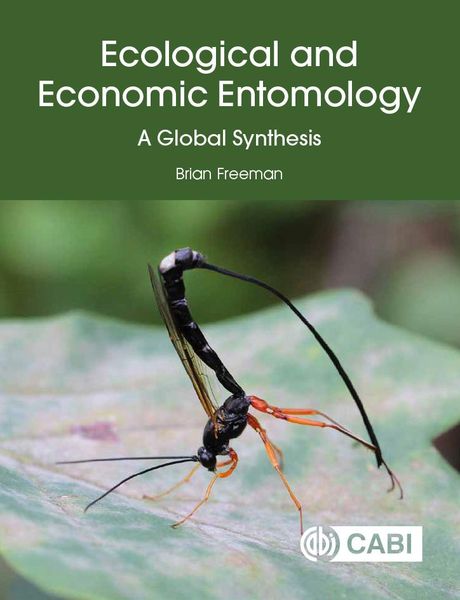
Ecological and Economic Entomology A Global Synthesis
Fr. 105.90
inkl. gesetzl. MwSt.Beschreibung
Produktdetails
Format
ePUB
Kopierschutz
Ja
Family Sharing
Nein
Text-to-Speech
Ja
Erscheinungsdatum
11.11.2020
Verlag
University Of Pittsburgh PressSeitenzahl
(Printausgabe)
Dateigröße
12404 KB
Sprache
Englisch
EAN
9781789241204
Ecological and Economic Entomology is a comprehensive advanced text covering all aspects of the role of insects in natural ecosystems and their impacts on human activity.
The book is divided into two sections. The first section begins with an outline of the structure, classification and importance of insects, followed by the geographical aspects of plant distribution and the complex defences plants marshal against herbivorous insects. Insect pests affecting plant roots, stem, leaf, and reproductive systems are covered in a comprehensive review. This section also covers insects that are important in medical and veterinary science, paying particular attention to those that transmit pathogens. The section concludes with the beneficial aspects of insects, especially their use in biological control, but also as soil formers and their importance in forensic science.
Autecology (or single-species ecology) and its application to pest management is the focus of the second section of the book. Firstly, some general aspects of autecology are examined, including species abundance, competition and speciation, and relevant genetics. The classic general theories of insect population dynamics are reviewed, followed by chapters on life tables, time series analysis and mathematical models in insect populations. The final chapter reviews the application of autecology to the insect pests of forests, farms and orchards and to the control of insect vectors of diseases of humans and livestock. Particular attention is paid to environmentally friendly methods of pest management and the application of Integrated Pest Management (IPM) techniques.
This volume is essential reading for professional entomologists and advanced students of agricultural, medical and veterinary entomology, insect ecology and conservation.
The book is divided into two sections. The first section begins with an outline of the structure, classification and importance of insects, followed by the geographical aspects of plant distribution and the complex defences plants marshal against herbivorous insects. Insect pests affecting plant roots, stem, leaf, and reproductive systems are covered in a comprehensive review. This section also covers insects that are important in medical and veterinary science, paying particular attention to those that transmit pathogens. The section concludes with the beneficial aspects of insects, especially their use in biological control, but also as soil formers and their importance in forensic science.
Autecology (or single-species ecology) and its application to pest management is the focus of the second section of the book. Firstly, some general aspects of autecology are examined, including species abundance, competition and speciation, and relevant genetics. The classic general theories of insect population dynamics are reviewed, followed by chapters on life tables, time series analysis and mathematical models in insect populations. The final chapter reviews the application of autecology to the insect pests of forests, farms and orchards and to the control of insect vectors of diseases of humans and livestock. Particular attention is paid to environmentally friendly methods of pest management and the application of Integrated Pest Management (IPM) techniques.
This volume is essential reading for professional entomologists and advanced students of agricultural, medical and veterinary entomology, insect ecology and conservation.
Kundinnen und Kunden meinen
Verfassen Sie die erste Bewertung zu diesem Artikel
Helfen Sie anderen Kund*innen durch Ihre Meinung