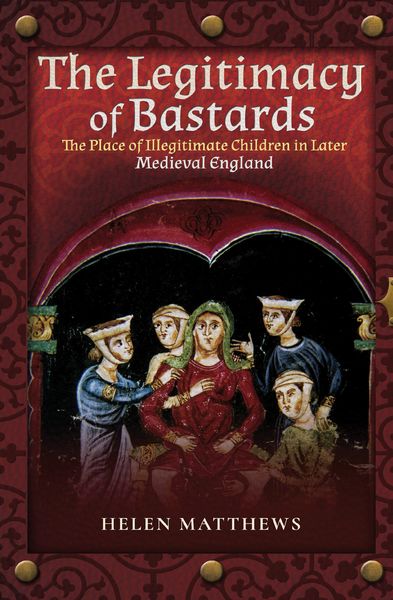
The Legitimacy of Bastards The Place of Illegitimate Children in Later Medieval England
-
- Einzelkauf Download ausgewählt
-
Sprache:Englisch
Fr. 18.90
inkl. gesetzl. MwSt.Beschreibung
Produktdetails
Format
ePUB 3
Kopierschutz
Nein
Family Sharing
Nein
Text-to-Speech
Ja
Erscheinungsdatum
12.11.2020
Verlag
Pen & Sword HistorySeitenzahl
248 (Printausgabe)
Dateigröße
28164 KB
Sprache
Englisch
EAN
9781526716576
An in-depth look at the lives of illegitimate children and their parents in England in the later Middle Ages.
For the nobility and gentry in later medieval England, land was a source of wealth and status. Their marriages were arranged with this in mind, and it is not surprising that so many of them had mistresses and illegitimate children. John de Warenne, earl of Surrey, married at the age of twenty to a ten-year-old granddaughter of Edward I, had at least eight bastards and a complicated love life.
In theory, bastards were at a considerable disadvantage. Regarded as 'filius nullius' or the son of no one, they were unable to inherit real property and barred from the priesthood. In practice, illegitimacy could be less of a stigma in late medieval England than it became between the sixteenth and late twentieth centuries. There were ways of making provision for illegitimate offspring and some bastards did extremely well-in the church, through marriage, as soldiers, and a few even succeeding to the family estates.
The Legitimacy of Bastardsis the first book to consider the individuals who had illegitimate children, the ways in which they provided for them and attitudes towards both the parents and the bastard children. It also highlights important differences between the views of illegitimacy taken by the Church and by the English law.
"Informative and well researched ... A great resource for those who want to learn more about the late medieval period and illegitimate children." -
Adventures of a Tudor Nerd
For the nobility and gentry in later medieval England, land was a source of wealth and status. Their marriages were arranged with this in mind, and it is not surprising that so many of them had mistresses and illegitimate children. John de Warenne, earl of Surrey, married at the age of twenty to a ten-year-old granddaughter of Edward I, had at least eight bastards and a complicated love life.
In theory, bastards were at a considerable disadvantage. Regarded as 'filius nullius' or the son of no one, they were unable to inherit real property and barred from the priesthood. In practice, illegitimacy could be less of a stigma in late medieval England than it became between the sixteenth and late twentieth centuries. There were ways of making provision for illegitimate offspring and some bastards did extremely well-in the church, through marriage, as soldiers, and a few even succeeding to the family estates.
The Legitimacy of Bastardsis the first book to consider the individuals who had illegitimate children, the ways in which they provided for them and attitudes towards both the parents and the bastard children. It also highlights important differences between the views of illegitimacy taken by the Church and by the English law.
"Informative and well researched ... A great resource for those who want to learn more about the late medieval period and illegitimate children." -
Adventures of a Tudor Nerd
Kundinnen und Kunden meinen
Verfassen Sie die erste Bewertung zu diesem Artikel
Helfen Sie anderen Kund*innen durch Ihre Meinung