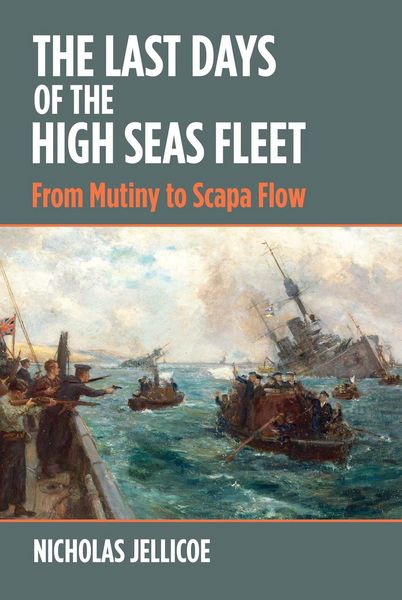
The Last Days of the High Seas Fleet From Mutiny to Scapa Flow
-
- Einzelkauf Download ausgewählt
-
Sprache:Englisch
Fr. 18.90
inkl. gesetzl. MwSt.Beschreibung
Produktdetails
Format
ePUB 3
Kopierschutz
Nein
Family Sharing
Nein
Text-to-Speech
Ja
Erscheinungsdatum
12.11.2020
Verlag
Seaforth PublishingSeitenzahl
352 (Printausgabe)
Dateigröße
25087 KB
Sprache
Englisch
EAN
9781526754592
"Much fresh material ... an excellent historical narrative of the events leading up to the Great Scuttle, the terrible day itself and its aftermath." -
Warships: International Fleet Review
On June 21, 1919, the ships of the German High Seas Fleet-interned at Scapa Flow since the Armistice-began to founder, taking their British custodians completely by surprise. In breach of agreed terms, the fleet dramatically scuttled itself, in a well-planned operation that consigned nearly half a million tons, and 54 of 72 ships, to the bottom of the sheltered anchorage in a gesture of Wagnerian proportions.
This much is well-known, but more than a century after the "Grand Scuttle" many questions remain. Was von Reuter, the fleet's commander, acting under orders or was it his own initiative? Why was June 21 chosen? Did the British connive in or even encourage the action? Could more have been done to save the ships? Was it legally justified? And what were the international ramifications?
This new book analyzes all these issues, beginning with the fleet mutiny in the last months of the war that precipitated a social revolution in Germany and the eventual collapse of the will to fight. The Armistice terms imposed the humiliation of virtual surrender on the High Seas Fleet, and the conditions under which it was interned are described in detail. Meanwhile the victorious Allies wrangled over the fate of the ships, an issue that threatened the whole peace process. Using much new material from German sources and a host of eyewitness testimonies, the circumstances of the scuttling itself are meticulously reconstructed, while the aftermath for all parties is clearly laid out. The story concludes with "the biggest salvage operation in history" and a chapter on the significance of the scuttling to the postwar balance of naval power. This is an important reassessment of the last great action of the First World War.
Warships: International Fleet Review
On June 21, 1919, the ships of the German High Seas Fleet-interned at Scapa Flow since the Armistice-began to founder, taking their British custodians completely by surprise. In breach of agreed terms, the fleet dramatically scuttled itself, in a well-planned operation that consigned nearly half a million tons, and 54 of 72 ships, to the bottom of the sheltered anchorage in a gesture of Wagnerian proportions.
This much is well-known, but more than a century after the "Grand Scuttle" many questions remain. Was von Reuter, the fleet's commander, acting under orders or was it his own initiative? Why was June 21 chosen? Did the British connive in or even encourage the action? Could more have been done to save the ships? Was it legally justified? And what were the international ramifications?
This new book analyzes all these issues, beginning with the fleet mutiny in the last months of the war that precipitated a social revolution in Germany and the eventual collapse of the will to fight. The Armistice terms imposed the humiliation of virtual surrender on the High Seas Fleet, and the conditions under which it was interned are described in detail. Meanwhile the victorious Allies wrangled over the fate of the ships, an issue that threatened the whole peace process. Using much new material from German sources and a host of eyewitness testimonies, the circumstances of the scuttling itself are meticulously reconstructed, while the aftermath for all parties is clearly laid out. The story concludes with "the biggest salvage operation in history" and a chapter on the significance of the scuttling to the postwar balance of naval power. This is an important reassessment of the last great action of the First World War.
Kundinnen und Kunden meinen
Verfassen Sie die erste Bewertung zu diesem Artikel
Helfen Sie anderen Kund*innen durch Ihre Meinung