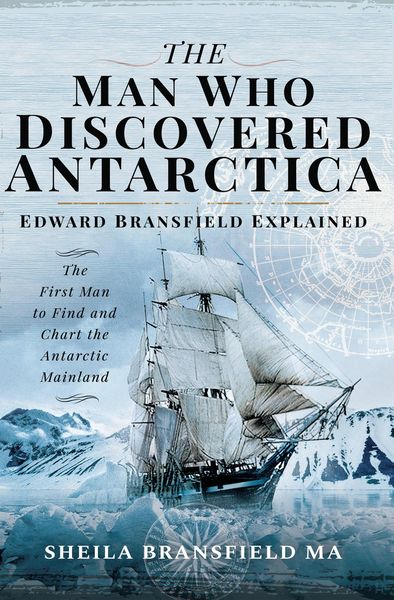
The Man Who Discovered Antarctica Edward Bransfield Explained: The First Man to Find and Chart the Antarctic Mainland
Fr. 18.90
inkl. gesetzl. MwSt.Beschreibung
Produktdetails
Format
ePUB 3
Kopierschutz
Nein
Family Sharing
Nein
Text-to-Speech
Ja
Erscheinungsdatum
12.11.2020
Verlag
Frontline BooksSeitenzahl
248 (Printausgabe)
Dateigröße
5012 KB
Sprache
Englisch
EAN
9781526752642
The definitive biography of the British naval officer who found the Antarctic shoreline in the early nineteeth century.
Captain Cook claimed the honor of being the first man to sail into the Antarctic Ocean in 1773, which he circumnavigated the following year. Cook, though, did not see any land, and declared that there was no such thing as the Southern Continent. Fifty years later, an Irishman who'd been impressed into the Royal Navy at eighteen, and risen through the ranks to the position of master, proved Cook wrong, discovering and charting parts of the Antarctic shoreline. He also discovered Elephant Island and Clarence Island, claiming them for the British Crown.
Edward Bransfield's naval career included taking part in the Bombardment of Algiers in 1816 onboard the 50-gun warship HMS
Severn. Then, in 1817, he was posted to the Royal Navy's Pacific Squadron off Valparaíso in Chile, and it was while he served there that the skipper of an English whaling ship, the
Williams, was driven south by adverse winds and discovered what came to be known as the South Shetland Islands where Cook had said there was no land. Bransfield's superior officer, Captain Sherriff, decided to investigate further. He chartered
Williams and sent Bransfield with two midshipmen and a ship's surgeon into the Antarctic-and the Irishman sailed into history.
Despite many parts of Antarctica and an Antarctic survey vessel being named after him, and a Royal Mail commemorative stamp issued in his name, the full story of this remarkable man and his historic journey, have never been told-until now. Following decades of research, Sheila Bransfield MA, a member of the UK Antarctic Heritage Trust, has produced the definitive biography of one of Britain's greatest maritime explorers. The book also includes a foreword by the Trust's patron the Princess Royal.
"Bransfield's meticulous research gives us a detailed account of the daily routines of the Navy and the immense amount of maintenance required of a large wooden warship in the Age of Sail." -Historical Novel Society
Captain Cook claimed the honor of being the first man to sail into the Antarctic Ocean in 1773, which he circumnavigated the following year. Cook, though, did not see any land, and declared that there was no such thing as the Southern Continent. Fifty years later, an Irishman who'd been impressed into the Royal Navy at eighteen, and risen through the ranks to the position of master, proved Cook wrong, discovering and charting parts of the Antarctic shoreline. He also discovered Elephant Island and Clarence Island, claiming them for the British Crown.
Edward Bransfield's naval career included taking part in the Bombardment of Algiers in 1816 onboard the 50-gun warship HMS
Severn. Then, in 1817, he was posted to the Royal Navy's Pacific Squadron off Valparaíso in Chile, and it was while he served there that the skipper of an English whaling ship, the
Williams, was driven south by adverse winds and discovered what came to be known as the South Shetland Islands where Cook had said there was no land. Bransfield's superior officer, Captain Sherriff, decided to investigate further. He chartered
Williams and sent Bransfield with two midshipmen and a ship's surgeon into the Antarctic-and the Irishman sailed into history.
Despite many parts of Antarctica and an Antarctic survey vessel being named after him, and a Royal Mail commemorative stamp issued in his name, the full story of this remarkable man and his historic journey, have never been told-until now. Following decades of research, Sheila Bransfield MA, a member of the UK Antarctic Heritage Trust, has produced the definitive biography of one of Britain's greatest maritime explorers. The book also includes a foreword by the Trust's patron the Princess Royal.
"Bransfield's meticulous research gives us a detailed account of the daily routines of the Navy and the immense amount of maintenance required of a large wooden warship in the Age of Sail." -Historical Novel Society
Kundinnen und Kunden meinen
Verfassen Sie die erste Bewertung zu diesem Artikel
Helfen Sie anderen Kund*innen durch Ihre Meinung