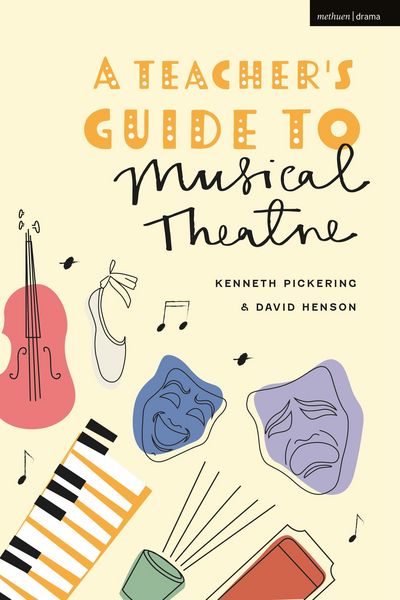
A Teacher's Guide to Musical Theatre
-
- Hardcover ausgewählt
- Taschenbuch
- eBook
-
Sprache:Englisch
Fr. 103.00
inkl. gesetzl. MwSt.,
Beschreibung
Produktdetails
Einband
Gebundene Ausgabe
Erscheinungsdatum
23.09.2021
Verlag
Methuen DramaSeitenzahl
180
Maße (L/B/H)
23.4/15.6/1.1 cm
Gewicht
432 g
Sprache
Englisch
ISBN
978-1-350-21393-7
Are you a teacher of musical theatre who struggles to plan and construct lessons? Are you looking for a structured approach to teaching musical theatre to students of all abilities? Do you know your Ivor Novello from your Stephen Sondheim? Despite being one of the most popular forms of performance study, Musical Theatre is often the most difficult to teach due to its part-practical and part-academic approach. With few books on the market directly aimed at teachers, it can be a challenging and daunting task to devise a course of study that takes in the history of the form as well as considering the wider aspects that come together to make a successful musical. A Teacher's Guide to Musical Theatre enables teachers to plan and deliver courses in Musical Theatre with confidence and flair. The unique structure of the chapters guides teachers through key facts and concepts in musical theatre history and offers practical in-class activities for students. From topics for class discussion and essay assignments to journal entries and portfolios to sample test questions, this book is full of practical advice from experienced teachers in the field which make it the idea companion for teachers and instructors on diploma and degree-level courses, as well as those devising courses in part-time performing arts schools. Devised to provide sufficient engaging and inspirational material for an initial term or semester, the book establishes the principles of teaching this relatively new subject and encourages teachers to extend much further into the subject. From The Mikado to Hamilton and everything in between, this book breaks down decades of history into appropriately sized lessons, designed to give students a rounded survey of the subject and an understanding of how musicals work. Offering expert guidance to those with varied fields of expertise and practical experience but limited teaching experience, this book is the only existing guide to structured and stimulating practice.
Noch keine Bewertungen vorhanden
Verfassen Sie die erste Bewertung zu diesem Artikel
Helfen Sie anderen Kundinnen und Kunden durch Ihre Meinung.