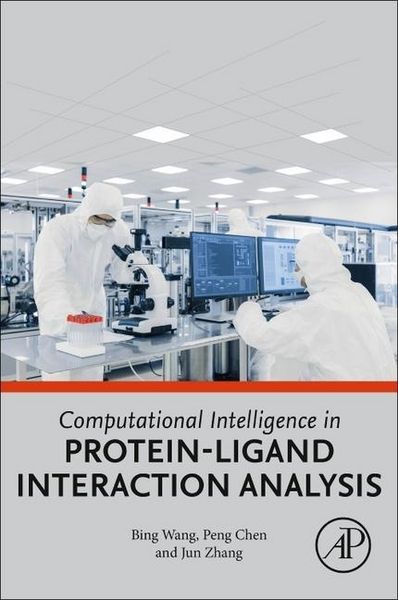
Produktbild: Computational Intelligence in Protein-Ligand Interaction Analysis

Computational Intelligence in Protein-Ligand Interaction Analysis

Fr. 253.00

inkl. gesetzl. MwSt., Versandkostenfrei


Beschreibung

Produktdetails

Einband

Taschenbuch

Erscheinungsdatum

26.03.2024

Abbildungen

60 illustrations (30 in full color)

Verlag

Elsevier Science & Technology

Seitenzahl

278

Maße (L/B/H)

22.9/15.1/1.6 cm

Gewicht

456 g

Sprache

Englisch

ISBN

978-0-12-824386-2

Beschreibung

Produktdetails

Einband

Taschenbuch

Erscheinungsdatum

26.03.2024

Abbildungen

60 illustrations (30 in full color)

Verlag

Elsevier Science & Technology

Seitenzahl

278

Maße (L/B/H)

22.9/15.1/1.6 cm

Gewicht

456 g

Sprache

Englisch

ISBN

978-0-12-824386-2

EU-Ansprechpartner

Zeitfracht Medien GmbH
Ferdinand-Jühlke-Straße 7
99095 Erfurt
DE
produktsicherheit@zeitfracht.de

Herstelleradresse

Elsevier Science & Technology
London Wall 125
EC2Y 5AS London
GB
tradeorders@elsevier.com

Noch keine Bewertungen vorhanden

Verfassen Sie die erste Bewertung zu diesem Artikel

Helfen Sie anderen Kundinnen und Kunden durch Ihre Meinung.

Kundinnen und Kunden meinen

Bewertungen (0)

  • Produktbild: Computational Intelligence in Protein-Ligand Interaction Analysis
  • 1. Computational intelligence methods in protein-ligand interactions
    2. Random forest method for predicting protein ligand-binding residues
    3. Encoders of protein residues for identifying protein-protein interacting residues
    4. Identification of hot spot residues in protein interfaces from protein sequences and ensemble methods
    5. Semi-supervised prediction of protein interaction sites from unlabeled sample information
    6. Developing computational model to predict protein-protein interaction sites based on XGBoost algorithm
    7. Evolutional algorithms and their applications in protein long-range contact prediction
    8. A novel robust geometric approach for modelling protein-protein interaction networks
    9. Prediction of protein-protein interactions from amino acid sequences with ensemble extreme learning machines and principal component analysis
    10. Ensemble learning-based prediction on drug-target interactions
    11. Convolutional neural networks for drug-target interaction prediction
    12. Ensemble learning methods for drug-induced liver injury identification
    13. Database construction for mutant protein interactions
    14. A linear programming computational framework integrates phosphor-proteomics and prior knowledge to predict drug efficacy