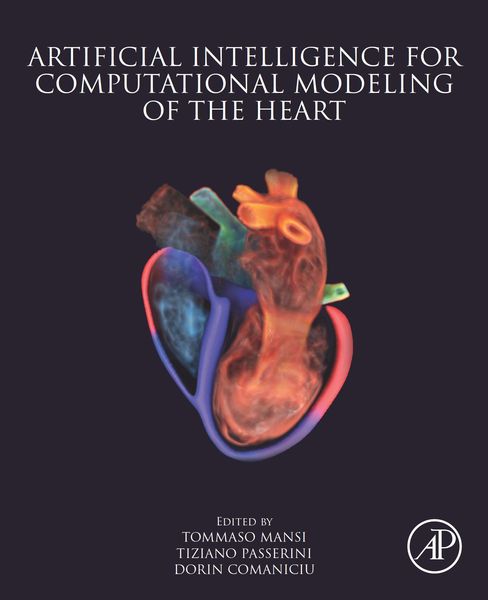
Artificial Intelligence for Computational Modeling of the Heart
-
- Taschenbuch
- eBook ausgewählt
-
Form:Einzelkauf Download
-
Sprache:Englisch
Fr. 125.90
inkl. gesetzl. MwSt.Beschreibung
Produktdetails
Format
ePUB 3
Kopierschutz
Nein
Family Sharing
Nein
Text-to-Speech
Ja
Erscheinungsdatum
25.11.2019
Herausgeber
Tommaso Mansi + weitereVerlag
Elsevier Science & Techn.Seitenzahl
274 (Printausgabe)
Sprache
Englisch
EAN
9780128168950
Artificial Intelligence for Computational Modeling of the Heart presents recent research developments towards streamlined and automatic estimation of the digital twin of a patient's heart by combining computational modeling of heart physiology and artificial intelligence. The book first introduces the major aspects of multi-scale modeling of the heart, along with the compromises needed to achieve subject-specific simulations. Reader will then learn how AI technologies can unlock robust estimations of cardiac anatomy, obtain meta-models for real-time biophysical computations, and estimate model parameters from routine clinical data. Concepts are all illustrated through concrete clinical applications.
- Presents recent advances in computational modeling of heart function and artificial intelligence technologies for subject-specific applications
- Discusses AI-based technologies for robust anatomical modeling from medical images, data-driven reduction of multi-scale cardiac models, and estimations of physiological parameters from clinical data
- Illustrates the technology through concrete clinical applications and discusses potential impacts and next steps needed for clinical translation
- Presents recent advances in computational modeling of heart function and artificial intelligence technologies for subject-specific applications
- Discusses AI-based technologies for robust anatomical modeling from medical images, data-driven reduction of multi-scale cardiac models, and estimations of physiological parameters from clinical data
- Illustrates the technology through concrete clinical applications and discusses potential impacts and next steps needed for clinical translation
Kundinnen und Kunden meinen
Verfassen Sie die erste Bewertung zu diesem Artikel
Helfen Sie anderen Kund*innen durch Ihre Meinung