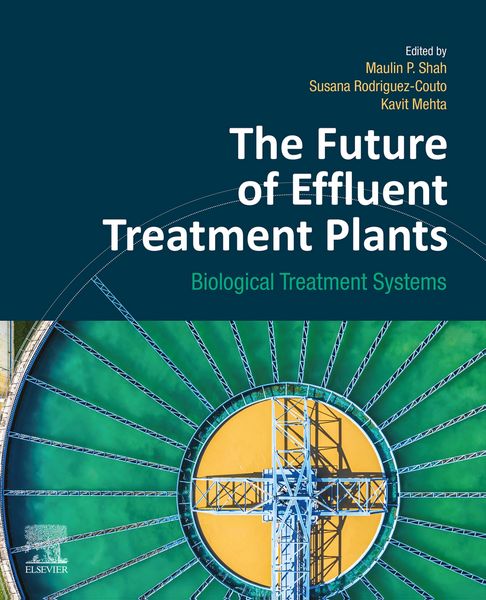
The Future of Effluent Treatment Plants Biological Treatment Systems
-
- Taschenbuch
- eBook ausgewählt
-
Form:Einzelkauf Download
-
Sprache:Englisch
Fr. 203.90
inkl. gesetzl. MwSt.Beschreibung
Produktdetails
Format
ePUB 3
Kopierschutz
Nein
Family Sharing
Nein
Text-to-Speech
Ja
Erscheinungsdatum
24.05.2021
Herausgeber
Maulin P. Shah + weitereVerlag
Elsevier Science & Techn.Seitenzahl
804 (Printausgabe)
Dateigröße
52192 KB
Sprache
Englisch
EAN
9780128231043
The Future of Effluent Treatment Plants: Biological Treatment Systems is an advanced and updated version of existing biological technologies that includes their limitations, challenges, and potential application to remove chemical oxygen demand (COD), refractory chemical oxygen demand, biochemical oxygen demand (BOD), color removal and environmental pollutants through advancements in microbial bioremediation. The book introduces new trends and advances in environmental bioremediation with thorough discussions of recent developments. In addition, it illustrates that the application of these new emerging innovative technologies can lead to energy savings and resource recovery.
The importance of respiration, nitrogen mineralization, nitrification, denitrification and biological phosphorus removal processes in the development of a fruitful and applicable solution for the removal of toxic pollutants from wastewater treatment plants is highlighted. Equally important is the knowledge and theoretical modeling of water movement through wastewater ecosystems. Finally, emphasis is given to the function of constructed wetlands and activated sludge processes.
- Considers different types of industrial wastewater
- Focuses on biological wastewater treatments
- Introduces new trends in bioremediation
- Addresses the future of WWTPs
The importance of respiration, nitrogen mineralization, nitrification, denitrification and biological phosphorus removal processes in the development of a fruitful and applicable solution for the removal of toxic pollutants from wastewater treatment plants is highlighted. Equally important is the knowledge and theoretical modeling of water movement through wastewater ecosystems. Finally, emphasis is given to the function of constructed wetlands and activated sludge processes.
- Considers different types of industrial wastewater
- Focuses on biological wastewater treatments
- Introduces new trends in bioremediation
- Addresses the future of WWTPs
Kundinnen und Kunden meinen
Verfassen Sie die erste Bewertung zu diesem Artikel
Helfen Sie anderen Kund*innen durch Ihre Meinung