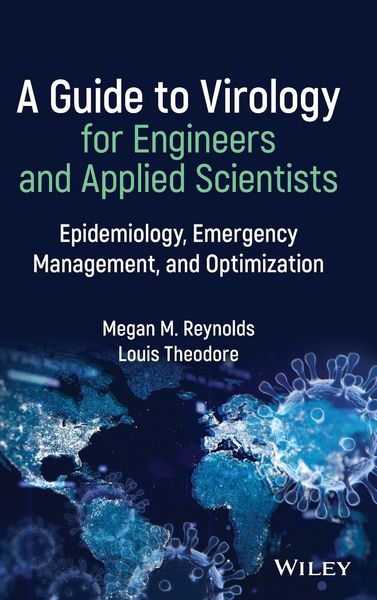
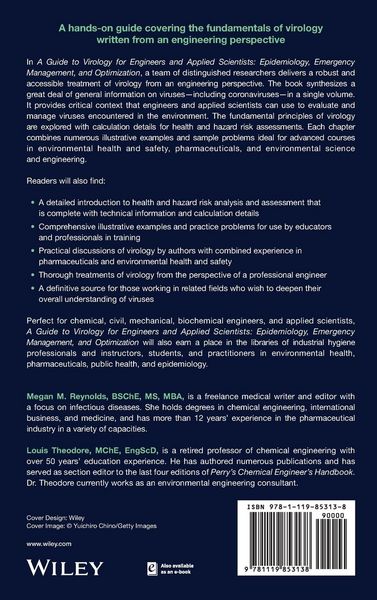
Preface xvii
About the Authors xix
Part I Introduction to Viruses 1
1 Overview of Molecular Biology 3
Contributing Author: Sarah Forster
1.1 Cell Basics 4
1.1.1 Cytoplasm 5
1.1.2 Ribosomes 5
1.1.3 Nucleus 6
1.2 Cell Replication 6
1.2.1 Nucleic Acids 6
1.2.2 DNA Replication 7
1.2.3 RNA Structure and Role 9
1.2.4 Protein Synthesis 9
1.3 Cellular Transport 11
1.3.1 Plasma Membrane 11
1.3.2 Cell Signaling 11
1.4 Immune Defense 12
1.4.1 Innate Immunity 12
1.4.2 Adaptive Immunity 13
1.4.2.1 Humoral Immunity 13
1.4.2.2 Cellular Immunity 14
1.5 Applications 14
1.6 Chapter Summary 16
1.7 Problems 16
References 16
2 Basics of Virology 19
2.1 Viral Basics and Terminology 19
2.2 Viral Life Cycle 21
2.2.1 Attachment (Connection) 21
2.2.2 Penetration (Entry) 22
2.2.3 Uncoating 22
2.2.4 Replication 23
2.2.5 Assembly 23
2.2.6 Maturation and Release 23
2.3 Virus Structure and Classification 24
2.3.1 DNA Viruses 25
2.3.2 RNA Viruses 25
2.3.3 Reverse Transcription Viruses (Retroviruses) 27
2.4 Viruses in Context of the Tree of Life 27
2.5 Viral Genetics 28
2.5.1 Antigenic Shift 28
2.5.2 Antigenic Drift 29
2.5.3 Phenotypic Mixing 29
2.5.4 Complementation 29
2.6 Applications 29
2.7 Chapter Summary 31
2.8 Problems 31
References 32
3 Pandemics, Epidemics, and Outbreaks 33
3.1 Human Viral Diseases 34
3.2 Ebola and Marburg Viruses 35
3.2.1 Symptoms 36
3.2.2 Diagnosis 37
3.2.3 Prevention and Treatment 37
3.3 Human Immunodeficiency Disease (HIV) 38
3.3.1 HIV Symptoms 39
3.3.1.1 Stage 1: Acute Infection 39
3.3.1.2 Stage 2: Chronic HIV Infection (Latent Phase) 39
3.3.1.3 Stage 3: Acquired Immunodeficiency Syndrome (AIDS) 39
3.3.2 Diagnosis 40
3.3.3 HIV Prevention and Treatment 40
3.4 Influenza 41
3.4.1 Influenza Symptoms 41
3.4.2 Influenza Diagnosis 42
3.4.3 Influenza Prevention and Treatment 42
3.4.4 Influenza Pandemics 43
3.5 Coronaviruses 44
3.5.1 Symptoms 45
3.5.1.1 Typical Acute Symptoms 45
3.5.1.2 Post-COVID Conditions 46
3.5.1.3 COVID-19 Multiorgan System Effects (MIS) 46
3.5.2 COVID-19 Diagnosis 47
3.5.3 COVID-19 Prevention and treatment 48
3.6 Current and Emerging Viral Threats 48
3.7 Applications 51
3.8 Chapter Summary 52
3.9 Problems 53
References 53
4 Virus Prevention, Diagnosis, and Treatment 57
4.1 Vaccination Successes and Challenges 58
4.2 Current Vaccine Technology 59
4.2.1 Live-attenuated vaccines 60
4.2.2 Inactivated vaccines 61
4.2.3 Recombinant Subunit Vaccines 61
4.2.4 Viral Vector Vaccines 62
4.2.5 Messenger RNA (mRNA) Vaccines 62
4.3 U.S.-Approved Vaccines and Requirements 63
4.3.1 Commercially Available Viral Vaccines 63
4.3.2 Vaccination Requirements 63
4.4 Viral Testing and Diagnosis 64
4.4.1 Viral Testing 65
4.4.2 Antibody Testing 66
4.5 Antiviral Treatment Options 66
4.5.1 HIV 67
4.5.1.1 Nucleoside Reverse Transcriptase Inhibitors (NRTIs) 67
4.5.1.2 Non-nucleoside Reverse Transcriptase Inhibitors (NNRTIs) 67
4.5.1.3 Protease Inhibitors (PIs) 67
4.5.1.4 Fusion Inhibitors (FIs) 67
4.5.1.5 Integrase Strand Transfer Inhibitors (INSTIs) 67
4.5.1.6 CCR5 Antagonists 67
4.5.1.7 Attachment Inhibitors 68
4.5.1.8 Post-Attachment Inhibitors 68
4.5.1.9 Pharmacokinetic Enhancers 68
4.5.2 Influenza 68
4.5.3 Hepatitis C virus (HCV) 68
4.5.4 Other Treatment Options 69