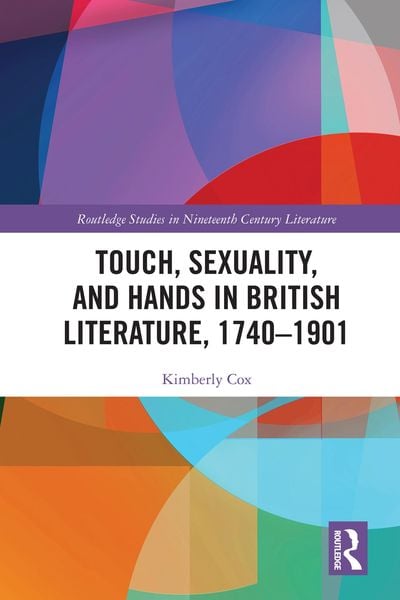
Touch, Sexuality, and Hands in British Literature, 1740-1901
-
- Hardcover
- Taschenbuch
- eBook ausgewählt
-
Form:Einzelkauf Download
-
Sprache:Englisch
-
eBook Format:PDF
- ePUB 3 Fr. 65.90
- PDF Fr. 65.90 ausgewählt
Fr. 65.90
inkl. gesetzl. MwSt.Beschreibung
Produktdetails
Format
Kopierschutz
Ja
Family Sharing
Nein
Text-to-Speech
Nein
Erscheinungsdatum
05.09.2021
Verlag
Taylor & Francis eBooksSeitenzahl
238 (Printausgabe)
Auflage
1. Auflage
Sprache
Englisch
EAN
9781000431933
From Robert Lovelace's uninvited hand-grasps in Samuel Richardson's Clarissa to to Basil Hallward's first encounter with Dorian Gray, literary depictions of touching hands in British literature from the 1740s to the 1890s communicate emotional dimensions of sexual experience that reflect shifting cultural norms associated with gender roles, sexuality¿, and sexual expression. But what is the relationship between hands, tactility, and sexuality in Victorian literature? And how do we best interpret ¿what those touches communicate between characters? This volume addresses these questions by asserting a connection between the prevalence of violent, sexually charged touches in eighteenth-century novels such as those by Eliza Haywood, Samuel Richardson, and Frances Burney and growing public concern over handshake etiquette in the nineteenth century evident in works by ¿Jane Austen, the Brontës, George Eliot, Elizabeth Gaskell, Thomas Hardy, Oscar Wilde, and Flora Annie Steel. This book takes an interdisciplinary approach that combines literary analysis with close analyses of paintings, musical compositions, and nonfictional texts¿, such as etiquette books and scientific treatises¿, to make a case for the significance of tactility to eighteenth- and nineteenth-century perceptions of selfhood and sexuality. In doing so, it draws attention to the communicative nature of skin-to-skin contact ¿as represented in literature and traces a trajectory of meaning from the forceful grips that violate female characters in eighteenth-century novels to the consensual embraces common in Victorian ¿and neo-Victorian literature.
Kundinnen und Kunden meinen
Verfassen Sie die erste Bewertung zu diesem Artikel
Helfen Sie anderen Kund*innen durch Ihre Meinung