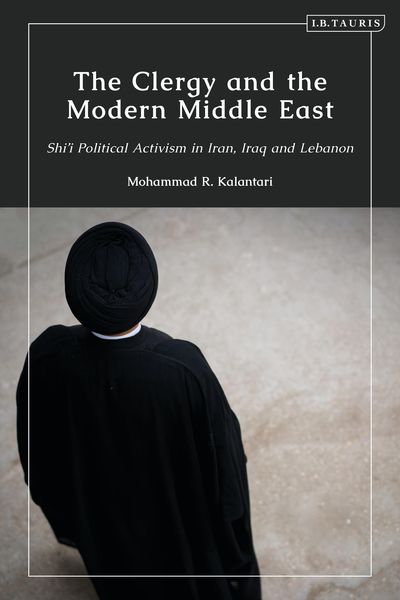
The Clergy and the Modern Middle East Shi'i Political Activism in Iran, Iraq and Lebanon
-
- Hardcover
- Taschenbuch
- eBook ausgewählt
-
Form:Einzelkauf Download
-
Sprache:Englisch
-
eBook Format:PDF
- PDF Fr. 35.90 ausgewählt
- ePUB Fr. 35.90
Fr. 35.90
inkl. gesetzl. MwSt.Beschreibung
Produktdetails
Format
Kopierschutz
Ja
Family Sharing
Nein
Text-to-Speech
Nein
Erscheinungsdatum
23.09.2021
Verlag
Bloomsbury eBooks UKSeitenzahl
272 (Printausgabe)
Auflage
1. Auflage
Sprache
Englisch
EAN
9781838605599
The Shi'i clergy are amongst the most influential political players in the Middle East. For decades, scholars and observers have tried to understand the balance of power between, Shi'i 'quietism' and 'activism'.
The book is based on exclusive interviews with high-profile Shi'i clerics in order to reveal how the Shi'i clerical elite perceives its role and engages in politics today. The book focuses on three ground-breaking events in the modern Middle East: the 1979 Islamic Revolution in Iran, the 2003 Iraq War, and the 2006 July war in Lebanon. By examining the nature and evolution of a Shi'i clerical network the book finds that, far from there being strategic differences between 'quitest' and 'activist' clerics, Shi'i mujtahid statesmen matured, from 1979 in Iran to 2003 Iraq, by way of a pragmatism which led to a strong form of transnational and associated whole in Lebanon in 2006.
In doing so, the book breaks down the established, and misleading, dichotomisation of the Shi'i clergy into 'quietists' and 'activists' and discovers that the decision of Shi'i clerical elites to become politically active or to stay out of politics are attributable to their ability to adapt to their political environments.
The book is based on exclusive interviews with high-profile Shi'i clerics in order to reveal how the Shi'i clerical elite perceives its role and engages in politics today. The book focuses on three ground-breaking events in the modern Middle East: the 1979 Islamic Revolution in Iran, the 2003 Iraq War, and the 2006 July war in Lebanon. By examining the nature and evolution of a Shi'i clerical network the book finds that, far from there being strategic differences between 'quitest' and 'activist' clerics, Shi'i mujtahid statesmen matured, from 1979 in Iran to 2003 Iraq, by way of a pragmatism which led to a strong form of transnational and associated whole in Lebanon in 2006.
In doing so, the book breaks down the established, and misleading, dichotomisation of the Shi'i clergy into 'quietists' and 'activists' and discovers that the decision of Shi'i clerical elites to become politically active or to stay out of politics are attributable to their ability to adapt to their political environments.
Kundinnen und Kunden meinen
Verfassen Sie die erste Bewertung zu diesem Artikel
Helfen Sie anderen Kund*innen durch Ihre Meinung