Beschreibung
Produktdetails
Einband
Gebundene Ausgabe
Erscheinungsdatum
13.07.2022
Herausgeber
Johannes Karl FinkVerlag
John Wiley & Sons IncSeitenzahl
432
Maße (L/B/H)
23/15.4/2.8 cm
Gewicht
703 g
Auflage
1. Auflage
Sprache
Englisch
ISBN
978-1-119-89638-8
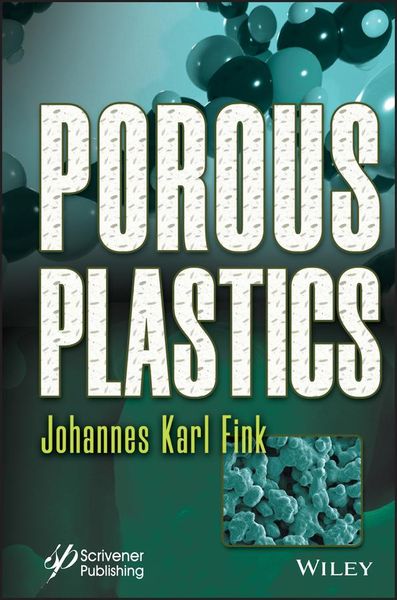
POROUS PLASTICS
A unique book by a well-known polymer scientist on a subject that is trending in plastics/polymer engineering.
Porous polymers are materials that are having pores in their design. Porous polymers are important for various fields of application and are used with pores of different sizes, i.e., from macropores to micropores.
This book focuses on the issues of porous polymers as well as low molecular compounds that can be introduced in porous polymers. The book begins with a chapter about polymers that are used for porous materials. Here, among others, microporous polymer networks, hyper-crosslinked polymers, and rigid ladder-type porous polymers are detailed. Related issues are also detailed in the subsequent chapters. In the next chapter, the major synthesis methods for porous polymers are described. Then, the properties and material testing methods, such as standards, are described in a chapter. In the following chapters, special fields of applications of porous polymers are described in detail, such as: medical uses, thermal insulation, membranes, separation methods, and other fields of use.
Audience The book will be used by plastics engineers, materials scientists and polymer scientists/researchers in both industry and academia./p>
A unique book by a well-known polymer scientist on a subject that is trending in plastics/polymer engineering.
Porous polymers are materials that are having pores in their design. Porous polymers are important for various fields of application and are used with pores of different sizes, i.e., from macropores to micropores.
This book focuses on the issues of porous polymers as well as low molecular compounds that can be introduced in porous polymers. The book begins with a chapter about polymers that are used for porous materials. Here, among others, microporous polymer networks, hyper-crosslinked polymers, and rigid ladder-type porous polymers are detailed. Related issues are also detailed in the subsequent chapters. In the next chapter, the major synthesis methods for porous polymers are described. Then, the properties and material testing methods, such as standards, are described in a chapter. In the following chapters, special fields of applications of porous polymers are described in detail, such as: medical uses, thermal insulation, membranes, separation methods, and other fields of use.
Audience The book will be used by plastics engineers, materials scientists and polymer scientists/researchers in both industry and academia./p>
Noch keine Bewertungen vorhanden
Verfassen Sie die erste Bewertung zu diesem Artikel
Helfen Sie anderen Kundinnen und Kunden durch Ihre Meinung.