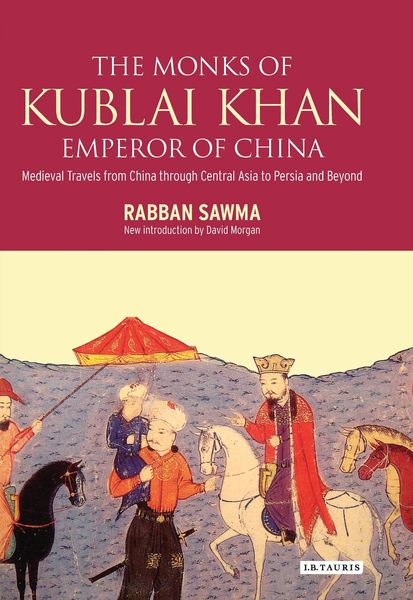
Monks of Kublai Khan, Emperor of China Medieval Travels from China Through Central Asia to Persia and Beyond
-
- Hardcover
- Taschenbuch
- eBook ausgewählt
-
Form:Einzelkauf Download
-
Sprache:Englisch
-
eBook Format:PDF
- PDF Fr. 122.90 ausgewählt
- ePUB Fr. 122.90
Fr. 122.90
inkl. gesetzl. MwSt.Beschreibung
Produktdetails
Format
Kopierschutz
Ja
Family Sharing
Nein
Text-to-Speech
Nein
Erscheinungsdatum
19.03.2014
Verlag
Bloomsbury eBooks UKSeitenzahl
360 (Printausgabe)
Auflage
1. Auflage
Übersetzt von
Ernest Alfred Wallace Budge
Sprache
Englisch
EAN
9780755627943
Towards the end of the thirteenth century the Nestorian monk, Rabban Sawma, together with his disciple Mark, set out from Khanbaliq (Beijing), the capital city of Kublai Khan's Mongol Empire, on a pilgrimage to Jerusalem. Travelling through northern China and Central Asia they arrived at Maraghah, capital city of the Ilkhanate that was Mongol-ruled Persia. Military unrest prevented them from ever reaching Jerusalem but they did reah Baghdad, where Rabban Sawma spent many years. Summoned by Arghun Khan, the Ilkhan ruler and grand nephew of Kublai Khan, Sawma was made Ilkhanid ambassador and sent to Europe, first travelling to Constantinople to meet the Byzantine emperor and then to meet the kings of France and England as well as Pope Nicholas IV. Sawma's disciple, Mark, became the Nestorian Catholicus. Sawma's account of his travels provides unique information on the Ilkhans of Perisa and their dealings with the Mongol Christians as well as the events that led to the downfall of the Nestorian Church in China and further offers a unique picture of Medieval Europe through Asian eyes. Translated by Sir E.A.
Wallis Budge, who also included a substantial introduction, the work is now rare. This edition contains a new introduction by Professor David Morgan, the leading scholar of the Mongol period.
Wallis Budge, who also included a substantial introduction, the work is now rare. This edition contains a new introduction by Professor David Morgan, the leading scholar of the Mongol period.
Kundinnen und Kunden meinen
Verfassen Sie die erste Bewertung zu diesem Artikel
Helfen Sie anderen Kund*innen durch Ihre Meinung