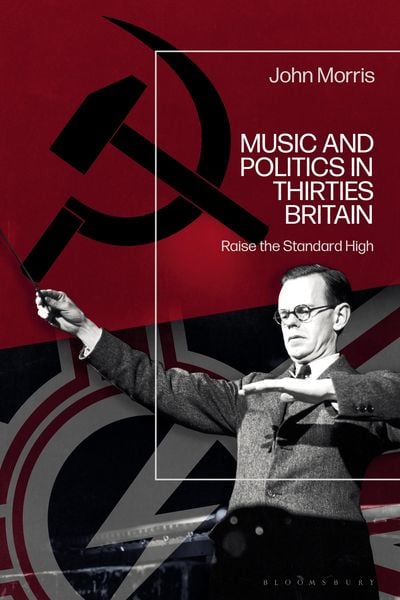
Music and Politics in Thirties Britain Raise the Standard High
-
- Hardcover
- Taschenbuch
- eBook ausgewählt
-
Form:Einzelkauf Download
-
Sprache:Englisch
-
eBook Format:ePUB
- PDF Fr. 35.90
- ePUB Fr. 35.90 ausgewählt
Fr. 35.90
inkl. gesetzl. MwSt.Beschreibung
Produktdetails
Format
ePUB
Kopierschutz
Ja
Family Sharing
Nein
Text-to-Speech
Ja
Erscheinungsdatum
03.11.2022
Verlag
Bloomsbury eBooks UKSeitenzahl
264 (Printausgabe)
Auflage
1. Auflage
Sprache
Englisch
EAN
9781350271258
Radical domestic politics, musical experimentation, advancing technology and the influence of migration from Europe and Britain's enrichment from it, all had their affects on a remarkable year in musical cultural life in the mid-30s. This book looks at the little-known aspect of music and politics in domestic Britain in 1934, a pivotal year in terms of political and cultural developments.
Music and Politics in Thirties Britain focuses on the production, reception and interpretation of classical music in relation to the changes of the 1930s. John Morris treads new ground by examining the relationship between music, musicians and fascism - an area overlooked by existing scholarship. The book expertly traces the complexities and contradictions of British music history in the 1930s as musicians like others in the Arts attempted to engage with the political turmoil of the period.
John Morris exemplifies the "cultural turn" in studies of British fascism, and also shows the overlap between ideas of the BUF and more progressive musicians. The result is a stimulating addition to existing scholarship which will be of interest to scholars and students alike.
Music and Politics in Thirties Britain focuses on the production, reception and interpretation of classical music in relation to the changes of the 1930s. John Morris treads new ground by examining the relationship between music, musicians and fascism - an area overlooked by existing scholarship. The book expertly traces the complexities and contradictions of British music history in the 1930s as musicians like others in the Arts attempted to engage with the political turmoil of the period.
John Morris exemplifies the "cultural turn" in studies of British fascism, and also shows the overlap between ideas of the BUF and more progressive musicians. The result is a stimulating addition to existing scholarship which will be of interest to scholars and students alike.
Kundinnen und Kunden meinen
Verfassen Sie die erste Bewertung zu diesem Artikel
Helfen Sie anderen Kund*innen durch Ihre Meinung