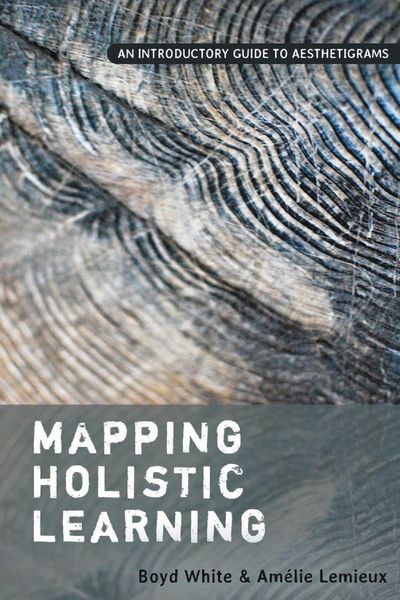
Mapping Holistic Learning An Introductory Guide to Aesthetigrams
-
- Hardcover
- Taschenbuch
- eBook ausgewählt
-
Form:Einzelkauf Download
-
Sprache:Englisch
-
eBook Format:PDF
- PDF Fr. 55.90 ausgewählt
- ePUB Fr. 55.90
Fr. 55.90
inkl. gesetzl. MwSt.Beschreibung
Produktdetails
Format
Kopierschutz
Ja
Family Sharing
Nein
Text-to-Speech
Nein
Erscheinungsdatum
17.10.2017
Verlag
Peter Lang Inc., International Academic PublishersSeitenzahl
164 (Printausgabe)
Dateigröße
2085 KB
Auflage
1. Auflage
Sprache
Englisch
EAN
9781433144684
Mapping Holistic Learning: An Introductory Guide to Aesthetigrams introduces the concept of aesthetigrams. These are participant-produced visual maps of aesthetic engagement. The map-making strategy was originally developed by one of the authors, Boyd White, to assist him in understanding what his university-level students were experiencing as they interacted with artworks. Such interactions are, after all, private, individualistic, and fleeting. How can a teacher foster student/teacher dialogue that might lead to enhanced engagement, much less do research, without a concrete record of such engagement? Aesthetigrams provide that record.
Recently, the strategy has been adapted to other fields of study-the teaching of literature, and philosophy for children, as well as the writing of poetry. Boyd White and Amélie Lemieux are persuaded that the strategy could be expanded into other disciplines. For example, might it not be useful for a teacher to know what a student is feeling and thinking as she struggles with a mathematical concept?
Mapping Holistic Learning is divided into three sections. Chapter 1 addresses the theoretical framework that underpins the authors' research. The second section, Chapters 2 to 5, provides examples of aesthetigram usage within the formal education environment, in art and literature classrooms. The third section, Chapters 6 and 7, introduces two recent experiments in informal settings-one in an adult poetry workshop, the other in a philosophy-for-children workshop. It is not necessary to follow the book in chronological order. Readers are invited to attend to the chapters that most closely address their individual interests.
Noch keine Bewertungen vorhanden
Verfassen Sie die erste Bewertung zu diesem Artikel
Helfen Sie anderen Kundinnen und Kunden durch Ihre Meinung.