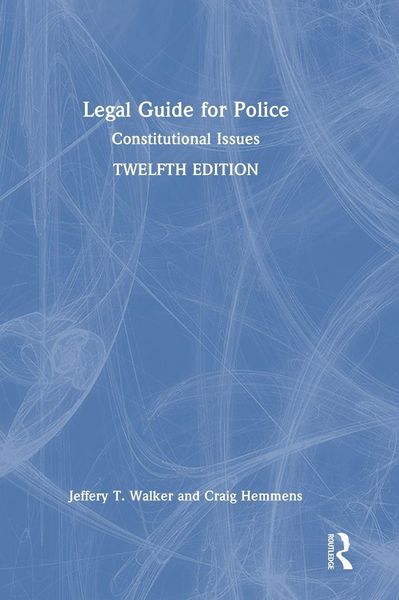

• Produktbild: Legal Guide for Police
  • Produktbild: Legal Guide for Police

Legal Guide for Police Constitutional Issues

Fr. 259.00

inkl. gesetzl. MwSt., Versandkostenfrei


Beschreibung

Produktdetails

Einband

Gebundene Ausgabe

Erscheinungsdatum

28.06.2023

Verlag

Taylor & Francis

Seitenzahl

278

Maße (L/B/H)

26/18.3/2 cm

Gewicht

748 g

Auflage

12. Auflage

Sprache

Englisch

ISBN

978-1-03-237628-8

Beschreibung

Produktdetails

Einband

Gebundene Ausgabe

Erscheinungsdatum

28.06.2023

Verlag

Taylor & Francis

Seitenzahl

278

Maße (L/B/H)

26/18.3/2 cm

Gewicht

748 g

Auflage

12. Auflage

Sprache

Englisch

ISBN

978-1-03-237628-8

Herstelleradresse

Libri GmbH
Europaallee 1
36244 Bad Hersfeld
DE

Email: gpsr@libri.de

Noch keine Bewertungen vorhanden

Verfassen Sie die erste Bewertung zu diesem Artikel

Helfen Sie anderen Kundinnen und Kunden durch Ihre Meinung.

Kundinnen und Kunden meinen

Bewertungen (0)

Die Leseprobe wird geladen.
  • Produktbild: Legal Guide for Police
  • Produktbild: Legal Guide for Police
  • Preface

    CHAPTER 1. Introduction

    1.1 Criminal Procedure

    1.2 Sources of Criminal Procedure Law

    1.3 Judicial Functions

    1.4 The Supreme Court and the Police

    1.5 Packer’s Models of the Criminal Justice System

    1.6 Summary

    CHAPTER 2. Results of Failure to Comply with Constitutional Mandates

    2.1 The Exclusionary Rule

    2.2 Extension of the Exclusionary Rule to All Courts: Mapp v. Ohio

    2.3 Application and Modification of the Exclusionary Rule

    2.4 Civil Liabilities

    2.5 Civil Rights Actions

    2.6 Liability of Supervisors, Administrators, and Agencies

    2.7 Admissibility of Evidence

    2.8 Summary

    CHAPTER 3. Police Power and Limitations

    3.1 Police Power, Authority, and Responsibility

    3.2 Limits on Police Authority

    3.3 Bill of Rights

    3.4 Due Process of Law

    3.5 Effects of Broadening the Scope of the Fourteenth Amendment Due Process Clause

    3.6 Protection of Rights via State Constitutions and Laws

    3.7 Summary

    CHAPTER 4. Police Authority to Detain

    4.1 General Considerations

    4.2 Consensual Encounters

    4.3 Terry v. Ohio Stop-and-Frisk Rationale

    4.4 Application to Off-Street Situations

    4.5 Application to Detention of Motorists

    4.6 Detention of Luggage

    4.7 Duration of the Detention

    4.8 Detention to Check Driver’s License and Registration

    4.9 Detention at Police Roadblocks

    4.10 Summary

    CHAPTER 5. Law of Arrest

    5.1 General Considerations

    5.2 Statutory Authority to Arrest

    5.3 Definition and Elements of Arrest

    5.4 Arrest under the Authority of an Arrest Warrant

    5.5 Arrest without a Warrant

    5.6 Post-Arrest Probable Cause Determination

    5.7 Use of Force in Making an Arrest

    5.8 The Citation and Summons in Law Enforcement

    5.9 Arrest after Fresh Pursuit

    5.10 Summary

    CHAPTER 6. Search and Seizure with a Warrant

    6.1 General Considerations

    6.2 Constitutional Provisions

    6.3 Seizure with a Valid Search Warrant—General

    6.4 The Warrant Must Be Issued on Probable Cause

    6.5 A Proper Official Must Issue the Warrant

    6.6 The Warrant Must Be Supported by Oath or Affirmation

    6.7 The Place to Be Searched and the Things to Be Seized Must Be Particularly Described

    6.8 Execution of the Search Warrant

    6.9 Search of a Person on the Premises

    6.10 Return of the Warrant

    6.11 Summary

    CHAPTER 7. Search and Seizure without a Warrant

    7.1 General Considerations

    7.2 Search Incident to a Lawful Arrest

    7.3 Search with a Valid Waiver (Consent Searches)

    7.4 Exigent Circumstances Exception to the Warrant Requirement

    7.5 Plain View Searches

    7.6 Search of Premises Not Protected by the Fourth Amendment (Open Fields)

    7.7 Search by a Private Individual

    7.8 Standing to Challenge the Search

    7.9 Stop-and-Frisk

    7.10 Airport Searches

    7.11 Search of Pervasively Regulated Businesses

    7.12 Summary

    CHAPTER 8. Specialized Searches without a Warrant: Vehicles, Dogs, and Technology

    8.1 General Considerations

    8.2 Search of Movable Vehicles and Objects

    8.3 Searches Related to Driving While Intoxicated Cases

    8.4 Search after Lawful Impoundment (Inventory Searches)

    8.5 Use of Dogs in Searches

    8.6 6 Electronic Searches and Seizure of Verbal Evidence via Recorders or Microphones

    8.7 Other Searches Using Technology

    8.8 Cell Phones and Computers

    8.9 Summary

    CHAPTER 9. Questioning Suspects

    9.1 General Considerations

    9.2 The Free and Voluntary Rule

    9.3 Warning and Waiver Requirements (Miranda Rule)

    9.4 Exclusion Related to the Fourth Amendment

    9.5 Right to Counsel

    9.6 The Delay in Arraignment Rule

    9.7 Exceptions to Right to Counsel and Self-Incrimination

    9.8 Admissibility of a Second Confession After an Inadmissible First Confession

    9.9 Summary

    CHAPTER 10. Pretrial Identification Procedures

    10.1 General Considerations

    10.2 Fingerprinting and Photographing Suspects

    10.3 Lineup—Self-Incrimination Challenge

    10.4 Lineup—Right to Counsel Challenge

    10.5 Lineup—Due Process Challenge

    10.6 Pretrial Photographic Identification

    10.7 Dental Examination

    10.8 Voice Exemplars

    10.9 Footprint Comparisons and Other Body Examinations

    10.10 Deoxyribonucleic Acid (DNA) Tests

    10.11 Summary

    CHAPTER 11. Police Law in Practice

    11.1 General Considerations

    11.2 The Consequences of Not Complying with the Law

    11.3 Detention and Arrest

    11.4 Searches and Seizures

    11.5 Questioning Suspects

    11.6 Pretrial Identification

    11.7 When You Are On Your Own

    Appendix

    The Bill of Rights (First Ten Amendments to the Constitution) and the Fourteenth Amendment

    Table of Cases

    Index