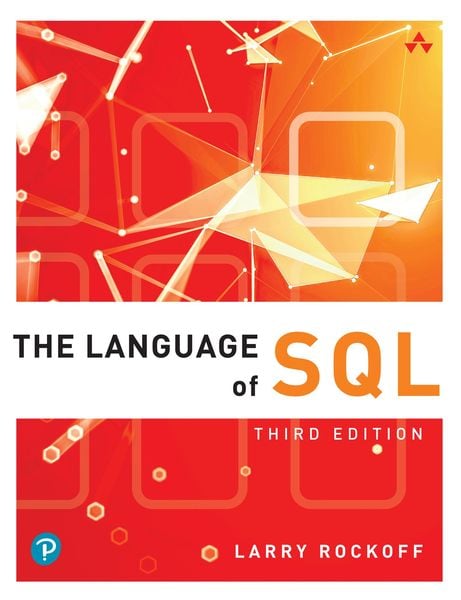
Language of SQL, The
-
- Taschenbuch
- eBook ausgewählt
-
Form:Einzelkauf Download
-
Sprache:Englisch
-
eBook Format:PDF
- PDF Fr. 29.90 ausgewählt
- ePUB Fr. 30.90
-
Auflage:3. Auflage
- 2. Auflage Fr. 26.90
- 3. Auflage Fr. 29.90 ausgewählt
Fr. 29.90
inkl. gesetzl. MwSt.Beschreibung
Produktdetails
Format
Kopierschutz
Nein
Family Sharing
Nein
Text-to-Speech
Nein
Altersempfehlung
18 - 67 Jahr(e)
Erscheinungsdatum
04.11.2021
Verlag
Pearson ITPSeitenzahl
272 (Printausgabe)
Dateigröße
3638 KB
Auflage
3. Auflage
Sprache
Englisch
EAN
9780137632589
Get Started Fast with SQL!
The only book you need to gain a quick working knowledge of SQL and relational databases.
Many SQL texts attempt to serve as an encyclopedic reference on SQL syntax-an approach that is often counterproductive because that information is readily available in online references published by the major database vendors.
For SQL beginners, it's more important for a book to focus on general concepts and to offer clear explanations and examples of what various SQL statements can accomplish. This is that book.
Several features make The Language of SQL unique among introductory SQL books.
First, you will not be required to download software or sit with a computer as you read the text. The intent of this book is to provide examples of SQL usage that can be understood simply by reading.
Second, topics are organized in an intuitive and logical sequence. SQL keywords are introduced one at a time, allowing you to grow your understanding as you encounter new terms and concepts.
Finally, this book covers the syntax of the latest releases of three widely used databases: Microsoft SQL Server 2019, MySQL 8.0, and Oracle 18c. Special "Database Differences" sidebars clearly show you any differences in syntax among these three databases, and instructions are included on how to obtain and install free versions of the databases.
- Use SQL to retrieve data from relational databases
- Apply functions and calculations to data
- Group and summarize data in a variety of useful ways
- Use complex logic to retrieve only the data you need
- Design relational databases so that data retrieval is easy and intuitive
- Update data and create new tables
- Use spreadsheets to transform your data into meaningful displays
- Retrieve data from multiple tables via joins, subqueries, views, and set logic
- Create, modify, and execute stored procedures
- Install Microsoft SQL Server, MySQL, or Oracle
Kundinnen und Kunden meinen
Verfassen Sie die erste Bewertung zu diesem Artikel
Helfen Sie anderen Kund*innen durch Ihre Meinung