The Social Semiotics of Populism
Aus der Reihe
Bloomsbury Advances in Semioti
-
- Hardcover
- Taschenbuch
- eBook ausgewählt
-
Form:Einzelkauf Download
-
Sprache:Englisch
-
eBook Format:PDF
- PDF Fr. 35.90 ausgewählt
- ePUB Fr. 35.90
Fr. 35.90
inkl. gesetzl. MwSt.Beschreibung
Produktdetails
Format
Kopierschutz
Ja
Family Sharing
Nein
Text-to-Speech
Nein
Erscheinungsdatum
26.01.2023
Verlag
Bloomsbury eBooks UKSeitenzahl
224 (Printausgabe)
Auflage
1. Auflage
Sprache
Englisch
EAN
9781350205406
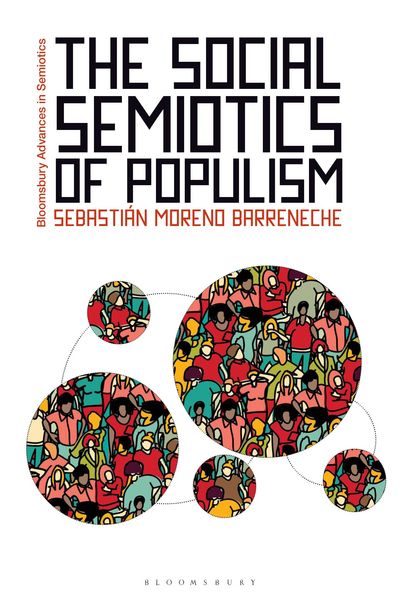
The concept of 'populism' is currently used by scholars, the media and political actors to refer to multiple and disparate manifestations and phenomena from across both the left and the right ends of the political spectrum. As a result, it defies neat definition, as scholarship on the topic has shown over the last 50 years. In this book, Sebastián Moreno Barreneche approaches populism from a semiotic perspective and argues that it constitutes a specific social discourse grounded on a distinctive narrative structure that is brought to life by political actors that are labelled 'populist'.
Conceiving of populism as a mode of semiotic production that is based on a conception of the social space as divided into two groups, 'the People' and 'the Other', this book uses semiotic theory to make sense of this political phenomenon. Exploring how the categories of 'the People' and 'the Other' are discursively constructed by populist political actors through the use of semiotic resources, the ways in which meaning emerges through the oppositions between imagined collective actors is explained.
Drawing on examples from Europe, North America and South America, The Social Semiotics of Populism presents a systematic semiotic approach to this multifaceted political concept and bridges semiotic theory and populism studies in an original manner.
Conceiving of populism as a mode of semiotic production that is based on a conception of the social space as divided into two groups, 'the People' and 'the Other', this book uses semiotic theory to make sense of this political phenomenon. Exploring how the categories of 'the People' and 'the Other' are discursively constructed by populist political actors through the use of semiotic resources, the ways in which meaning emerges through the oppositions between imagined collective actors is explained.
Drawing on examples from Europe, North America and South America, The Social Semiotics of Populism presents a systematic semiotic approach to this multifaceted political concept and bridges semiotic theory and populism studies in an original manner.
Kundinnen und Kunden meinen
Verfassen Sie die erste Bewertung zu diesem Artikel
Helfen Sie anderen Kund*innen durch Ihre Meinung