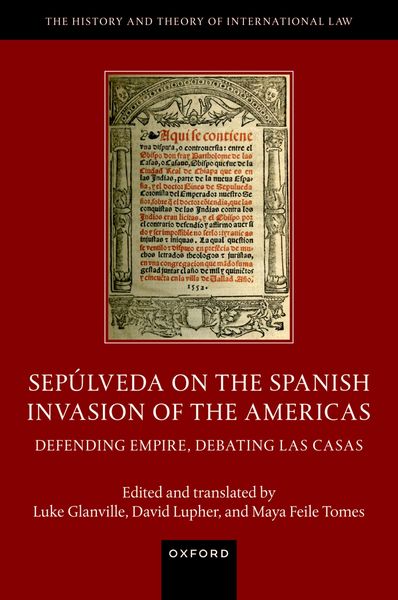
Sepúlveda on the Spanish Invasion of the Americas Defending Empire, Debating Las Casas
-
Form:Einzelkauf Download
-
Sprache:Englisch
-
eBook Format:ePUB
- PDF Fr. 93.90
- ePUB Fr. 93.90 ausgewählt
Fr. 93.90
inkl. gesetzl. MwSt.Beschreibung
Produktdetails
Format
ePUB
Kopierschutz
Ja
Family Sharing
Nein
Text-to-Speech
Ja
Erscheinungsdatum
23.02.2023
Herausgeber
Luke Glanville + weitereVerlag
OUP eBookSeitenzahl
424 (Printausgabe)
Dateigröße
828 KB
Sprache
Englisch
EAN
9780192609243
This volume presents the first full English translation of four key texts from the dispute between Juan Ginés de Sepúlveda and Bartolomé de las Casas regarding the justice of Spain's invasion of the Americas, culminating in their famous debate in Valladolid in 1550-51.
An impassioned defence of the invasion, Sepúlveda's Democrates secundus (composed around 1544) amplified the controversy within Spain about the justice of its activities in the Americas. When Las Casas schemed to block publication of Sepúlveda's manuscript, Sepúlveda wrote an Apologia (1550) in its defence. Tensions were so high that Emperor Charles V called a temporary halt to undertakings in the Americas and convoked a meeting of theologians and jurists in Valladolid to address the matter. Here, Sepúlveda and Las Casas debated bitterly. Las Casas subsequently printed a composite record of the Valladolid deliberations (Aquí se contiene una disputa o controversia, 1552). Sepúlveda retaliated by penning a furious response (Proposiciones temerarias y de mala doctrina, around 1553-54) and strove to have Las Casas' text banned by the Inquisition.
The debate between Sepúlveda and Las Casas was a pivotal moment in the history of international legal thought. They argued over fundamental matters of empire and colonial rule; natural law and cultural difference; the jurisdiction of the Church, responsibilities of Christian rulers, and rights of infidel peoples; the just reasons for war and grounds for resistance; and the right to punish idolatry, protect innocents from tyranny, and subjugate unbelievers for the purpose of spreading the Christian faith.
With a detailed scholarly introduction that elucidates the complex story of these four controversial texts and reflects on the impacts of Sepúlveda's ideas, which continue to be felt in the theories and practices of war today, this book is a must-read for all those interested in the fields of history, political science, international relations, and colonial studies.
An impassioned defence of the invasion, Sepúlveda's Democrates secundus (composed around 1544) amplified the controversy within Spain about the justice of its activities in the Americas. When Las Casas schemed to block publication of Sepúlveda's manuscript, Sepúlveda wrote an Apologia (1550) in its defence. Tensions were so high that Emperor Charles V called a temporary halt to undertakings in the Americas and convoked a meeting of theologians and jurists in Valladolid to address the matter. Here, Sepúlveda and Las Casas debated bitterly. Las Casas subsequently printed a composite record of the Valladolid deliberations (Aquí se contiene una disputa o controversia, 1552). Sepúlveda retaliated by penning a furious response (Proposiciones temerarias y de mala doctrina, around 1553-54) and strove to have Las Casas' text banned by the Inquisition.
The debate between Sepúlveda and Las Casas was a pivotal moment in the history of international legal thought. They argued over fundamental matters of empire and colonial rule; natural law and cultural difference; the jurisdiction of the Church, responsibilities of Christian rulers, and rights of infidel peoples; the just reasons for war and grounds for resistance; and the right to punish idolatry, protect innocents from tyranny, and subjugate unbelievers for the purpose of spreading the Christian faith.
With a detailed scholarly introduction that elucidates the complex story of these four controversial texts and reflects on the impacts of Sepúlveda's ideas, which continue to be felt in the theories and practices of war today, this book is a must-read for all those interested in the fields of history, political science, international relations, and colonial studies.
Kundinnen und Kunden meinen
Verfassen Sie die erste Bewertung zu diesem Artikel
Helfen Sie anderen Kund*innen durch Ihre Meinung