The Compleat Angler
-
- Hardcover
- Taschenbuch ausgewählt
- eBook
- Hörbuch
-
Sprache:Englisch
-
Verlag:Binker North
- Important Books Fr. 17.90
- Cambridge Scholars Publishing Fr. 15.90
- Editorium Fr. 18.90
- Tredition Fr. 19.90
- Dover Publications Inc. Fr. 14.90
- Oxford University Press Fr. 15.90
- Book Jungle Fr. 29.90
- Alpha Edition Fr. 25.90
- Digireads.com Fr. 19.90
- Creative Media Partners, LLC Fr. 26.90
- Coachwhip Publications Fr. 26.90
- Random House USA Fr. 23.90
- Smk Books Fr. 21.90
- Living Book Press Fr. 19.90
- Binker North Fr. 21.90 ausgewählt
- Kessinger Publishing, LLC Fr. 25.90
- Double 9 Books Fr. 24.90
Fr. 21.90
inkl. gesetzl. MwSt.,
-
Kostenlose Lieferung ab Fr. 30 Einkaufswert
Schweiz & Liechtenstein:
Versandkostenfrei ab Fr. 30.00
Versandkosten bis Fr. 30.00: Fr. 3.50Andere Lieferländer
Fr. 18.00 unabhängig vom Warenwert
Beschreibung
Produktdetails
Einband
Taschenbuch
Erscheinungsdatum
09.06.2023
Verlag
Binker NorthSeitenzahl
90
Maße (L/B/H)
22.9/15.2/0.6 cm
Gewicht
145 g
Sprache
Englisch
ISBN
978-1-77441-968-7
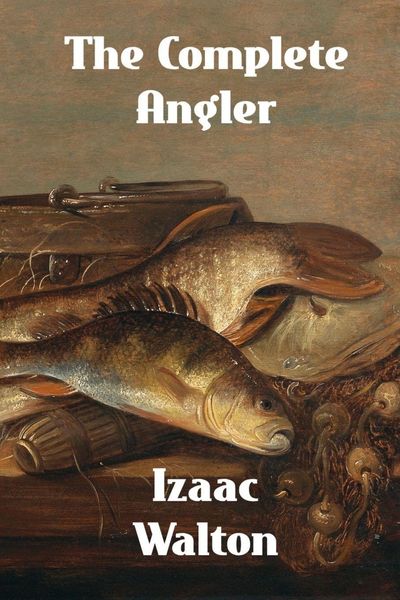
The Compleat Angler (the spelling is sometimes modernised to The Complete Angler, though this spelling also occurs in first editions) is a book by Izaak Walton, first published in 1653 by Richard Marriot in London. Walton continued to add to it for a quarter of a century. It is a celebration of the art and spirit of fishing in prose and verseWalton was born in Stafford and moved to London when he was in his teens in order to learn a trade. The Compleat Angler reflects the author's connections with these two locations, especially on the River Dove, central England, that forms the border between Staffordshire and Derbyshire in the Peak District. The book was dedicated to John Offley of Madeley, Staffordshire, and there are references in it to fishing in the English Midlands. However, the work begins with Londoners making a fishing trip up the Lea Valley in Hertfordshire, starting at Tottenham. Walton was not sympathetic to the Puritan regime of the 1650s and the work has been seen as a reaction to the turbulence of the English Civil War and its aftermath; "the disorder of the present times received muted comment in the work's scenes of harmony", is the view of the Oxford Dictionary of National Biography.[2] "Study to be Quiet" was one of Walton's favourite mottos.
Noch keine Bewertungen vorhanden
Verfassen Sie die erste Bewertung zu diesem Artikel
Helfen Sie anderen Kundinnen und Kunden durch Ihre Meinung.